
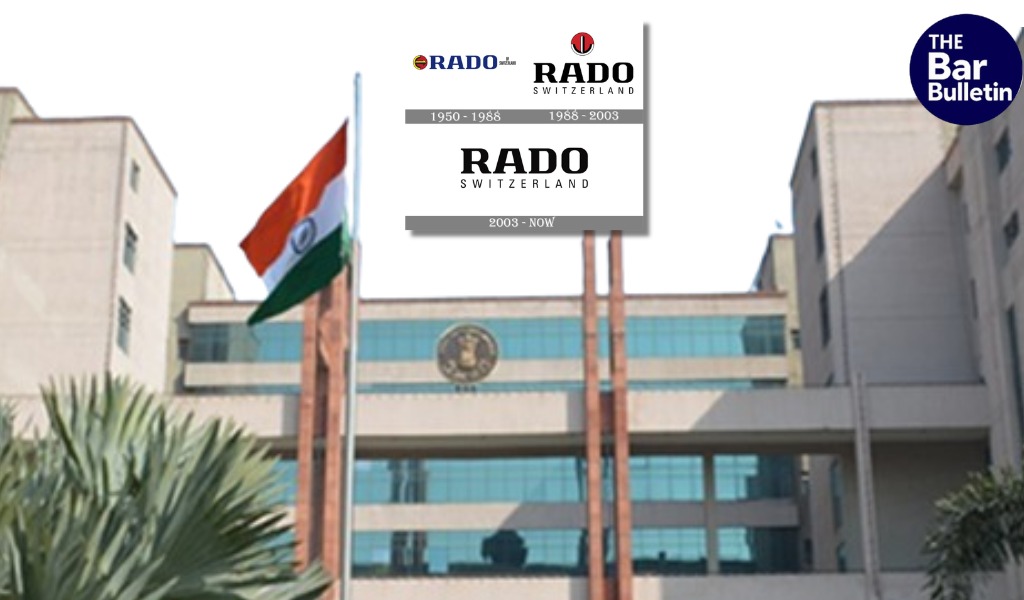

The Saket Bench of the District Court has held that in a trademark infringement and passing off action, mere recovery of goods bearing the disputed marks from a defendant’s premises is not sufficient to entitle the plaintiff to relief where the plaintiff fails to prove, through competent evidence, that the recovered goods are counterfeit or infringing, especially when there is no comparison with original products and no technical expert evidence identifying distinguishing infringing features.
The Court further held that where the plaintiff’s witness lacks personal knowledge of the material facts, cannot establish the source of such knowledge from company records, and cannot substantiate alleged sales or deception in the relevant market, the plaintiff fails to establish a prima facie case even on the standard of preponderance of probabilities, and is therefore not entitled to permanent injunction, delivery up, rendition of accounts or damages.
The Court also affirmed that territorial jurisdiction in a trademark suit may still be sustained under Section 134(2) of the Trade Marks Act, 1999 if the plaintiff is carrying on business within the territorial jurisdiction of the Court through its exclusive showrooms, even where the plaintiff fails to prove infringing sales by the defendant within that territory.
The District Judge Lokesh Kumar Sharma observed that the plaintiffs failed to prove their case even on preponderance of probabilities. It observed that although PW1 stated in cross-examination that the plaintiffs were private limited companies, no such pleading or incorporation proof had been placed on record. The Court further found that prosecution witness failed to establish the source of his knowledge of the facts, as he was not associated with the plaintiffs’ companies and there was nothing to show he had derived knowledge from their official records.
On the allegation of infringing sales in South Delhi, the Court found that no specific locality, volume of sales or prices had been proved. It characterized the assertion of South Delhi sales as unsupported by concrete material. The Court also observed that the class of consumers of the plaintiffs’ luxury products was entirely different from the class purchasing from New Lajpat Rai Market, and therefore the question of confusion in the minds of consumers did not arise in the facts of the case.
The Court further held that even if the Local Commissioner’s report could be treated as admissible in the absence of formal objections, the report merely recorded recovery of certain watches and empty boxes/bags bearing marks such as RADO, TISSOT and OMEGA from the defendant’s shops. The Court emphasized that neither the Local Commissioner nor the plaintiffs’ representatives had original products for comparison, and no technical expert was examined to identify and explain the distinguishing features between the plaintiffs’ original products and the allegedly infringing goods. The Court therefore held that the possibility of genuine and original watches, boxes or carry bags being present at the defendant’s shop could not be ruled out.
As regards territorial jurisdiction, the Court held against the defendant. It noted that although the plaintiffs failed to prove any business activities of Defendant No. 1 in South Delhi, the existence of the plaintiffs’ exclusive showrooms within the territorial jurisdiction of the Court, read with Section 134(2) of the Trade Marks Act, 1999, was sufficient to confer territorial jurisdiction.
Briefly, the plaintiffs, namely Rado Uhren AG, Tissot SA, Omega SA and Compagnie des Montres Longines, instituted a commercial suit for permanent injunction, infringement of trademarks and copyright, passing off, delivery up, damages and rendition of accounts against the defendants in relation to alleged counterfeit watches and allied products bearing the marks RADO, TISSOT, OMEGA and LONGINES.
The plaintiffs pleaded that their trademarks were long prior adopted, registered in India under the Trade Marks Act, 1999, and had acquired worldwide goodwill and reputation. They alleged that in the second week of October 2023 they came across impugned products of the defendants being sold in South Delhi markets and asserted that the defendants were using identical and deceptively similar marks in relation to watches and related goods, thereby infringing their statutory and common law rights.
Defendant No. 1 contested the suit by disputing territorial jurisdiction, the plaintiffs’ legal status and authority of their authorized representative, and denied dealing in the plaintiffs’ brands. He contended that he was carrying on business from Chandni Chowk/Lajpat Rai Market and was selling only local brands.
