


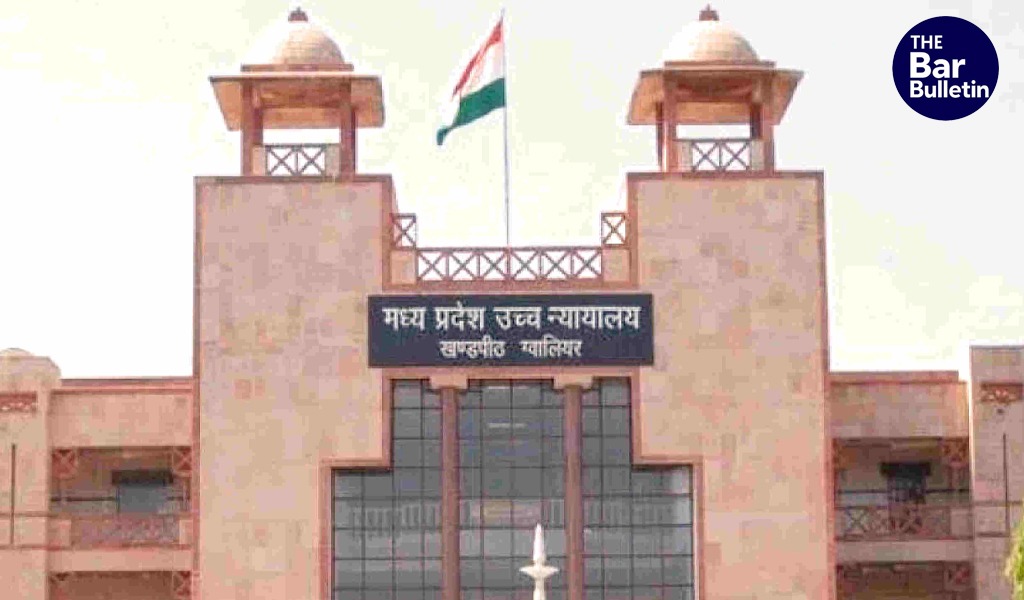

The Madhya Pradesh High Court (Jabalpur Bench) allowed the writ petition challenging the denial of ex-gratia and leave encashment to a married daughter, observing that such benefits cannot be denied solely on the ground of marital status.
The case arose from the order under which the petitioner has been denied payment of ex gratia and leave encashment after the death of her father, who was working as a driver at the District Court, Narsinghpur, under the administrative control of Madhya Pradesh. The petitioner is a duly recorded nominee in the service records and has been granted GPF, Karmchari Group Insurance Benefits, and a compassionate appointment. However, her claim for ex-gratia and leave encashment is rejected on the ground that a married daughter is not entitled to receive such benefits.
Hearing the petition, the bench of Justice Vivek Rusia and Justice Pradeep Mittal has relied on the case of Meenakshi Dubey vs. M.P. PoorvaKshetra Vidyut Vitran Co. Ltd. and held that deprivation of a married daughter from consideration for compassionate appointment hits Articles 14, 16, and 39(a) of the Constitution of India. The court further held that leave encashment is a statutory right and depriving an employee of it is violative of Article 300A of the Constitution. Interpreting the state government notification dated November 14, 1972, the court observed that it does not debar a married daughter and cannot be used to defeat the claims if she is the only legal heir.
Observing that the purpose of ex-gratia is to provide immediate financial relief to the family of the deceased employee, the court held that it cannot be denied on the ground that the married daughter cannot claim it. Hence, the court allowed the writ petition and set aside the impugned order with the direction to pay the ex-gratia and leave encashment amount to the petitioner within 60 days.
Appearances:
Advocate Durgesh Kumar Singrore for petitioner.
Advocate Shobhitaditya for respondent No.1 and 2.
