
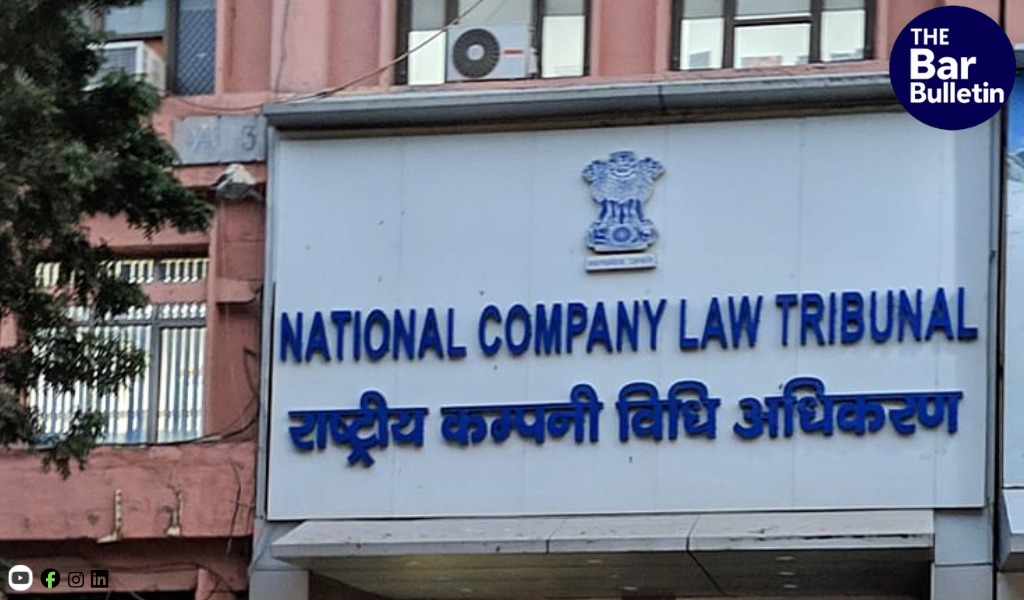

The Mumbai Bench of the National Company Law Tribunal (NCLT) has asserted that for admission of a petition under Section 7 of the IBC, the Adjudicating Authority is required only to ascertain the existence of a financial debt and the occurrence of default, and once these are established, technical objections as to Form 1 particulars, insufficiency of stamping, absence of Information Utility record, or pendency of parallel proceedings against related obligors do not defeat maintainability.
The Tribunal further held that where term loans are repayable through continuing instalment schedules, limitation for Section 7 proceedings is not exhausted merely because some earliest instalments may have become time-barred; each subsequent unpaid instalment constitutes a default under Section 3(12), and defaults occurring within three years prior to filing are sufficient to sustain the petition.
It was also held that multiple loan facilities granted by the same creditor to the same corporate debtor as part of a common financing relationship may be pursued in one consolidated Section 7 application, and simultaneous proceedings against co-borrowers, guarantors, or sister concerns do not bar such petition until the underlying debt is fully satisfied.
The Division Bench comprising Nilesh Sharma (Judicial Member) and Sameer Kakar (Technical Member) observed that the scope of inquiry under Section 7 is limited to examining whether there exists a financial debt and whether default has occurred. It further observed that at the admission stage the Adjudicating Authority is not required to examine broader disputes, the commercial viability of the Corporate Debtor, or its alleged solvency; nor can technical objections be permitted to defeat the statutory remedy once debt and default are established.
On limitation, the Tribunal rejected the Corporate Debtor’s argument that limitation began almost immediately after disbursement. It observed that the facilities were structured term loans with defined repayment tenures and periodic instalment obligations extending well beyond the dates of disbursement. Since the petition was filed on May 29, 2019 and the repayment schedules continued till November 2019, July 2022, and March 2023 respectively, the debt was intended to be serviced during the contractual tenure.
The Tribunal also rejected the objection that the petition was incomplete for failure to state the date of default. It found that the petition and annexures clearly disclosed the dates of default for each loan facility and held that the requirement under Form 1 is to disclose sufficient particulars to establish default. It therefore treated the alleged defect, at best, as a minor procedural irregularity that could not frustrate insolvency proceedings once debt and default were otherwise shown.
On the issue of clubbing multiple loans in one petition, the Tribunal held that all three facilities arose out of a common financial relationship between the same parties and formed components of the same overall financing arrangement. Merely because there were separate sanction letters, separate loan agreements, or different dates of default did not require separate Section 7 proceedings. The Tribunal held that once a composite financial relationship and default are established, a consolidated petition is maintainable.
As regards parallel proceedings against sister concerns, the Tribunal held that such proceedings do not bar a Section 7 petition against the present Corporate Debtor so long as the debt remains unpaid. It observed that simultaneous recourse against different obligors in respect of the same debt is legally permissible, subject to the principle that the creditor cannot recover more than what is due.
The Tribunal further held that the objection relating to insufficient stamping of the loan agreements under the Maharashtra Stamp Act did not affect maintainability of a Section 7 petition. It observed that insolvency proceedings are summary in nature and that existence of debt and default could in any case be established from other material on record, including sanction letters, statements of account, loan documentation, and assignment agreements. Similarly, absence of an Information Utility record or Banker’s Book certificate was not fatal because proof of default is not confined to those forms alone.
Briefly, the dispute arises from a Section 7 application under the Insolvency and Bankruptcy Code, 2016 filed against RNA Lifestyle Private Limited by Authum Investment & Infrastructure Limited, earlier Suraksha Asset Reconstruction Limited, seeking initiation of CIRP. The amount claimed in default was Rs. 50.21 crores, comprising opening balance, interest, and penal interest. The Financial Creditor also proposed NPV Insolvency Professionals Private Limited as IRP.
The Original Lender, Reliance Capital Limited, had granted three construction finance facilities to the Corporate Debtor: Term Loan 2 of Rs. 28 crores sanctioned on Aug 29, 2015 and disbursed on Nov 06, 2015 at 17% interest with 48 months’ tenure; Term Loan 3 of Rs. 3 crores sanctioned on Apr 19, 2016 and disbursed on Apr 30, 2016 at 16.75% interest with 62 months’ tenure; and Term Loan 4 of Rs. 4.35 crores sanctioned and disbursed on Dec 31, 2016 at 17% interest with 62 months’ tenure including 12 months’ moratorium. The Corporate Debtor executed the relevant loan agreements, board resolutions, undertakings, declarations, promissory note, continuity letter, and security documents in relation to these facilities.
The financial assets were first assigned by Reliance Commercial Finance Limited in favour of Suraksha Asset Reconstruction Limited under an Assignment Agreement, and were later assigned by Suraksha to Authum Investment & Infrastructure Limited under a Deed of Assignment. The Tribunal permitted substitution of Authum in place of Suraksha and restored the main company petition after its earlier dismissal for default.
The Corporate Debtor opposed the petition on multiple grounds. It contended that the petition was incomplete for not properly stating the date of default in Form 1; that limitation had expired because default allegedly occurred soon after disbursement of the loans; that Section 19 of the Limitation Act, 1963 was inapplicable to IBC proceedings; that the loan agreements were insufficiently stamped under the Maharashtra Stamp Act, 1958; that different loans and different causes of action could not be clubbed in one Section 7 petition; and that the Financial Creditor had already initiated proceedings against sister concerns in relation to the same debt.
Appearances:
Adv. Shadab Jan i/b Adv. Turab Ali Kazmi, Adv. Utkarsh Singh, Adv. Saumya Kapoor, Adv. Hardika Kukreja, Adv. Adhishree Nokha, Adv. Sanyukta Menon, for the Applicant
Adv. Aniruth Purusothanam a/w Ad. Aditya Sharma, for Respondent
