
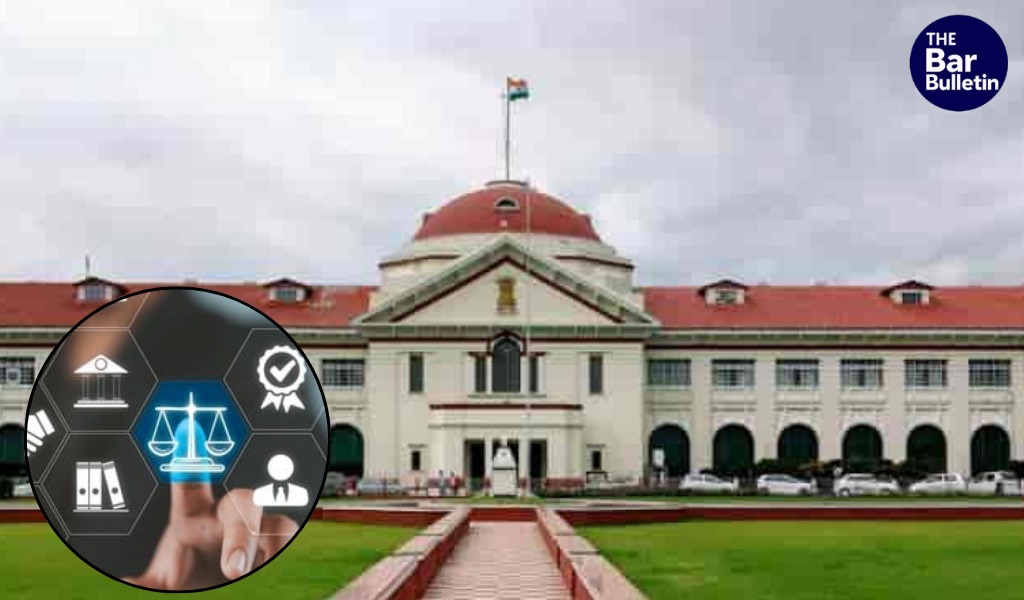

The Patna High Court has asserted that in service matters, a writ Court is justified in declining interference where the claim is raised after inordinate delay and laches, since mere filing of representations does not extend limitation and equity aids the vigilant, not the indolent. The Court explained that where the Single Judge has merely granted liberty to make a fresh representation, and the appellant does not avail of that liberty, the appellate Court will not interfere unless the impugned order suffers from perversity, illegality, or palpable unreasonableness.
Applying these principles, the High Court held that in view of the appellant’s delayed approach, his prior unsuccessful litigation, and the State’s stand regarding prolonged unauthorized absence and non-fulfilment of continuous service requirements, no case for interference in the Letters Patent Appeal is made out.
The Division Bench comprising the Chief Justice Sangam Kumar Sahoo and Justice Harish Kumar noted that the Single Judge had already granted indulgence to the appellant by permitting him to file a fresh representation before the Chief Engineer within a stipulated period, but the appellant did not avail of that liberty and instead challenged the order in appeal.
The Bench observed that the appellant had superannuated on September 30, 2012 and was seeking regularization after more than 13 years from the date of retirement. The Bench emphasized that mere representation does not extend limitation, and that in service matters an aggrieved person must approach the Court expeditiously and within a reasonable time.
The Bench also took note of the State’s stand that the appellant had remained unauthorizedly absent for more than 12 years at different times, that the Executive Engineer had no jurisdiction to sanction such long leave, and that the Screening Committee, after considering the materials in light of Mobina Khatoon, found that the appellant had not worked continuously for the required period in the work charge establishment.
Further, similar relief had earlier not been granted to the appellant and that after reconsideration as directed in the earlier proceedings, his case had already been rejected on valid grounds. In such circumstances, the Bench found no perversity, palpable unreasonableness, illegality, or inconsistency with any particular position of law in the order passed by the Single Judge.
Briefly, the appellant, a work charge employee appointed as Work Supervisor Grade II in the Water Resources Department on December 20, 1973, challenged the order dated June 24, 2025 passed by the Single Judge, whereby the petition was disposed of with liberty to file a fresh representation before the Chief Engineer for consideration in light of Finance Department Resolution No. 5547 dated July 03, 2019. The appellant did not file such representation and instead preferred the present Letters Patent Appeal.
In the petition, the appellant had sought setting aside of Memo January 17, 2013 and December 22, 2023, by which his claim for regularization was rejected, and had prayed for grant of regularization and consequential benefits on the ground that similarly situated and even junior work charge employees had been regularized.
The appellant’s case was that after joining service, he proceeded on leave on account of illness with due sanction, later rejoined, and again proceeded on leave before reporting for joining on May 09, 2004. He relied upon the State Government Resolution No. 6394(2) dated October 23, 1987, which contemplated regularization of work charge employees who had completed at least five years of continuous service till October 21, 1984.
The State, in its counter affidavit, contended that the petition was barred by delay and laches, having been filed about 13 years after retirement, and was also barred by res judicata so far as Memo No. 187 dated January 17, 2013 was concerned. The State further asserted that the appellant had remained absent for 4457 days, i.e., 12 years and 211 days, had not worked continuously for the required period, and that the leave allegedly sanctioned by the Executive Engineer was beyond his jurisdiction under the Bihar Service Code.
Appearances:
Advocate Braj Kishore Singh, for the Appellant
Additional Advocate General, Anjani Kumar, for the Respondent
