
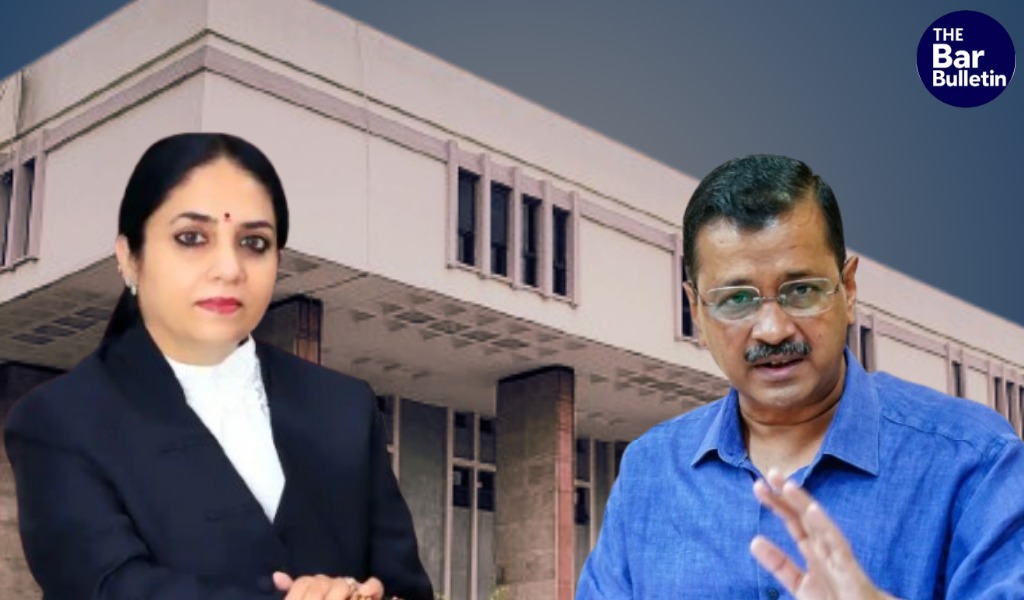

Delhi Chief Minister Arvind Kejriwal has written to Justice Swarana Kanta Sharma of the Delhi High Court, stating that he declines to participate further in proceedings in Criminal Revision Petition No. 134/2026, citing a continuing apprehension regarding the fairness and perceived impartiality of the adjudicatory process.
In his letter, Kejriwal highlighted that the decision is rooted in conscience and not intended as an act of defiance against the institution. He notes that his earlier application seeking recusal of the judge was dismissed on 20 April 2026, and contends that the reasoning in the order has not alleviated his concerns.
He reiterates two principal grounds: first, the judge’s alleged public association with the Akhil Bharatiya Adhivakta Parishad (ABAP), which he describes as ideologically aligned with the ruling dispensation; and second, a perceived conflict of interest arising from the professional engagements of the judge’s children, who are empanelled as government counsel and receive case assignments from the Solicitor General appearing for the opposing party. Referring to RTI material, he points to the volume of case allocations to one of the judge’s children to suggest a reasonable apprehension of proximity with the Union government.
Kejriwal further submits that the language employed in the order rejecting recusal characterising his plea as an ‘attack’ on the judge indicates that his concerns were viewed as personal rather than legal, thereby undermining his expectation of a neutral hearing.
Invoking the principle that justice must not only be done but also be seen to be done, he asserts that public confidence in the proceedings stands compromised. Drawing on Gandhian principles of satyagraha, he states that he will abstain from further participation despite being aware of potential adverse legal consequences.
He clarifies that this decision is confined to the present matter and does not amount to a blanket refusal to appear before the judge in other cases. He also indicates that he reserves the right to challenge the recusal order and pursue appropriate remedies before the Supreme Court.