
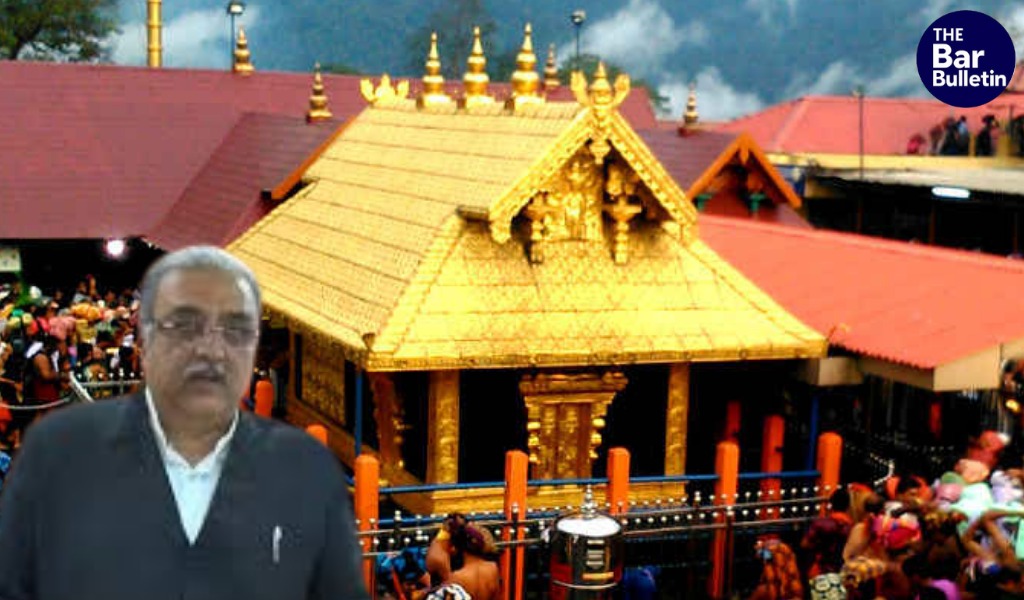

Senior advocate V. Giri, appearing for the Thanthri (chief priest) of the Sabarimala Temple, Kandararu Rajeevaru, argued before the Supreme Court 9-Judge Bench on the 6th day of the ongoing Sabarimala Reference.
Mr. Giri submitted that the right to worship is linked to the beliefs and practices of the religion concerned, and that a devotee approaching a temple does so in acceptance of the deity and the mode of worship associated with it.
“My right under Article 25 is intrinsically connected to belief… If I do not believe in the deity, why should I go there?”
He submitted that a devotee enters a temple in surrender to the deity and must accept its defining characteristics. The right to worship, therefore, cannot be used to question or alter those very characteristics. Illustrating the point, he said a worshipper cannot demand that rituals of one tradition be performed in another:
“He cannot go to a Shiva temple and say… I would like to see ceremonies of a Vaishnavite temple performed here.”
On the specific context of Sabarimala, Giri argued:
“The characteristic of the deity… contemplates that the deity is a permanent celibate.”
Regarding state interference, he submitted: \
“Any state action which permits the defilement or pollution of the image would violently interfere with the religious faith, and would therefore be prima facie invalid under Article 25.”
Denominational Autonomy and Limits of Judicial Scrutiny
Placing reliance on precedents such as The Commissioner, Hindu Religious Endowments v. Sri Lakshmindra Thirtha Swamiar of Shirur Mutt, Mr Giri emphasised that what constitutes a religious practice must be determined by the doctrines of the religion itself. He highlighted that Hindu temple worship is governed by Agama Shastras, which prescribe rituals, modes of worship, and even qualifications for priests.
According to him, these practices are inseparable from the identity of the deity:
“Any deviation… would interfere with the religious faith in a vital respect.”
He further argued that non-believers cannot invoke constitutional protection to challenge religious practices, stating:
“It is no business for a non-believer to question it… such a claim is not captured under Article 25.1.”
Linking this to Article 26 of the Constitution of India, Mr Giri submitted that religious denominations have the right to manage their own affairs in matters of religion. He argued that once a practice is found to be religious and not secular, the scope of interference is limited, except on grounds such as public order, morality or health.