
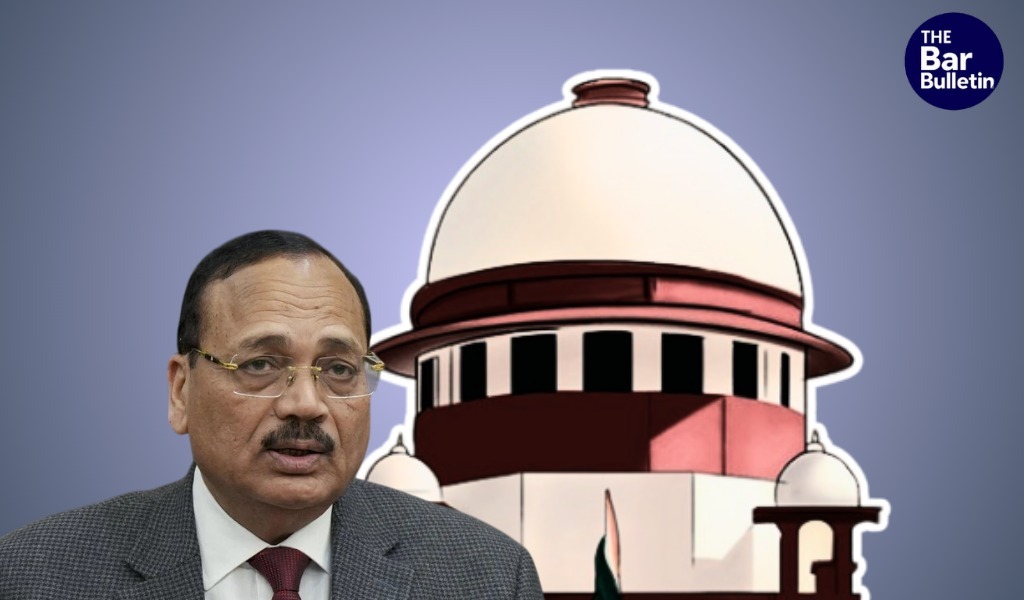

The Supreme Court on Thursday considered a Plea seeking the creation of a National Digital Registry for the legal profession, including a Unique National Advocate Identifier, real-time verification of enrolment status, disciplinary records, and QR-verifiable public profiles for advocates.
The petition, filed by the Bar Association of India, also seeks the formulation of a social media code of conduct for advocates, including norms governing online solicitation and misleading promotional practices.
The matter was heard by a Bench comprisingChief Justice of India Surya Kant and Justice V. Mohana. During the hearing, the petitioners submitted that the proposal was intended to address concerns relating to fake legal practitioners, verification of advocates’ credentials, and the increasing use of digital platforms by members of the legal profession. Expressing initial interest in the proposal, CJI Surya Kant observed:
“
“This appears to be a very innovative idea. Nowadays with technology, it can be well done.”
The Court, however, questioned the feasibility of implementing such a registry without involving educational institutions responsible for producing law graduates.
The petitioners informed the Court that the University Grants Commission (UGC) had already been impleaded as a party and not all institutions connected with legal education necessarily fall within the UGC framework. When counsel suggested that the All India Council for Technical Education (AICTE) could also be included because some technical institutions have begun offering legal programmes, the Court emphasised the need for a broader and coordinated approach.
“
“For any coordinated effort to be made in this direction, you will have to ultimately include the law universities, compelling them to disclose and notify the list of all those bona fide law graduates from those universities.”
The petitioners, however, urged the Court not to immediately expand the proceedings by impleading numerous institutions. Instead, they proposed placing a supplementary policy paper before the Court outlining possible methods of implementation. Accepting the broad approach suggested by the petitioners, the Bench observed:
“
“You first need to create a module kind of thing.”
Counsel agreed to formulate and place a detailed mechanism before the Court, submitting that impleading every university at the present stage could delay the proposed reforms.
Concerns were also raised relating to unverified individuals presenting themselves as legal experts online and the growing need for standards governing lawyers’ use of social media. However, CJI remarked that:
“
“Advocates normally are very responsible. They know law, they know their responsibility. They are professionally very disciplined. The first thing they learn is professional ethics. They may not be really professionals. They may not, in fact, actually be enrolled advocates.”
CJI Surya Kant observed that the future of the legal profession lies with young advocates and noted that many young lawyers’ associations across the country were already engaged in constructive academic and professional activities.
“
“The best way is to strengthen the young members of the profession. Unless they are secured a space in the profession, unless they are really periodically trained, some space in the overcrowded courts, these problems will arise. First thing need to be done is we must encourage the young lawyers and we must bring them on the forward front side….Our hope and care lies in the young members and the future generation of lawyers. It is a collaborative enterprise with all the Bar Councils, Bar Associations and all. This is the spirit we are trying to move forward….Some of the young lawyers have formed very constructive associations. They organize lectures, they invite some academia. Very good healthy discussions on legal subjects. I myself know because I have been actively associated with them and I do encourage them.”