
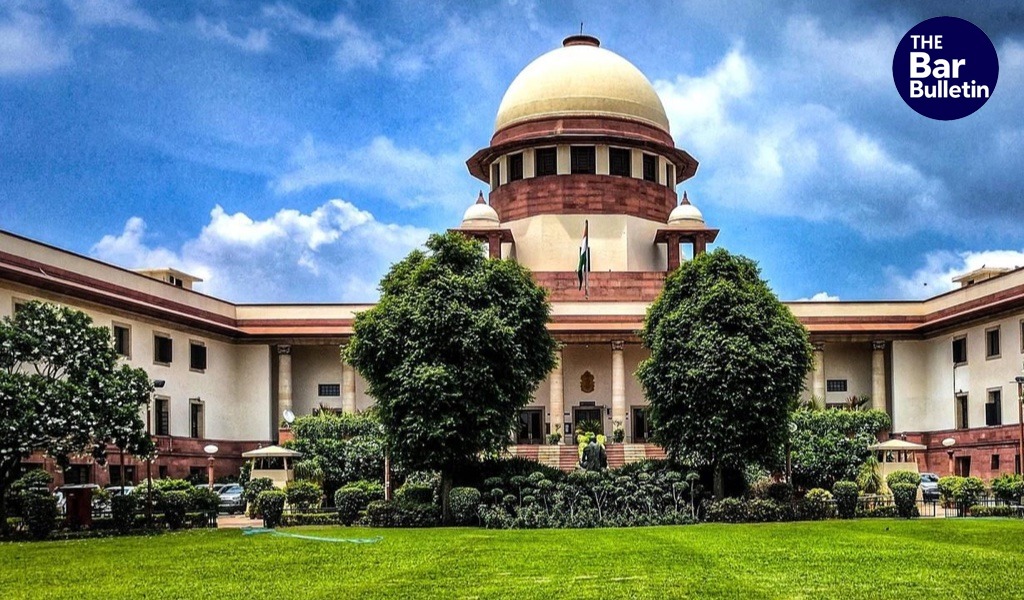
The Supreme Court has held that the final signed order uploaded by the Court not the rough dictation made in open court constitutes the binding judicial decision, dismissing a miscellaneous application that sought to treat oral courtroom dictation as the final judgment in the Adani Ports land dispute case.
A Bench of Justice J.K. Maheshwari and Justice Atul S. Chandurkar rejected the plea filed by certain respondents in the disposed-of civil appeal, who claimed that the order dictated in open court on January 27, 2026 should prevail over the signed order uploaded later on February 12, 2026.
The applicants argued that the signed order materially differed from the oral dictation, particularly because the courtroom dictation allegedly contemplated maintenance of status quo over the subject land and continuation of proceedings before the Gujarat High Court, whereas the signed order did not preserve status quo and treated the pending writ petition as disposed of. To support this claim, the applicants relied on media reports, stock exchange disclosures, a YouTube video recording of the proceedings, and a transcript prepared by them.
Rejecting the contention, the Court held that the plea was fundamentally misconceived and amounted to an impermissible attempt to rewrite a concluded judicial order through a miscellaneous application.
“The signed order dated 27.01.2026 which was uploaded on 12.02.2026 remains the only final order passed by the Court,” the Bench clarified.
The Court drew a distinction between dictation of a draft order in open court and the final signed judgment, observing that oral dictation often serves as a skeletal framework that remains subject to corrections, refinements, and enhancements in chambers before the order is finalised.
Recognising the practical realities of Indian courts handling heavy dockets, the Bench said the practice of dictating rough orders in open court and refining them later is a functional necessity and does not undermine judicial finality, provided no material alterations are introduced without rehearing parties.
The Court held that the changes complained of did not amount to material modifications but were merely corrections and refinements to the draft order.
Coming down heavily on the applicants, the Bench described the plea as a “gross abuse of process of law” and said the pleadings appeared to be a “misconceived attempt to undermine the dignity of the Court and browbeat its authority.”
The Court also noted that the application was procedurally defective and not maintainable, since miscellaneous applications in disposed matters are permissible only in limited circumstances such as clerical corrections or executory impossibility due to subsequent developments.
Dismissing the application both on maintainability and merits, the Supreme Court imposed symbolic exemplary costs of ₹2,000 each on the applicants, payable to the Supreme Court Legal Services Committee.
