
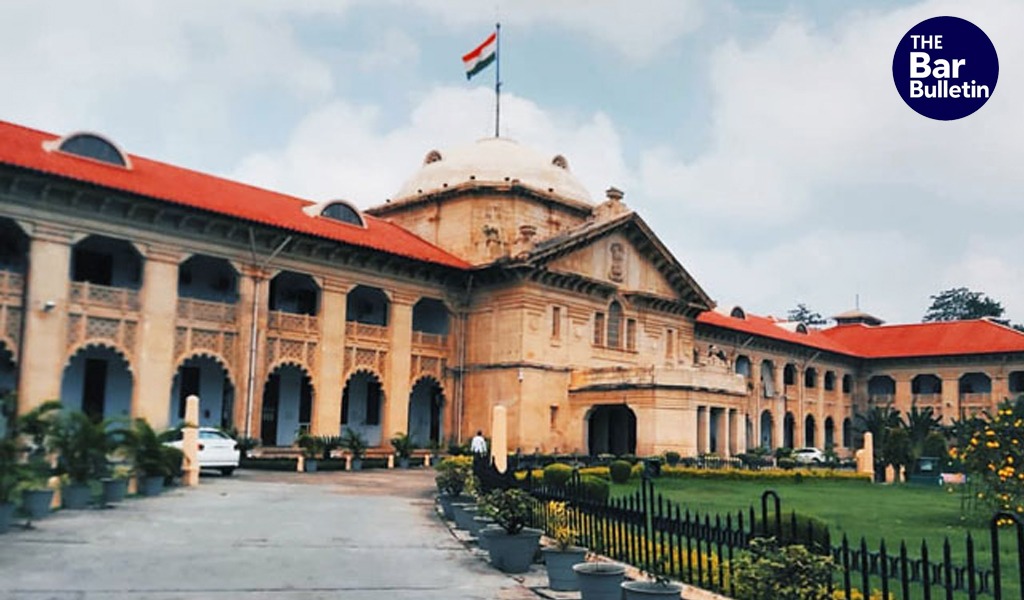

A batch of matters were filed before the Allahabad High Court regarding the inordinate delay in the adjudication of trial court proceedings, coupled with the apparent reluctance or failure by the district judiciary to furnish requisite information when called upon by the High Court.
Regarding the first case, it was contended that the courts below had not adhered to the binding directions laid down by the Supreme Court in Satender Kumar Antil v. CBI (2024) 9 SCC 177 and certain other matters. It was also submitted that there had been a failure on part of the district judges to furnish information repeatedly called for by this Court.
Considering three other cases, it was stated that collectively, they disclosed a concerning pattern of procedural stagnation before the district courts, and also that no effective attention was being paid at the level of this Court. A Single Judge Bench of Justice Vinod Diwakar said that there was no notified national policy governing the administration of justice, nor any settled procedure or codified rules prescribed for it. It was stated that sustained, effective and result-oriented training and learning programmes for Judges are wanting-programmes that would bring consistency to judicial pronouncements and help to build judicial character.
The Court suggested that every promotion or elevation should be followed by a compulsory programme of training, so that the officer may appreciate the consequences of decisions taken at each level and their effect on society. It was stated that ‘judicial character’ required the removal of influences that corrupt or undermine it. After considering the facts of each case, the Court went on to examine the positions disclosed in all cases.
Regarding the first case, the Court stated that the after the communications of the Registrar General, district-wise data was compiled in respect of orders granting bail passed after 12-08-2025 in apparent non-compliance with Smt. Bacchi Devi v. State of U.P. (2025) SCC OnLine All 5286. The data disclosed that in 9775 orders granting anticipatory bail and 1,56,155 orders granting regular bail passed after that date, the accused were directed to furnish two securities by the judicial officers. It was noted that only eight district judges furnished satisfactory material, that too confined only to the month of November 2025, and that the reports received from the remaining district were deficient. Significantly, the Court found that the reports did not disclose full compliance with Smt. Bacchi Devi (supra).
For the second case, the Court noted that the material disclosed a structural difficulty of considerable magnitude as 16,15,655 cases were pending in which charge has not been framed- 14,08,134 before the Magistrates and 2,07,521 before the Courts of Session- the pendency extending back to 1981. It was said that there is a widening gap between the volume of cases entering criminal courts and the rate at which the charges are framed. The Court stated that the remaining two cases before the Court also disclosed a similar position.
The Court stated that the difficulty experienced by a trial court in comprehending and applying the judgments of the constitutional courts is not merely an individual shortcoming. It was said to be a systemic issue, rooted in institutional arrangements, legal education, the design of judicial training programmes, and institutions’ behavioural patterns. The Court further said that the judicial officers tend to adhere to established practice and precedent rather than to adopt a fresh constitutional interpretation, particularly where such interpretation would materially alter procedural or customary practices. It was stated that for a nation that aspires to the status of a developed country, such judicial inertia and institutional apathy are not merely administrative or attitudinal lapses as they go to the core of the judicial system.
Upon examining various materials, the Court stated that the increasing globalization of law and commerce necessitates that Indian courts remain attentive to international best practices. It was said that the demands of a modern economy require a judiciary that is not only independent but also institutionally effective and responsive with strong judicial character. Further, the Court said that arbitration is not merely a process of alternative dispute
Resolution, but also a measure of the confidence which the international business community reposes in our judicial system.
It was stated that in India, judges select judges and set norms for the judges and that the entire mechanism of selection, performance, and outcome is controlled and supervised by judges. Hence, the Court found it safe to conclude that India’s judicial establishment today is the outcome of the choices made by our judges. While noting the machinery at the Allahabad High Court itself, the Court stated that the absence of formal rule-bound procedure, the non-disclosure of reasons, lack of external oversight, and internal independence have led to criticisms that the system perpetuates elitism and undermines diversity within the judiciary.
The Court said that the institutional functioning of High Courts tends to be Chief Justice-centric. It was stated that the Chief Justice exercises exclusive administrative prerogatives and that this concentration of administrative control, coupled with influence over judicial assignments and the management of the court’s resources, renders the office structurally dominant, thereby creating a functional hierarchy that is incompatible with the formal ideal of judicial equality and constitutional morality.
It was found that our judicial system illustrates both the possibilities of judicial independence and the pitfalls of judicial self-governance. While it has fortified external independence, it has also exposed vulnerabilities in internal independence and institutional legitimacy. Further, the Court stated that while judicial decisions are subject to appeal and review, judges’ administrative decisions often escape structured scrutiny, even when they have profound consequences. Resultantly, the Court said that accountability for erroneous or discriminatory administrative conduct is largely internal, resting on conventions of self-regulation, peer scrutiny, and the ethical expectations of the office.
The Court stated that the appointment of judges is indispensable, but a judge cannot function without a Bench Secretary, a stenographer, a record-keeper, other clerical staff, besides court rooms and other establishment as per their entitlement. It was said that where 1396 posts of a
sanctioned 4138 lie vacant in the High Court Registry, and no appointment has been made in several cadres since 2022, the attention given to the one side of the institution has plainly not been given to the other.
It was stated that participative management assumes particular significance in the institutional framework of a High Court, where collective deliberation enables the diverse experiences and perspectives of its judges to inform administrative decisions. The Court said that this promotes transparency, fosters institutional confidence, and facilitates the effective implementation of decisions. The Court stated that time is of the essence, and that litigants cannot be left waiting indefinitely, asking even for the framing of charges.
It was noted that the first petition had already been allowed by an order dated 11-12-2025, and that the petitioner was to be released on a personal bond of Rs. 5,000/- and one surety in the like amount. In the second case, the Additional Chief Judicial Magistrate, Prayagraj, was directed to decide the case in a time-bound manner. Applications for personal exemption were directed to be disposed of by reasoned orders, bail bonds were permitted to be forfeited, and action was directed to be taken against erring police officers.
The third petition was disposed of with the trial to be conducted as per the directions in the second case. In the fourth petition, the trial court was directed to expedite the trial and the accused was to be bound down to appear, the Senior Superintendent of Police, Kanpur Nagar, was to ensure his presence, and if he still failed to appear, the trial was to be concluded after taking him into judicial custody.
Lastly, the Court requested the Chief Justice to explore convening Full Courts and opening dialogue to ensure compliance with the High Court Rules, 1952. It was stated that it was time that the institution addressed the issue with the urgency and promptitude it deserved. The Registrar was directed to place a copy of this judgment before the Chief Justice and a copy was directed to be transmitted to the Secretary, Department of Justice, Ministry of Law and Justice, who may place the same before the Minister of State for Law and Justice, for consideration, and a copy of the note may also be forwarded to the Cabinet Secretary, Union of India.
