
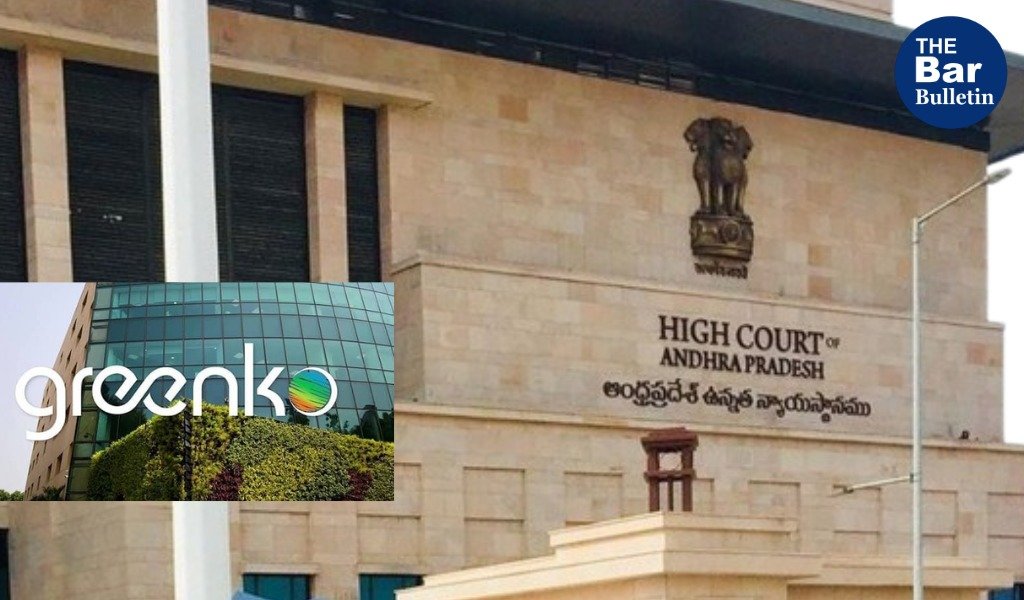

Holding that CBIC Instruction No. 13/2022 ceased to exist in law after being struck down by the Delhi High Court, the High Court of Andhra Pradesh (Amaravati Bench) has ruled that customs authorities could not rely on it to reject Greenko’s applications and could not retrospectively apply a later notification to defeat pending rights under the Manufacture and other Operations in Warehouse (No.2) Regulations, 2019 (MOOWR scheme).
The Court affirmed that the unamended statutory framework under Section 65 of the Customs Act and the MOOWR Regulations did not contain any express or implied prohibition against solar power generation projects. The Court said that CBIC could not dictate the outcome of licensing decisions through executive instructions. Licensing authorities are required to independently assess applications instead of mechanically following departmental directives.
Further, the Court held that Notification No.86/2024-Customs (N.T.), which came into force on Dec 17, 2024, could not be used to reject Greenko’s pending application or nullify rights flowing from the Court’s earlier interim order.
Briefly, GREENKO AP01 IREP PRIVATE LIMITED entered into Power Purchase Agreements with SECI for establishing large solar power projects in Andhra Pradesh and sought licences under Sections 58 and 65 of the Customs Act, 1962 to avail the benefits of the Manufacture and Other Operations in Warehouse Regulations, 2019 (MOOWR Scheme). The company intended to warehouse imported capital goods such as solar modules and related equipment and use them for solar power generation.
While its applications were pending, the Central Board of Indirect Taxes and Customs (CBIC) relied on Instruction No.13/2022-Customs dated July 09, 2022, which directed customs authorities not to grant permissions under Section 65 for solar power generation projects. Acting solely on this instruction, the customs authorities rejected Greenko’s applications on June 24, 2024.
Earlier, the Delhi High Court in ACME Heergarh Powertech Pvt. Ltd. v. CBIC [W.P.No.10537 of 2022] had quashed the CBIC instruction and held that solar power generation could be carried out under the MOOWR framework because neither Section 65 nor the Regulations excluded such activity. Despite that judgment, the Andhra Pradesh customs authorities continued to rely on the same instruction to reject Greenko’s applications.
After the Andhra Pradesh High Court granted interim protection to Greenko on Dec 09, 2024, the company requested implementation of that order. However, the authorities treated the request as a fresh application and rejected it again on Dec 17, 2024, by relying on Notification No.86/2024-Customs (N.T.), which came into force only on Dec 17, 2024, and excluded goods imported for solar power generation projects from the scope of Section 65 of the Customs Act.
The Division Bench comprising Justice Battu Devanand and Justice Tuhin Kumar Gedela observed that the Delhi High Court had already delivered a detailed and reasoned judgment in ACME Heergarh Powertech Pvt Ltd. vs. CBIC [W.P.No.10537 of 2022], holding that the CBIC instruction improperly dictated the outcome of quasi-judicial decisions and prevented licensing authorities from independently considering applications. Such directions were contrary to settled principles of administrative law.
The Court noted that Section 65 of the Customs Act permits “any manufacturing process or other operations” in a licensed warehouse and does not contain any express or implied exclusion for solar power generation projects. The legislative scheme does not restrict the provision to particular classes of goods or activities.
Also read Delhi Court Denies Bail to Advocate Accused in Satya Niketan PG Building Collapse That Killed Seven
The Court rejected CBIC’s argument that the Delhi High Court judgment applied only to existing licences and not to fresh applications. According to the Court, once the Delhi High Court found the instruction legally unsustainable, authorities could not continue to rely upon it while deciding pending applications.
The Court further held that since the Delhi High Court had quashed the impugned instruction and the Supreme Court had not granted any stay against that judgment, the instruction could not continue to be enforced anywhere in the country. A central executive instruction that has been set aside could not be revived or selectively applied by customs officers in another State.
The Court found that applying Notification No.86/2024 retrospectively to an application already pending and protected by an interim judicial order was illegal, arbitrary and contrary to settled legal principles. The authorities had misapplied the law and acted contrary to the Court’s earlier directions.
