

The Bombay High Court has clarified that the Supreme Court’s transitional directions in Bhumika Trust Vs. Union of India [2026 SCC OnLine SC 1687] do not grant automatic eligibility to all fresh law graduates, and was not intended to open judicial service recruitment to candidates who lacked the requisite period of practical legal exposure. The Court also clarified that Bhumika Trust Vs. Union of India and others did not abolish the experience requirement but only modified its implementation during the transition period.
Emphasising that one year of deemed practice applies only within the Supreme Court’s transitional scheme, the High Court said that the deemed one-year practice benefit was based on the assumption that eligible law graduates had already spent the intervening period in legal practice, law clerkships, or similar legal work. The Supreme Court’s framework treats one year of Judicial Academy training and one year of supervised law clerkship as equivalent to further periods of practice for satisfying the overall eligibility structure.
Briefly, the petitioners, Satish Maulyawan Patole and Jinesh Jitendra Koli, both law graduates enrolled as advocates in June 2026, challenged a corrigendum issued by the Maharashtra Public Service Commission (MPSC) for recruitment to the post of Civil Judge Junior Division and Judicial Magistrate First Class. They sought permission to apply for the examination and argued that, in view of the Supreme Court’s decision in Bhumika Trust Vs. Union of India [2026 SCC OnLine SC 1687], all law graduates, including fresh graduates, were entitled to participate in the recruitment process.
The impugned corrigendum dated 23 October 2026 stated that only those law graduates who had obtained their law degree before 22 August 2025 would be deemed to have completed one year of active practice and could apply under the transitional arrangement created by the Supreme Court. The petitioners contended that this interpretation wrongly excluded fresh graduates who obtained law degrees after that date.
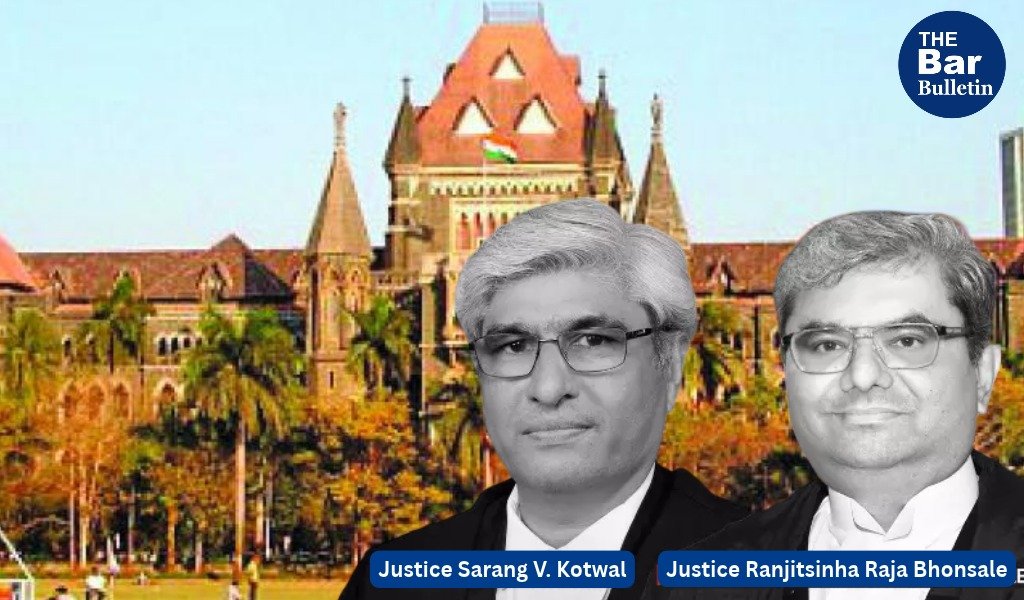
The Division Bench comprising Justice Sarang V. Kotwal and Justice Ranjitsinha Raja Bhonsale examined the background of the Supreme Court’s decisions in the All India Judges Association vs Union of India [2025(11) SCC 233] and the subsequent review judgment in Bhumika Trust Vs. Union of India [2026 SCC OnLine SC 1687]. The Court noted that the Supreme Court had consistently recognized the importance of practical exposure to court functioning before entry into judicial service and had never abandoned the underlying requirement of prior legal experience.
The High Court observed that the Supreme Court, while introducing transitional arrangements in Bhumika Trust, had specifically proceeded on the assumption that more than one year had elapsed since restoration of the practice requirement and that most law graduates would have spent that period in legal practice, law clerkships, or law-firm work. Such experience was treated as equivalent to one year of practice only as a one-time transitional measure.
The Court further observed that the Supreme Court’s scheme effectively divided the three-year experience requirement into three parts: one year of practical legal exposure before recruitment, one year of intensive training at the Judicial Academy, and one year of supervised law clerkship under judicial officers and High Court judges. Together, these three components fulfilled the objective of ensuring adequate practical experience before a candidate assumes independent judicial duties.
According to the High Court, Paragraph 73(i) of the Supreme Court’s judgment in Bhumika Trust Vs. Union of India, could not be read in isolation. The expression ‘all law graduates’ had to be understood in the context of the Supreme Court’s assumption that such graduates had already gained one year of practical exposure after the restoration of the practice requirement. The Court rejected the argument that ‘law graduates’ and ‘candidates’ referred to different classes of persons.
