
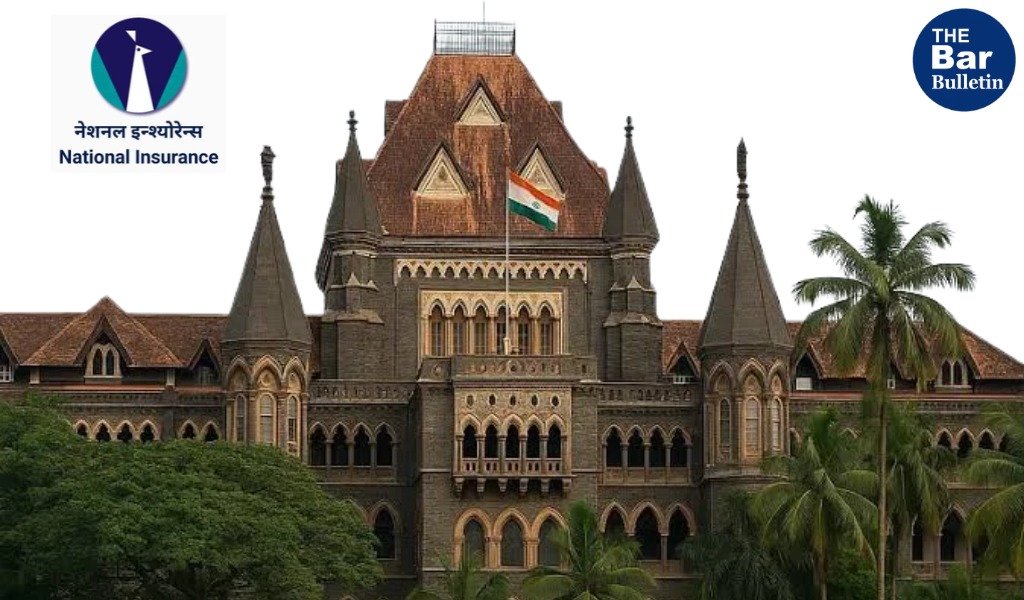

Emphasising that National Insurance’s claim over Worli property rights can proceed, the Bombay High Court has held that Section 41 of the Presidency Small Cause Courts Act cannot be invoked at the threshold when the existence of a landlord-tenant relationship itself is disputed. The Court said that a plaint can be rejected under Order VII Rule 11(d) CPC only when a statutory bar is apparent on the face of the pleadings.
The Court explained that Section 41(1) of the Presidency Small Cause Courts Act applies only where the dispute arises between a landlord and tenant or a licensor and licensee. The Court also said that the insurer asserted rights through a chain of assignments and statutory vesting, and not through any lease or licence granted by the contesting defendants.
The Court also found that the plaint did not disclose a direct lessor-lessee relationship between the parties and therefore the jurisdictional objection could not be decided against the plaintiff at the threshold stage.
Briefly, the dispute concerns a Worli property owned by the Municipal Corporation of Greater Mumbai. The land was originally leased to Blackwood Hodge, which subsequently granted a long-term sub-lease to Ghai Lamba Pvt Ltd. Ghai Lamba constructed a commercial building on the land and later assigned its sub-leasehold rights and interests in the building to India Reinsurance Corporation. After nationalisation, those rights allegedly vested in National Insurance Company Ltd., which claimed to be the lawful sub-lessee of the land and owner of the structure.
The building was later declared unsafe and demolished by the municipal authorities. Meanwhile, P.E. Manning Consultants Pvt Ltd., which claimed rights through the original lessee, issued a notice terminating the alleged sub-lease and disputed National Insurance’s title and entitlement. National Insurance thereafter filed a commercial suit seeking, among other reliefs, recognition of its status as sub-lessee, declaration that the termination notice was invalid, and protection against dispossession.
A Single Judge Bench of Justice Gauri Godse observed that while the plaintiff’s claim was based on sub-lease rights, the crucial question for deciding an application under Order VII Rule 11 CPC was whether the suit, on the face of the plaint, was a dispute between a landlord and tenant or between a licensor and licensee so as to attract Section 41(1) of the Presidency Small Cause Courts Act.
The Court noted that the plaintiff was not claiming to be a sub-lessee under any of the defendants. Rather, it claimed title through assignments executed by third parties who were not parties to the suit. The plaint did not disclose any direct contractual relationship of landlord-tenant or lessor-lessee between the plaintiff and the defendants.
The High Court also found no indication that the suit had been cleverly drafted merely to avoid the jurisdictional bar contained in Section 41(1). At the stage of deciding an application for rejection of the plaint, only the pleadings and documents forming part of the plaint could be considered. On such reading, the statutory bar was not apparent.
