
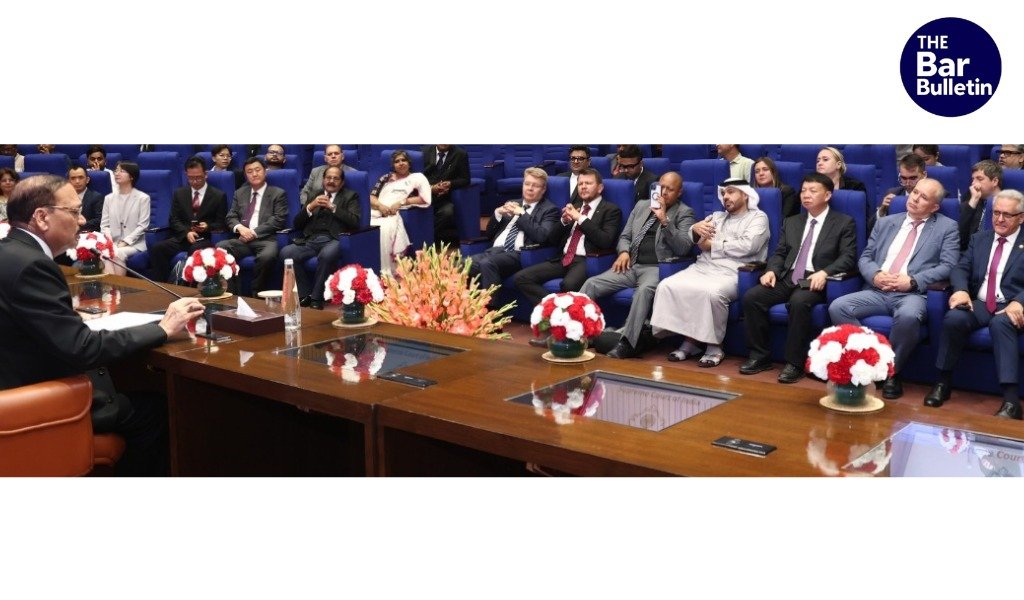

Chief Justice of India Justice Surya Kant today called for stronger legal and judicial institutions across BRICS+ jurisdictions, emphasising that the Rule of Law, institutional capacity and legal certainty are fundamental to economic resilience, innovation and sustainable development.
Addressing the inaugural session of the 11th BRICS+ Legal Forum, organised by the Bar Association of India, the CJI said the Forum’s theme “Rule of Law Frameworks and Institutional Capacity Building for Economic Resilience, Innovation and Sustainability” poses a question to the legal fraternity at a particularly important moment.
“
“The strongest economies of this century will not be the ones with the most resources beneath their soil, but the ones whose courts and institutions honour every promise made above it.”
Justice Surya Kant said economic growth cannot be sustained merely through geography or natural resources, but must be deliberately built on institutions strong enough to command trust. He identified trust, predictability and stability as the three key attributes that a justice delivery system rooted in the Rule of Law brings to an economy.
CJI coins ‘Nyaya-nomics’
Highlighting the relationship between justice and economic development, the CJI described “Nyaya-nomics” as “the economics of justice.”
He observed that consistent adjudication and confidence in legal processes reduce transaction costs, create a level playing field for markets and facilitate growth. Development, he said, is ultimately proportional to the enforceability of commitments made within a legal system.
The CJI noted that BRICS+ nations collectively represent more than 40% of the world’s population and close to 40% of global output measured by purchasing power. He emphasised that the scale of development across these economies is closely linked to the strength of their institutions, with the judiciary playing a central role.
Indian arbitration jurisprudence demonstrates importance of legal certainty
Justice Surya Kant highlighted India’s arbitration jurisprudence as an example of how judicial decisions can provide greater certainty to international commerce.
Referring to BALCO, he noted that the Supreme Court established that Indian courts would not exercise jurisdiction over an arbitration seated outside India merely because one of the parties was Indian. “The seat, not the litigant’s address, would decide whose courts had a say,” he said.
He also referred to PASL Wind Solutions v. GE Power Conversion, observing that even two Indian companies could choose a foreign seat of arbitration if that was the agreement they had reached.
Referring to Cox and Kings v. SAP India and the Supreme Court’s seven-judge decision concerning stamp duty and arbitration agreements, the CJI said the Court had consistently sought to ensure that form does not defeat intention and technicalities do not unmake genuine commercial commitments.
CJI links insolvency reforms with economic resilience
The CJI also referred to India’s insolvency jurisprudence, including the Supreme Court’s decisions upholding the constitutional validity of the Insolvency and Bankruptcy Code and recognising the primacy of the commercial wisdom of the Committee of Creditors.
He observed that the principle was simple: capital that is recycled quickly returns to the economy, while capital trapped in litigation for a decade rarely does.
Calls for BRICS+ judicial fellowship and shared jurisprudence repository
Looking towards deeper institutional cooperation among BRICS+ jurisdictions, Justice Surya Kant proposed two initiatives for consideration by the Forum:
a BRICS+ Judicial Fellowship, enabling early-career judges to spend time in the courts of other BRICS+ jurisdictions; and
a shared jurisprudence repository, drawing upon India’s experience in digitising case law, so that judgments from one jurisdiction can inform courts in another facing similar legal questions.
The CJI said the BRICS+ Legal Forum represents an opportunity for diverse legal traditions—including common law, civil law and hybrid systems—to learn from one another without erasing their differences.
‘Nyaya Setu’: Building a Bridge of Justice
Justice Surya Kant proposed “Nyaya Setu”, meaning a “Bridge of Justice,” as a phrase that could capture the Forum’s larger objective of connecting eleven legal traditions and deliberately cultivating trust between institutions.
He said economic resilience must be rooted in predictability, fairness and trust, innovation must be protected by legal certainty, and sustainability requires legal systems capable of safeguarding markets, nature and human dignity.
Concluding his address, the CJI called upon participants to work towards institutions that are not “fortresses of formality” but “bridges of trust”, and reiterated that the Rule of Law must remain the foundation connecting economic progress with justice.
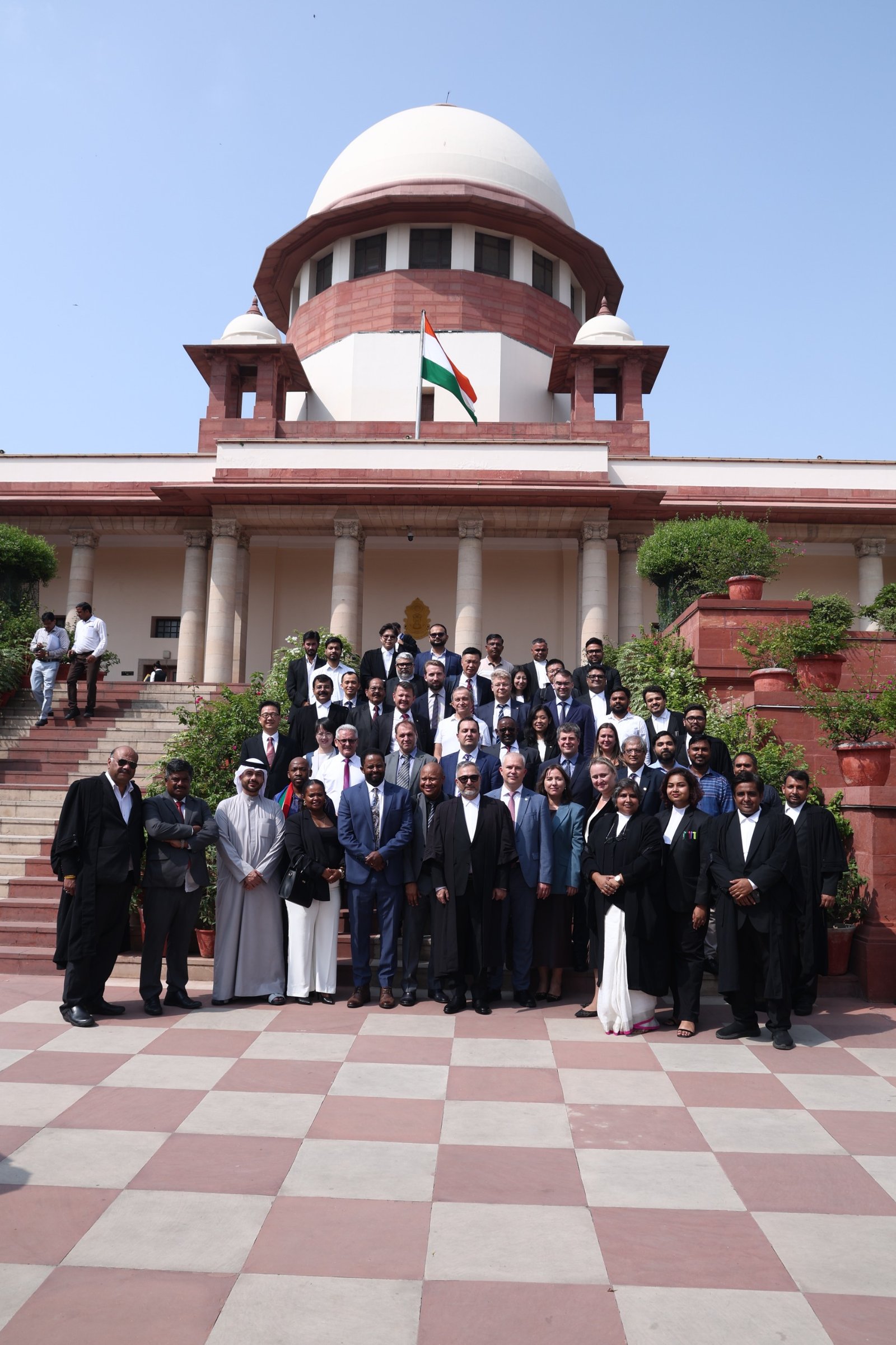
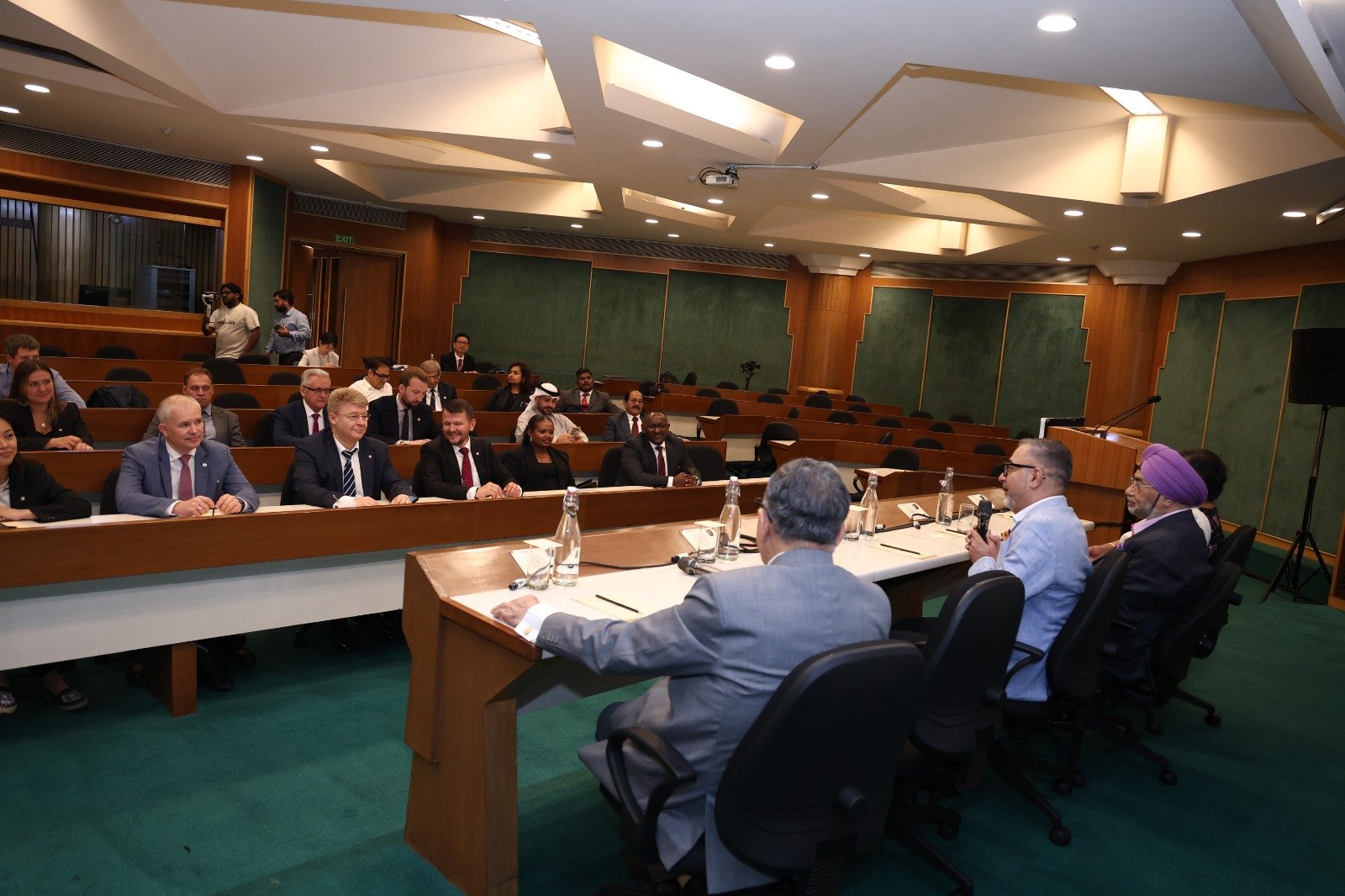
The 11th BRICS+ Legal Forum brings together legal professionals from across the participating jurisdictions to deliberate on institutional capacity building, economic resilience, arbitration, climate finance, legal education, artificial intelligence governance, digital trust and international investment law.