
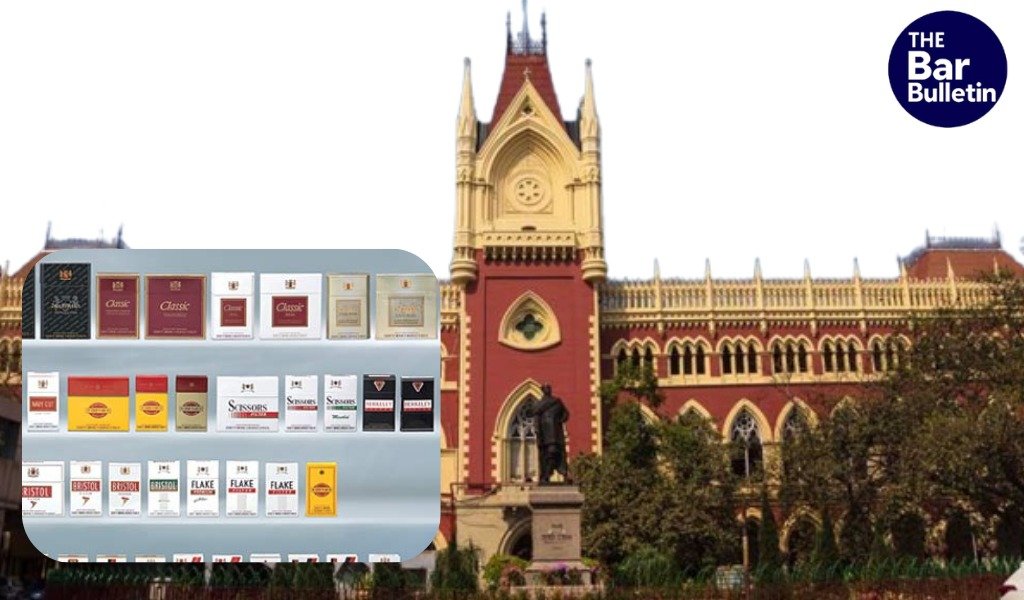

The Calcutta High Court has refused to dispense with the mandatory pre-institution mediation requirement under Section 12A of the Commercial Courts Act, 2015, in a proposed intellectual property suit filed by ITC Limited against SMM Tobacco Private Limited and others over alleged counterfeit cigarette and tobacco products. Justice Arindam Mukherjee held that the Supreme Court’s ruling in Novenco Building & Industry v. Xero Energy Engineering Solutions Pvt. Ltd, (2026) 4 SCC 815. did not justify dispensing with Section 12A formalities in the facts of the case.
ITC sought to institute a suit for infringement and passing off, while seeking dispensation of the Section 12A requirement on the ground that it contemplated urgent interim relief. The plaint alleged that ITC received information in July 2026 regarding illicit counterfeiting operations in Muzaffarpur, Bihar, allegedly involving mechanised cigarette-making and packing machinery. Following the information, ITC conducted inquiries and approached the police, resulting in an FIR and search and seizure operations on July 22, 2026.
The Court noted that Section 12A is mandatory in view of the Supreme Court’s decision in Patil Automation Pvt. Ltd. v. Rakheja Engineers Pvt. Ltd, (2022) 10 SCC 1, but that the statutory requirement can be dispensed with where, on the basis of the plaint and accompanying material, the Court is satisfied that the plaintiff genuinely contemplates urgent interim relief. The Court referred to Novenco for the test governing such urgency and Yamini Manohar v. T.K.D. Keerthi for the limited scrutiny required at the presentation stage.
Relying on Novenco, ITC argued that infringement of intellectual property rights is a continuing wrong and that continuing infringement itself creates urgency. The Supreme Court in Novenco had observed that each act of manufacture, sale or offer for sale of an infringing product constitutes a fresh wrong and that the urgency lies in the persistence of the peril rather than merely in the age of the cause of action.
The Court, however, distinguished the facts before him. The Court noted that ITC became specifically aware of the alleged infringement in July 2026 and, at that stage, had two independent remedies available: approaching the police under the relevant criminal provisions or instituting a civil action for infringement and passing off. ITC chose to lodge an FIR, which led to search and seizure, while keeping its civil remedy in abeyance.
The Court held that while a continuing cause of action remains available in intellectual property matters, that principle does not mean that a plaintiff can approach the civil court at any stage and automatically obtain dispensation from Section 12A. Such an interpretation, the Court observed, would effectively render the mandatory mediation requirement otiose in IP disputes, contrary to legislative intent.
The Court also took note of subsequent decisions of the Calcutta and Bombay High Courts which had explained the ratio in Novenco, including Goodfaith Holding (P) Ltd. v. Supreme Wood Products (P) Ltd. and High Point Supply Co. LLC v. Agati Healthcare (P) Ltd.
Holding that Novenco was not applicable to the facts of the case, the Court declined to dispense with the mandatory Section 12A formalities. Since the plaint had only been filed before the Central Filing Department and had not yet been presented and admitted, the Court directed that it be returned for completion of the pre-suit mediation formalities, along with payment of requisite court fees. The Court permitted ITC to use the same court fees for instituting the suit on the same cause of action, if required after mediation and subject to applicable law.
