
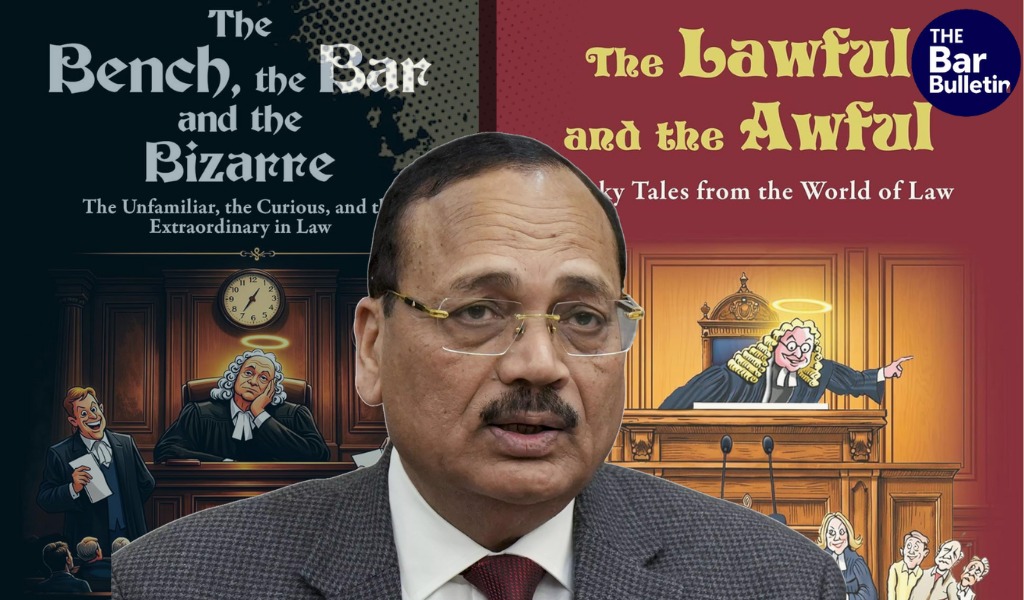

Chief Justice of India Surya Kant delivered a memorable and laughter-filled address at the launch of Solicitor General Tushar Mehta’s two books “The Bench, the Bar and the Bizarre” and “The Lawful and the Awful” at Bharat Mandapam on Saturday evening.
Blending wit, courtroom anecdotes, and reflections on the human side of law, the Chief Justice described the books as “a courtroom drama that accidentally wandered into a stand-up special.”
Praising Mehta’s ability to find humour within the solemn world of litigation, CJI Surya Kant remarked:
“Mr. Mehta has done what so few dare to attempt: he has entered the hallowed halls of the legal world armed with nothing but sharp quips and a keen eye.”
The Chief Justice jokingly wondered how the Solicitor General found time to write two books despite his demanding schedule, quipping that Mehta may have “successfully petitioned the Almighty for a 25th hour in the day.”
Throughout his address, the CJI regaled the audience with classic courtroom anecdotes involving legendary legal figures such as C.K. Daphtary, Fali Nariman, G. Ramaswamy, and Justice Hidayatullah, drawing repeated laughter from the packed auditorium.
Describing the courtroom as a place “where theatre meets law,” the Chief Justice observed that judges and lawyers together contribute to the “grand spectacle of justice,” often through dramatic exchanges, wit, and moments that become part of legal folklore.
He noted that the books go far beyond humour and reveal the deeply human side of the legal profession. According to the CJI, behind every statute, precedent, and judicial order are individuals with “their own quirks, their own flaws but also occasional bursts of comic brilliance.”
The Chief Justice also praised the depth of research behind the books, observing that Mehta had sifted through old records, trial archives, and forgotten courtroom incidents to uncover stories that “read more like sitcom scripts than somber documents.”
Reflecting on the accessibility of the books, the CJI remarked that they help readers appreciate the law by laughing at it, while making the justice system less intimidating and more relatable to the public.
In one of the evening’s most applauded moments, the Chief Justice observed:
“These books are a celebration of statutes twirling with satire, and of precedents dancing right into punchlines.”
He also humorously suggested that Mr Mehta’s next literary venture should focus on India’s own judicial system, remarking that there was “no dearth of comical tales” within Indian courts themselves. In a lighter vein, he added that perhaps omitting the Indian Bench from the current books reflected the Solicitor General’s “heightened survival instinct.”
Concluding his address, the Chief Justice lauded the books for making readers “appreciate the law more deeply by laughing at it,” while famously remarking:
“Justice may be blind, but she has an excellent sense of humour.”