
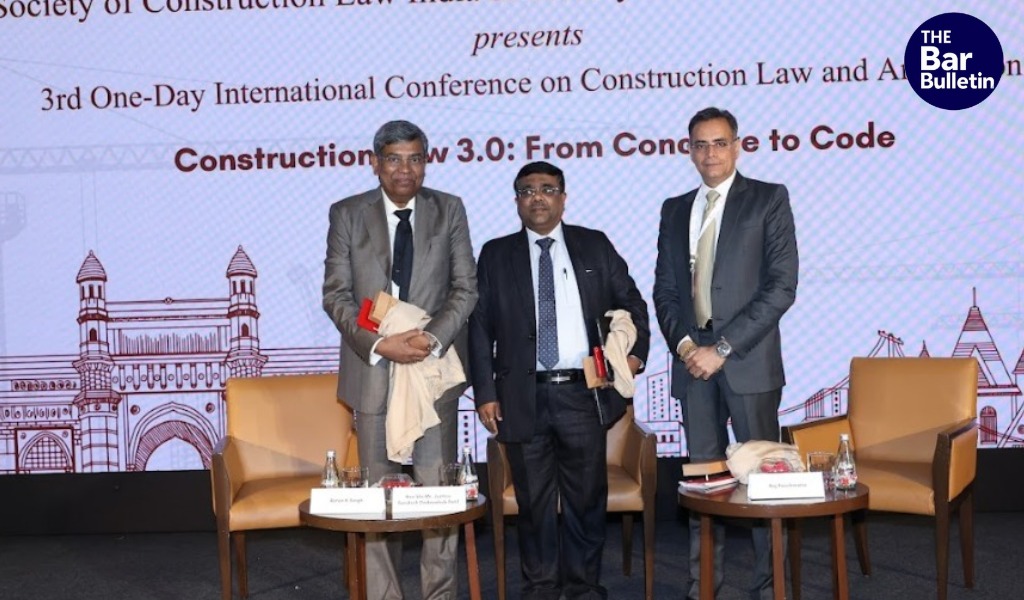

The 3rd One-Day International Conference on Construction Law and Arbitration was inaugurated on April 25, 2026, at Trident BKC, Mumbai, under the theme “Construction Law 3.0: From Concrete to Code.” The conference was organised by the Society of Construction Law India and the Society of Construction Law Mumbai.

Delivering the inaugural address, Ratan K. Singh, Senior Advocate and Founder-Chairman of the Society of Construction Law India, highlighted the urgent need to strengthen the arbitration framework in the construction sector, even as the industry continues to expand rapidly.
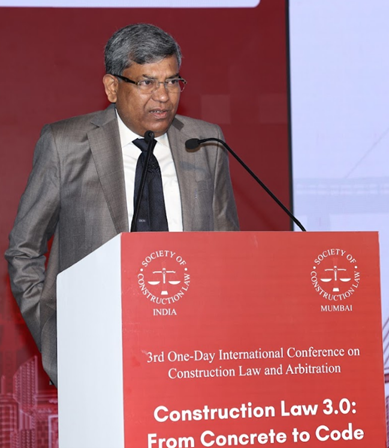 Mr Ratan K Singh noted that the objective behind such platforms is to build a more robust ecosystem for resolving construction disputes. He pointed out that concerns around the quality of arbitral decision-making and awards persist, particularly when courts are called upon to examine arbitration proceedings or enforcement issues. According to him, improving this ecosystem requires systematic training, not just of lawyers, but also arbitrators and other stakeholders involved in construction disputes.
“A problem sometimes we face and sometimes even the judiciary faces while dealing with arbitration proceedings or enforcement, is that the quality of decision-making or of awards has been a concern. The question is how to better it, and one way of doing it better is to train lawyers, train arbitrators, and train all other stakeholders.”
Addressing recent developments, Mr Singh highlighted a worrying trend of moving away from arbitration clauses in contracts. “Construction industry is really a large industry. It contributes substantially to the GDP of this country. But in the recent past, we have seen developments where organisations like NHAI have said that they will not have arbitration in their contracts. Rather than merely criticising, we must introspect and understand what went wrong in the system.”
Placing the discussion in a broader economic context, Mr Singh reiterated the significance of the construction sector as a key driver of India’s growth. Given its substantial contribution to GDP, he stressed that the effectiveness of dispute resolution mechanisms directly impacts the health of the industry.
He concluded by calling for sustained and collective efforts to improve the system, emphasising that meaningful reform would require consistency, collaboration, and a long-term commitment to strengthening institutional capacity in construction law and arbitration.
__________________________________________
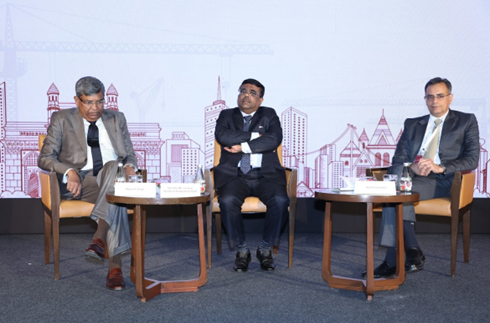
Addressing the gathering as Chief Guest, Justice Sandesh D. Patil of the Bombay High Court spoke on the rapid growth of the construction sector and highlighted that the growth of the construction sector reflects broader economic development, and with it, the evolution of legal practice.
“Achievement and progress in construction are synonymous with development. As the construction industry grows and prospers, there is naturally a corresponding rise in litigation — and that reflects the sector’s expansion and complexity. Earlier, civil practice was largely limited to land and agricultural disputes. Today, construction law has emerged as a significant and growing area, reflecting the changing needs of the economy. The construction industry in India is a major economic driver, contributing nearly 8–10% of the national GDP, and is expected to reach USD 2.13 trillion by 2030.”
He also highlighted the growing relevance of arbitration as a preferred mechanism for resolving disputes in the construction sector, noting that traditional litigation often struggles to keep pace with the scale and technical complexity of modern infrastructure projects. With large-value contracts, multiple stakeholders, and time-sensitive execution, he observed that efficient dispute resolution has become central to sustaining industry growth.
“Arbitration in the construction sector is a completely different ballgame altogether. It involves multiple stakeholders, engineers, lawyers, experts, and chartered accountants, all of whom play a crucial role in resolving disputes. Given the challenges of docket-burdened courts, the industry has increasingly turned to arbitration. While arbitration has seen a sharp rise over the years, we must also recognise that it comes with its own set of challenges and limitations, which need to be addressed.”
At the same time, Justice Patil acknowledged existing concerns within the system, including issues of efficiency and quality, and highlighted ongoing efforts to strengthen arbitration law, adding that there have been continuous legislative and judicial efforts to improve the arbitration framework in India.
He also ighlighted he multidisciplinary nature of construction disputes, noting that effective resolution requires coordination between legal professionals, engineers and technical experts. He concluded by stressing that as India’s infrastructure footprint expands, the legal system must evolve in parallel to ensure timely and effective dispute resolution.
____________________________________________________
Delivering the closing address, Raj Panchmatia, Senior Vice-Chair of the Society of Construction Law, Mumbai, and Partner, Khaitan & Co. placed construction law within the broader transformation of infrastructure and technology, noting that the field has evolved far beyond traditional concerns of contracts and delays.
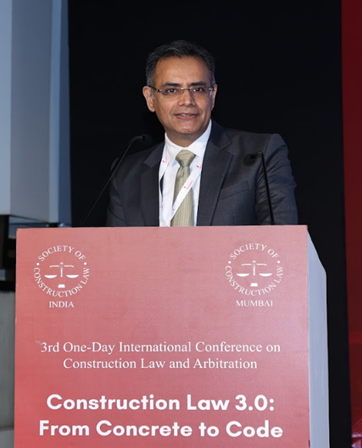 He observed that modern construction disputes are embedded in a far more complex ecosystem, shaped by digital tools, data-driven project management, ESG obligations, and intricate financing structures. According to him, the legal profession is still adapting to this transition, as the industry itself moves “from the age of the drawing boards to the dashboard.”
Panchmatia highlighted Mumbai as a fitting backdrop for this discussion, pointing to the scale of infrastructure development underway from metro expansions and coastal road projects to high-speed rail and freight corridors. He linked this surge in infrastructure investment to an inevitable rise in disputes, stressing that such disputes carry consequences far beyond contractual disagreements.
He emphasised that infrastructure disputes affect a wide range of stakeholders, including lenders, subcontractors, consultants, government bodies, and ultimately the public. Unlike ordinary commercial disputes, he noted, delays in infrastructure projects impact not just finances but also mobility, public convenience, and economic productivity.
“In ordinary commercial disputes, time is money. In infrastructure disputes, time is also mobility, public convenience, investment confidence and economic productivity.”
He further underlined that resolving such disputes requires interdisciplinary understanding, combining legal expertise with technical knowledge of engineering, planning, delay analysis, and project finance. The future of dispute resolution in this sector, he said, depends on how effectively different professionals learn to work together.
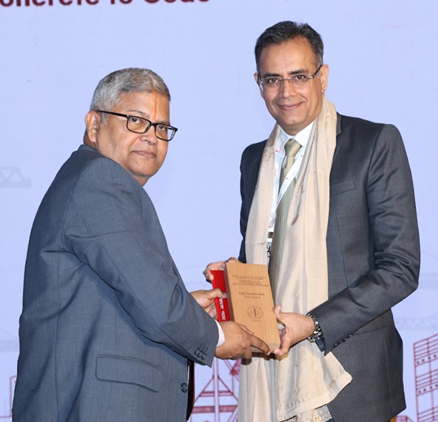
Panchmatia also stressed the role of institutional platforms like the Society of Construction Law in bridging gaps between stakeholders. Conferences such as this, he noted, serve as crucial spaces for collaboration, early engagement, and knowledge-sharing before disputes escalate.
“The challenge is not merely to build more infrastructure; the challenge is to build better contracts, better documentation, better contract administration, better risk allocation and better dispute resolution capacities.”
Concluding his address, he called for greater integration between law and engineering disciplines, emphasising that effective dispute resolution in construction cannot be achieved in isolation, but requires a coordinated and informed approach across sectors.