
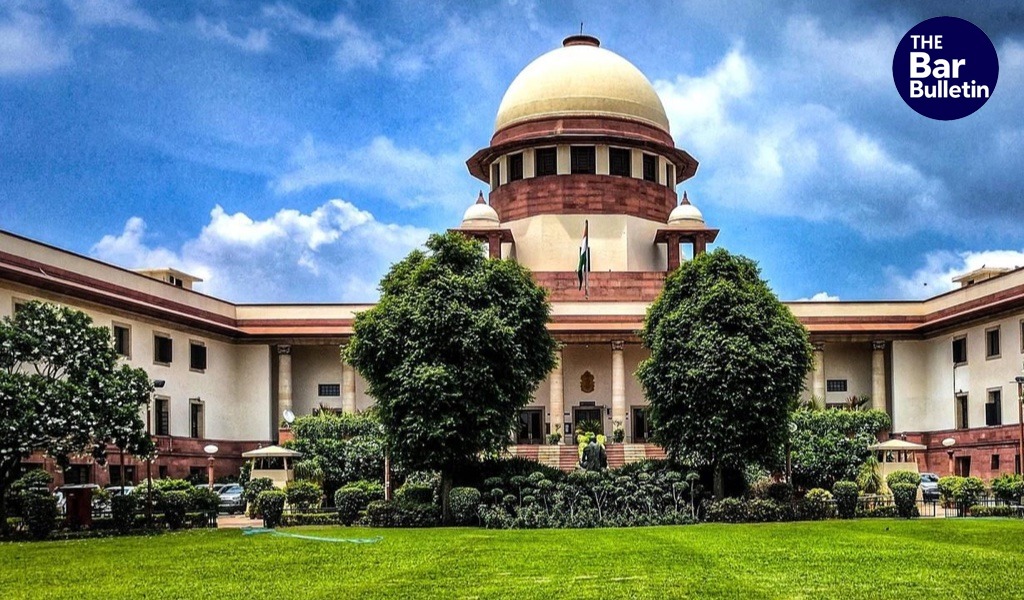

The Supreme Court has clarified that for the purpose of maintainability of petitions under Sections 397 and 398 of the Companies Act, 1956, against oppression and mismanagement, the expression “member” is not to be construed in an unduly restrictive or purely technical sense confined only to formal entry in the register of members under Section 41(2). The Court held that in the context of the equitable jurisdiction under Sections 397 and 398, read with Section 399, a person may be treated as a member where the cumulative factual circumstances demonstrate a clear, recognized proprietary interest in the company and the person has, in substance, been treated by the company as having shareholder status, notwithstanding absence of formal entry in the register at the relevant time.
Accordingly, the Apex Court dismissed the appeals, upheld the finding that respondent no. 1 was entitled to be treated as a member for purposes of Sections 397 and 398, and directed release of the amount deposited before the Court with accrued interest in favour of respondent no. 1.
A Two-Judge Bench of Justice Pamidighantam Sri Narasimha and Justice Alok Aradhe observed that the statutory scheme draws a distinction between the inclusive definition of “member” under Section 2(27) and the provisions in Section 41 dealing with acquisition of membership. Section 41 prescribes recognized modes by which membership may arise, but the requirement of written agreement and entry in the register was not treated as the sole or exclusive mode in the context of proceedings under Sections 397 and 398.
The Bench emphasized that jurisdiction under Sections 397 and 398 is equitable in character, and therefore maintainability must be examined with reference to Section 399 and the remedial purpose of the provisions, rather than by a purely mechanical application of Section 41(2). It rejected an unduly restrictive or technical construction of the term “member” that would defeat substantive rights.
The Bench approved the approach that, for Sections 397 and 398, the word “member” cannot be construed in isolation or rigidly confined to the technical requirements of Section 41(2), and that the broader definitional framework in Section 2(27) assumes significance. On facts, the Bench found that the High Court was justified in relying on a cumulative factual chain showing recognition of respondent no. 1’s proprietary interest: contemporaneous correspondence describing him as “co-owner,” conciliation materials acknowledging his entitlement to substantial shareholding, his appointment as Managing Director, rebranding of the hospital with reference to his trading concern, and the company’s acceptance and utilisation of his investment for its business operations.
The Bench therefore found no reason to differ from the High Court and the Company Law Board (CLB) in treating respondent no. 1 as a member for the purpose of maintaining proceedings under Sections 397 and 398 of the Companies Act.
Briefly, dispute arose from two appeals against High Court judgments affirming orders of the Company Law Board. The central issue was whether respondent no. 1 could be treated as a “member” of the company for maintaining petitions under Sections 397 and 398 of the Companies Act, 1956, despite the absence of a formal entry of his name in the register of members at the relevant time.
The Appellant no. 1 was incorporated on Nov 14, 1994, and Appellants nos. 3 and 4 were its shareholders and directors. The hospital established by appellant no. 2 and his wife ran into financial difficulty, whereupon respondent no. 1 proposed infusion of funds on the condition that he be appointed Managing Director and that the hospital be converted into a specialized cardiac facility. He was thereafter appointed Managing Director with effect from Jan 01, 1998 for five years, and the hospital was converted into a heart institute.
The respondent’s case, disputed by the appellants, was that at a Board meeting held on July 15, 1999, 14,75,998 shares were allotted to him against share application money paid by him to the company. Later disputes arose, leading to his suspension, followed by conciliation proceedings between May 27, 2000 and May 29, 2000, after which his suspension was withdrawn and he withdrew from day-to-day affairs of the company.
In January 2001, respondent no. 1 filed the first company petition under Sections 397 and 398 alleging oppression and mismanagement, principally complaining that despite receipt of share application money, the appellants had failed to issue share certificates. The appellants objected to maintainability under Section 399 on the basis that he was not a “member”. During the pendency of that petition, respondent no. 1 also withdrew his offer to acquire shares owing to delay and filed civil suits for recovery of share application money with interest and other amounts allegedly spent by him.
By order dated Dec 02, 2004, the CLB allowed the first petition, treated respondent no. 1 as a member, and directed the company either to allot shares corresponding to his investment or refund the investment with interest.
In the second tranche, the Board allotted 14,75,998 shares to respondent no. 1 and also allotted shares to certain appellants against prior investments. On the same day, appellant no. 2 was allotted 60,00,000 shares for transfer of land and building, which transfer was a pre-condition to enter into a Management Agreement with Wockhardt Hospitals Ltd. Respondent no. 1 challenged the allotment of 60,00,000 shares as oppressive and dilutive, alleging that his shareholding would stand reduced from 49% to 15%. During the proceedings, the company nevertheless entered into the Management Agreement with Wockhardt on Mar 02, 2005.
Later, by order dated Mar 14, 2008, the CLB held that the allotment of 60,00,000 shares to appellant no. 2 was oppressive and intended to deprive respondent no. 1 of the benefit of the earlier order. It also found the manner of entering into the Wockhardt Management Agreement improper, and directed purchase of respondent no. 1’s shares with 6% interest. The High Court observed inter alia that failure to issue share certificates indicated an intention to keep respondent no. 1 out of effective participation in the company.
Appearances:
Shyam Mehta, Sr. Adv., Gagan Sanghi, Adv., Farah Hashmi, Adv., Varad Kilor, Adv., and Rameshwar Prasad Goyal, AOR, for the Appellant
Shailesh Madiyal, Sr. Adv., Haripriya Padmanabhan, Sr. Adv., Utsav Trivedi, Adv., Mugdha Pande, Adv., Vikash Shukla, Adv., Anchit Singla, Adv., Vineeth Prasad, Adv., Madhav, Adv., Kadam Hans, Adv., Harsh, Adv., Ayushman Agarwal, Adv., Anushka Rawal, Adv., Prina Gupta, Adv., Shiv Vinayak Gupta, Adv., Himani Singh, Adv., Bina Gupta, AOR, Deepak Sabharwal, Adv., Tungesh, AOR, Anurya Sabharwal, Adv., and Snigdha Jha, Adv, for the Respondent
