
The Delhi High Court strikes down an arbitral award where claims for idling of resources, additional overheads, material at site and loss of profit were allowed without evidence, and reliance was placed on conciliation proceedings to decide the arbitration. The Court said that where a tribunal records concessions or admissions during conciliation and later uses them to decide the arbitration, the award is patently illegal. Reference was made to the Apex Court’s decision in Moti Ram v. Ashok Kumar, (2011) 1 SCC 466, wherein it was emphasised that the element of confidentiality is essential to mediation and conciliation, and statements made therein cannot be used against the maker if settlement fails.
The High Court held that the twin conditions of breach and consequential actual loss or damage is mandatory. The expertise of the arbitrator cannot substitute the claimant’s onus to prove actual loss, and the quantification based on personal experience, trade usage, or CPWD circulars without evidence is patently illegal. Following the Supreme Court ruling in Unibros v. All India Radio, 2023 SCC OnLine SC 1366, the Court reiterated that a party claiming loss of profit must establish delay, non-attribution of delay, status as an established contractor, and credible evidence of loss. The formula is only an estimating tool and cannot dispense with evidentiary requirements.
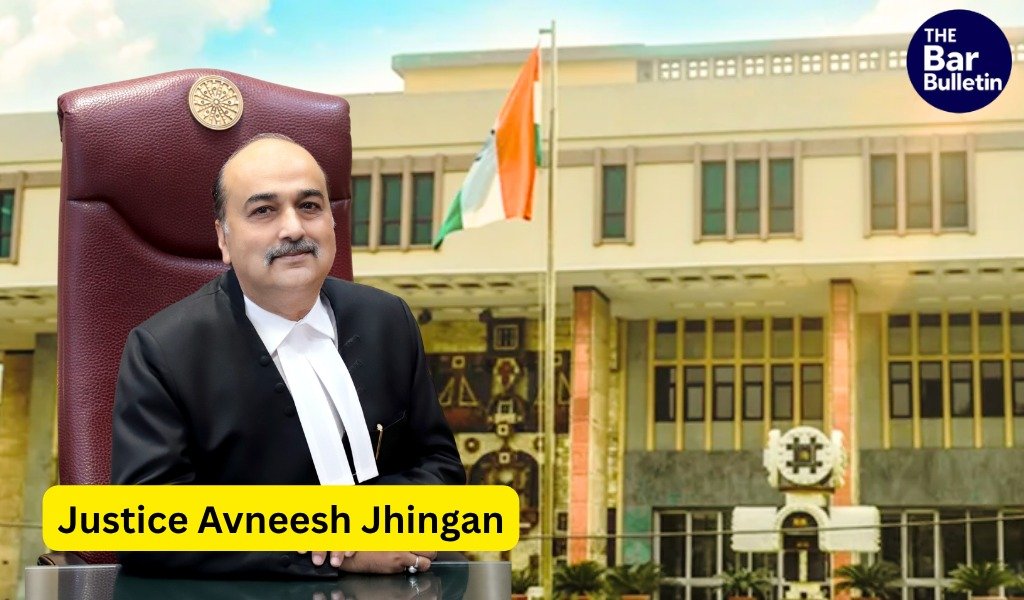
A Single Judge Bench of Justice Avneesh Jhingan observed that the arbitral tribunal held the petitioner responsible for delay and breach of contractual obligations, and that no corresponding breach on the part of the respondent was established. The tribunal further held that the MOU was binding upon the parties but did not constitute novation of the original contract. The tribunal partly allowed the claims relating to work executed, WCT, idling/under-utilisation of machinery, additional overhead, material lying at site and loss of profit/profitability, and rejected the claims towards escalation and other heads, while rejecting all the counterclaims of the petitioner.
The Court noted that the proceedings recorded during the conciliation were relied upon while adjudicating the claims in arbitration, which was impermissible as the proceedings during conciliation cannot be considered and relied upon in case the arbitration of dispute is necessitated. The Court further observed that document C-77 relied upon by the respondent to substantiate the quantum of work was a self-serving document, and there was no discussion in the award of the evidence establishing that the Krishi Kalyan Cess was leviable at the relevant time. The Court noted that the MOU recorded an amount of Rs. 11.82 crores as having been paid to the respondent, but this amount was subject to reconciliation, which the tribunal failed to address.
The Court observed that the tribunal relied upon personal experience in the field of construction and CPWD circulars MAN-150 and 169 for quantifying overhead expenses at 7.5% of the contract value, without producing evidence of additional overhead expenditure incurred due to breach of contract. The Court further noted that the CPWD circulars relied upon by the tribunal were not confronted to the petitioner, which was in violation of Section 24(3) of the Arbitration and Conciliation Act.
Also read After Taking ₹31.65 Lakhs on a ₹2.8 Lakh Loan, Assam Financial Corporation Cannot Hold Property Papers: Gauhati HC
Briefly, the dispute arose out of a construction contract for the development of ‘Sikka Kamya Greens, Sector-10, Greater Noida’, awarded to Vikartan Infrastructure Pvt Ltd (the respondent) by Eco Green Buildtech Pvt Ltd (the petitioner) vide letter of acceptance dated April 09, 2016, for a contract value of Rs. 53.73 crores with a stipulated completion period of thirty-four months i.e. up to Dec 08, 2019. During execution, disputes arose regarding delay, release of payments, and prolongation of the contract, leading to a Memorandum of Understanding (MOU) dated Sep 27, 2018, between the parties. The respondent alleged that the petitioner failed to comply with its obligations under the MOU, while the petitioner relied on the MOU for having settled the accounts and claims.
Arbitration was invoked by the respondent on July 13, 2020, and a sole arbitrator was appointed with the consent of the parties. During the arbitral proceedings, an independent engineer was appointed as the Local Commissioner (LC) to measure the work executed at site, who inspected the site and submitted the report. Before the tribunal, the respondent raised twelve claims aggregating to Rs. 15.07 crores apart from interest, while the petitioner preferred thirteen counterclaims aggregating to Rs. 4.02 crores apart from interest and costs. The tribunal passed the award dated Feb 28, 2023, and an additional award correcting a computational error in claim no.6 from Rs. 2.04 crores to Rs. 2.84 crores.
