
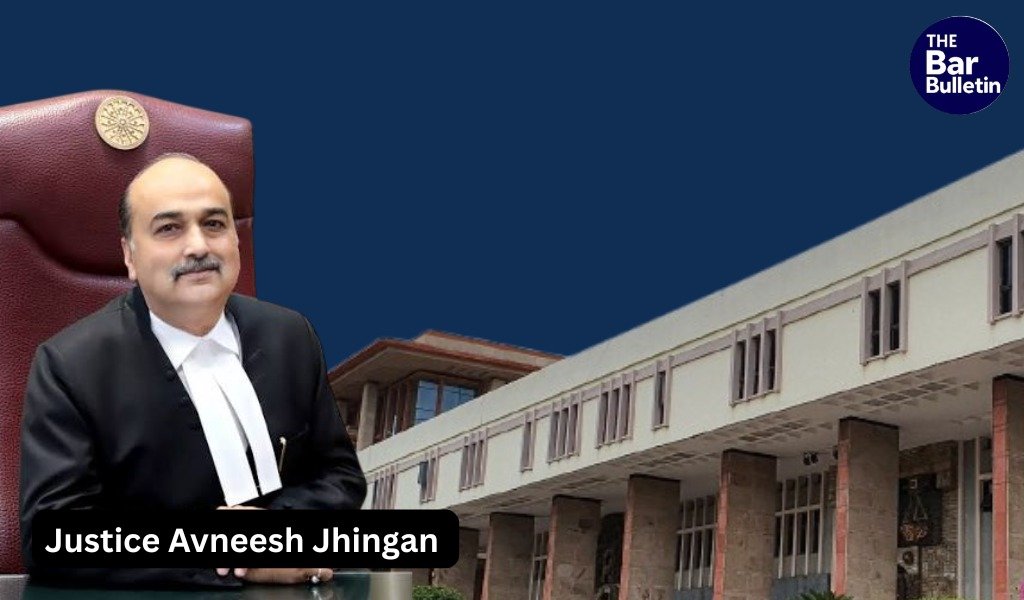

In a petition filed before the Delhi High Court under Section 34 of the Arbitration and Conciliation Act, 1996 (A&C Act) against an arbitral award dated 22.11.2022, wherein the issue was whether the appointment of the sole arbitrator was unilateral and in violation of amended Section 12(5) of the Act, a Single Judge Bench of Justice Avneesh Jhingan held that in the absence of compliance of proviso to Section 12(5) of the Act, the arbitrator’s appointment was void ab initio, which rendered the impugned award to be null.
The Government of NCT of Delhi issued a Notice Inviting Tender (NIT) for construction of a residential complex for Judicial Staff Quarters at Sector-19, Dwarka, New Delhi. The petitioner was the successful bidder and was issued a Letter of Acceptance (LOA) dated 24.09.2014, following which the parties executed a contract. Thereafter, disputes arose between the parties regarding the amount due, delay and implementation of the contract. Clause 25 of the General Conditions of Contract (GCC) provided that disputes would be referred for adjudication through arbitration by a sole arbitrator appointed by the Chief Engineer, CPWD, in charge of the work.
Arbitration was invoked by the petitioner by notice dated 28.12.2018, and the arbitrator was appointed by the respondent on 08.01.2019. The proceedings culminated in the impugned award, which was challenged by both parties through petitions under Section 34 of the Act. the petitioner contended that there was an express waiver by the parties and that the rigours of Section 12(5) of the Act were not applicable.
The respondent raised a preliminary objection that the appointment of the arbitrator was void ab initio, being violative of Section 12(5) of the Act, and consequently that the award was a nullity. In rebuttal to the petitioner’s waiver argument, the respondent contended that there was no express waiver in writing by either party, and that appointment of an arbitrator or mere participation in the arbitration proceedings could not be construed as a waiver under the proviso to Section 12(5) of the Act.
The Court referred to Bhadra International (India) Pvt. Ltd. & Ors. v. Airports Authority of India, 2026 INSC 6, as well as a Division Bench decision in Mahavir Prasad Gupta and Sons v. Govt. of NCT of Delhi, 2025 SCC OnLine Del 4241, and stated that after the amendment of Section 12(5) of the Act, an employee of a party in dispute could neither be appointed arbitrator nor could nominate or appoint any other person as an arbitrator. It was said that the uni9lateral appointment in absence of an express agreement in writing between the parties to waive applicability of Section 12(5) was void ab initio. Further, the Court stated that the filing of the statement of claim or participation in the arbitral proceedings could not be construed as waiver under the proviso to Section 12(5). It was also stated that the unilateral appointment of the arbitrator could be objected to for the first time under Section 34.
The Court held that in light of Bhadra International (supra) and Mahavir Prasad Gupta (supra), that the appointment of the arbitrator was in violation of amended Section 12(5). It was then examined whether, after the dispute arose, there was an express waiver in writing by the parties dispensing with Section 12(5). It was noted that in the notice served by the petitioner under Section 21 of the Act, a specific objection had been raised against appointment of an employee of the respondent as arbitrator, and no express waiver of Section 12(5) was given.
Citing Bhadra International (supra), the Court reiterated that waiver involved a conscious decision to abandon an existing legal right, made only by a person fully aware of that right, that a legal right could not be taken away by implication, and that the legislature’s deliberate use of “express agreement” and “in writing” denoted that waiver must be through an express and written manifestation of intention, not inferred from absence of a prescribed format. The Court asserted that the express consent in writing under the proviso to Section 12(5) had to be of both parties, and it was not the petitioner’s case that the respondent had consented to waive applicability of Section 12(5).
Referring to Mahavir Prasad Gupta and Sons (supra), the Court held that an appointment of an ineligible person as an arbitrator is void ab initio and that it can be challenged by the party making such appointment. Hence, the Court concluded that, in the absence of compliance with the proviso to Section 12(5) by the parties, the appointment of the arbitrator by the respondent was in violation of Section 12(5) read with the Seventh Schedule of the Act, rendering the appointment void ab initio and the impugned award a nullity.
