
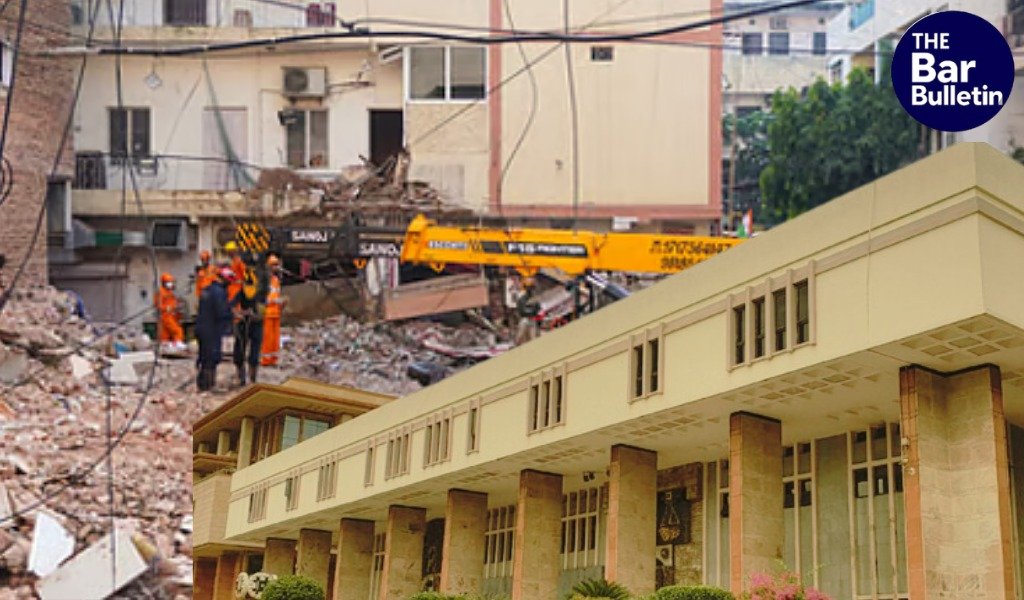

The Delhi High Court, comprising Justice Devendra Kumar Upadhyay and Justice Tejas Karia, has sought a clearer, time-bound mechanism from the authorities for regulating paying guest (PG) accommodations and addressing structural and safety concerns in such premises.
During the hearing, the Court questioned the Municipal Corporation of Delhi (MCD) on the statutory framework governing PG structures and sought details of the action being taken against unauthorised construction and use of residential properties as PG accommodations.
As per the MCD’s status report, 2,453 PG buildings were identified across its 12 zones, accommodating approximately 50,529 occupants. Of these, building plans could be traced or verified as sanctioned in respect of only 730 buildings. The survey found 2,342 buildings to be visibly safe, 91 requiring minor repairs, 30 requiring major repairs and four in dangerous condition.
The Court also questioned the authorities on the large number of buildings for which sanctioned building plans were not available or could not be traced, and sought clarity on the steps being taken to verify their legality and compliance with applicable building norms.
The MCD informed the Court that it had intensified action against unauthorised constructions and PG premises. Between September 6 and September 23, 2026, it reported 543 demolitions, 178 sealing actions, 354 show-cause notices for unauthorised construction, 205 sealing show-cause notices and 205 demolition orders.
The Court emphasised that merely placing figures before it would not be sufficient and that each recommendation or decision should identify the responsible authority or officer and a definite timeline for implementation.
The matter was also placed in the context of the broader concerns arising from incidents involving unsafe accommodation and coaching centres in Delhi. The Court, however, clarified that issues concerning PG accommodations and other matters tagged with the proceedings should be dealt with separately and not conflated.
The Court directed the authorities to file a better and more comprehensive response setting out the measures proposed, and indicated that the matter would be taken up again after the High-Powered Committee constituted by the State Government meets and its recommendations are placed before the Court.