
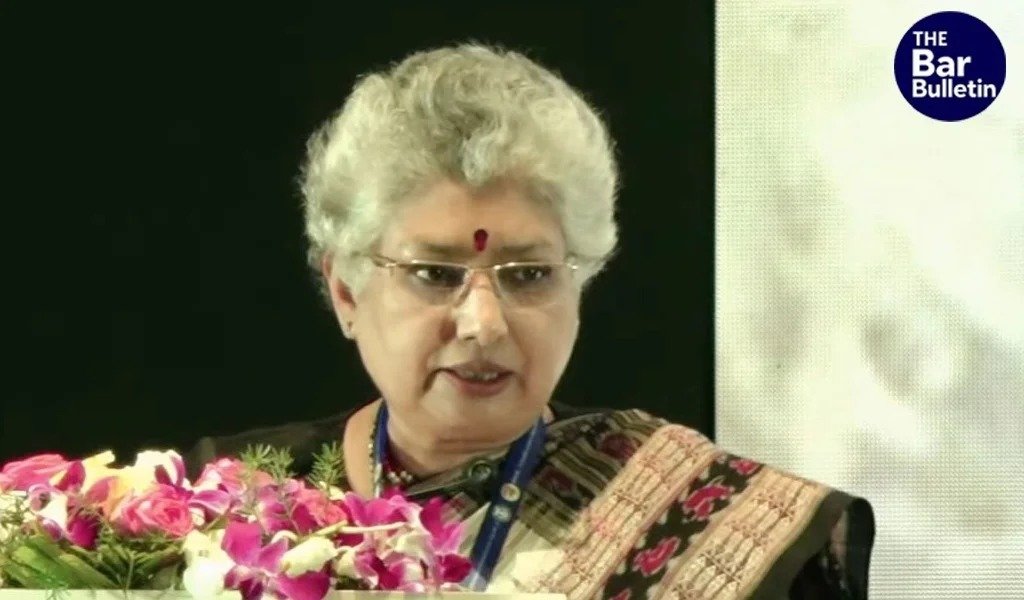

Supreme Court Judge Justice B.V. Nagarathna has called for stronger institutions, greater accountability and more effective rehabilitation measures under the Juvenile Justice (Care and Protection of Children) Act, 2015, highlighting persistent gaps in implementation as the legislation completes ten years.
Speaking at the inaugural session of the National Annual Stakeholders Consultation on “Ten Years of the Juvenile Justice (Care and Protection of Children) Act, 2015: Progress, Challenges and Priorities for the Next Decade” at the Supreme Court on October 10, Justice Nagarathna emphasised that the law must preserve the possibility of growth, reform and reintegration for children in conflict with law.
Addressing the question of treating a child in conflict with law as an adult, she described it as one of the most delicate fault lines in the criminal justice system, where public anxiety over crime must be balanced against constitutional commitments to childhood and the philosophy of reform.
Justice Nagarathna explained that the 2015 Act classifies offences as petty, serious and heinous, while retaining rehabilitation, social reintegration, family-based care and the best interests of the child as central objectives. She stressed that a Juvenile Justice Board is not intended to function as a miniature criminal court, but must approach children with an understanding of their capacity for development and change.
She also highlighted the need for careful and consistent preliminary assessments under Section 15 of the Act, which concerns a child’s mental and physical capacity, and emphasised that institutionalisation should remain a measure of last resort for children in need of care and protection. Family restoration, foster care, sponsorship and adoption should be prioritised wherever consistent with the child’s best interests.
Pointing to implementation challenges, Justice Nagarathna raised questions concerning vacancies in Juvenile Justice Boards, the functioning of Child Welfare Committees, access to meaningful legal aid, delays in social investigation reports, the quality of individual care plans, and access to the justice system for children with disabilities.
Citing the India Justice Report published in November 2025, she noted that data relating to the year ending October 2023 showed that 55% of cases before Juvenile Justice Boards across 18 States and two Union Territories were pending. More than 55,000 children were awaiting decisions, while 111 of 470 responding Boards were functioning without their full complement of a principal magistrate and two social-worker members.
She cautioned that disposal of a case does not necessarily mean that a child has been rehabilitated, underscoring the need to examine whether children receive education, counselling, medical care and legal assistance while proceedings are pending, and whether their individual care plans are implemented.
Calling for coordinated action by the judiciary, police, executive, legal services institutions, social workers, civil society organisations and families, Justice Nagarathna said the next decade must focus on better data, stronger institutions, timely and child-sensitive adjudication, and improved outcomes under the Act.
“When a child breaks the law, the law must not break the child,” she said, stressing that children must be treated as individuals whose circumstances demand an appropriate response, rather than as files, placements or statistics.