
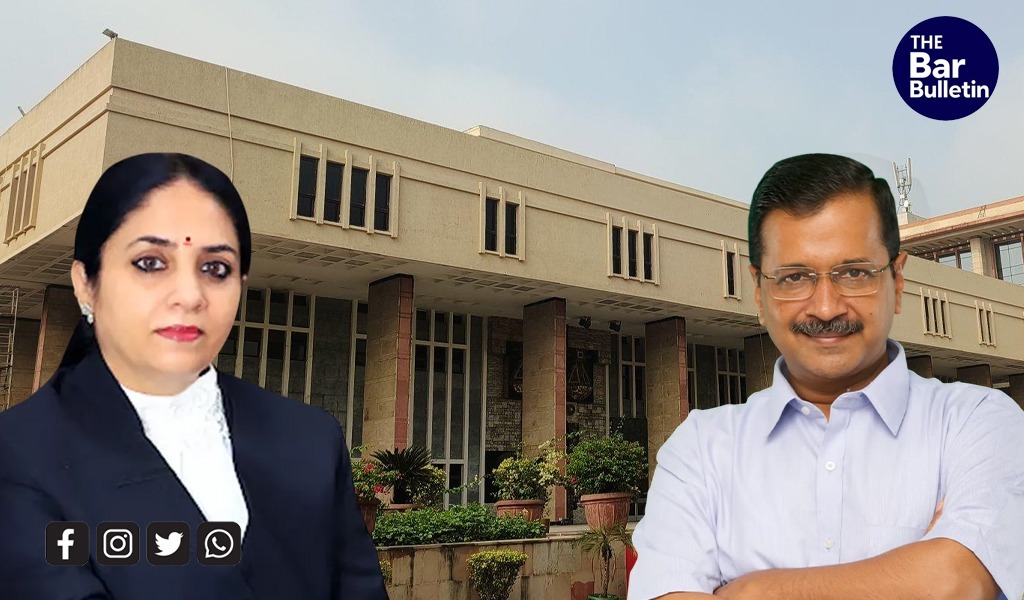

Justice Swarana Kanta Sharma initiated criminal contempt proceedings against former Delhi Chief Minister Arvind Kejriwal and several others over what she described as a concerted campaign to scandalise the court and undermine public faith in the judiciary, while simultaneously directing that the main case be placed before the Chief Justice for assignment to another bench.
In a strongly worded order dictated in open court, Justice Sharma held that the material placed before her prima facie disclosed criminal contempt under the Contempt of Courts Act, observing that statements and social media campaigns targeting the court appeared aimed at intimidating the independent exercise of judicial functions.
“Judicial silence is mistaken as weakness by those who are not familiar with constitutional discipline,” she remarked, while emphasising that courts are not seeking immunity from criticism, but cannot permit organised attempts to erode the justice delivery system.
The contempt proceedings stem from public statements, letters, videos and social media posts made after Justice Sharma rejected Kejriwal’s recusal plea in a pending matter. The Court noted that instead of challenging the recusal order before the Supreme Court, Kejriwal allegedly chose to issue a public letter and video asserting that he could not expect justice from the Court in matters involving the Union Government or BJP, while declaring he would neither personally appear nor participate through counsel.
Justice Sharma held that such statements were not bona fide criticism of judicial orders but amounted to direct allegations of political influence and lack of judicial independence, intended to create public distrust in the institution.
The Court also took exception to statements by AAP leaders and spokespersons who allegedly amplified similar claims, including assertions that the Court was ideologically aligned with a political organisation.
A substantial part of the order addressed circulation of an allegedly edited video clip from Justice Sharma’s academic lecture in Varanasi, which was presented online as footage from an event linked to a political organisation. The judge said the clip had been selectively edited to falsely portray political affiliation, despite subsequent fact-checks debunking the claim.
Significantly, Solicitor General Tushar Mehta, appearing during the proceedings, urged Justice Sharma to continue hearing the main case, cautioning that transferring the matter could embolden litigants to adopt such tactics as a means of getting rid of an ‘inconvenient judge’.
However, Justice Sharma declined to continue with the substantive proceedings, observing that while the recusal plea had already been rejected and had not succeeded, judicial propriety required that the main matter be heard by another bench once contempt proceedings had been initiated over acts directly targeting the court.
She clarified that this was not an acceptance of the recusal demand, but a separate consequence of the contempt issue. She noted that while any other bench could hear the main case, the acts directed against the court and the institution of judiciary required action by the court concerned.
The matter will now be placed before the Chief Justice for assignment of the main case to a different bench, while the criminal contempt proceedings will continue separately.