
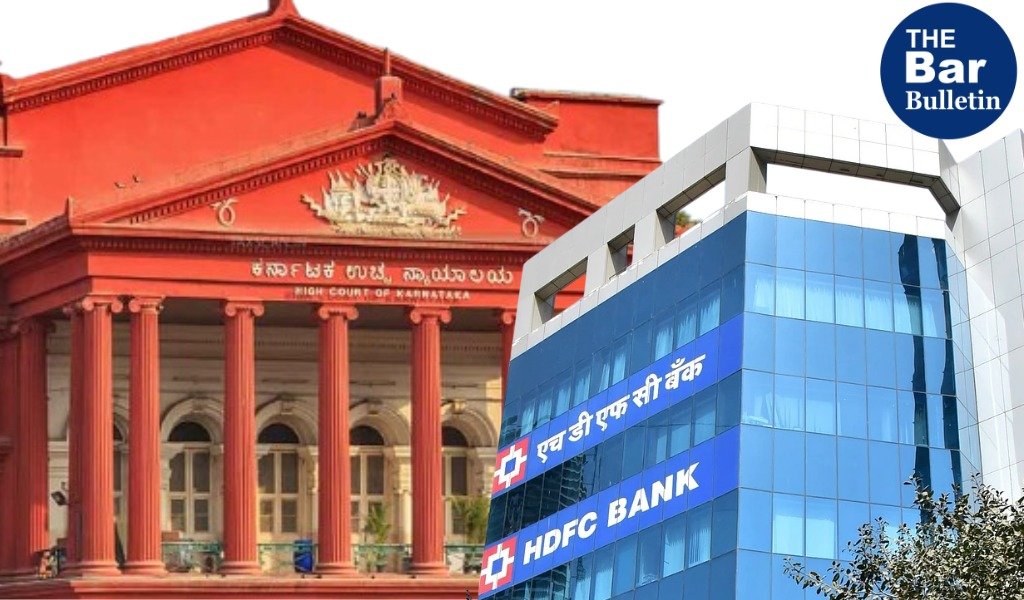

The Karnataka High Court (Bengaluru Bench) has clarified that scrutiny of property documents and sanction of a housing loan do not, by themselves, certify the seller’s title for the purchaser’s benefit. Essentially, a bank’s scrutiny cannot substitute the purchaser’s independent legal verification, unless there is an agreement to the contrary.
No material showed that HDFC Bank had agreed to guarantee title or independently represented that the property was free from encumbrances. The Court expressly distinguished a situation involving such an agreement.
The complaint disclosed no specific dishonest inducement by HDFC Bank or material showing its knowing participation in an arrangement to deceive the purchaser. Loan sanction alone could not establish dishonest or common intention under Section 420 read with Section 34 IPC. Accordingly, the Court quashed the criminal proceedings only against the Bank
Briefly, Latha Jacob purchased a Bengaluru flat after obtaining a housing loan from HDFC Bank. The seller had earlier taken a loan from SBI against the same property. Although SBI was stated to have executed a discharge deed, it allegedly initiated SARFAESI recovery proceedings after the sale, claiming that a loan remained outstanding.
The purchaser alleged that HDFC Bank’s legal scrutiny and loan approval had led her to believe that the title was clear, and that its failure to properly verify the title caused her loss. HDFC Bank sought quashing of the criminal proceedings alleging cheating under Section 420 read with Section 34 of the IPC.
A Single Judge Bench of Justice Suraj Govindaraj observed that a purchaser is expected to independently verify the seller’s title. However, the principle of “buyer beware” does not, by itself, decide another person’s criminal liability. A bank ordinarily scrutinises title documents to assess its proposed security and protect its own financial interest.
Such scrutiny and loan sanction do not automatically amount to a title certificate or assurance to the purchaser, unless otherwise agreed. Here, there was no material showing that HDFC Bank had undertaken to guarantee the title, or independently represented that it was free from encumbrances, added the Bench.
The Court held that sanctioning a housing loan after examining property documents cannot, without further material, establish the dishonest intention or common intention necessary for cheating under Section 420 read with Section 34 of the IPC.
The complaint disclosed no specific act of fraudulent or dishonest inducement by HDFC Bank, nor material showing that it knowingly joined any arrangement with the seller or SBI to deceive the purchaser. Hence, criminal proceedings against the Bank could therefore not be sustained merely because it had scrutinised the documents and sanctioned the loan.
