
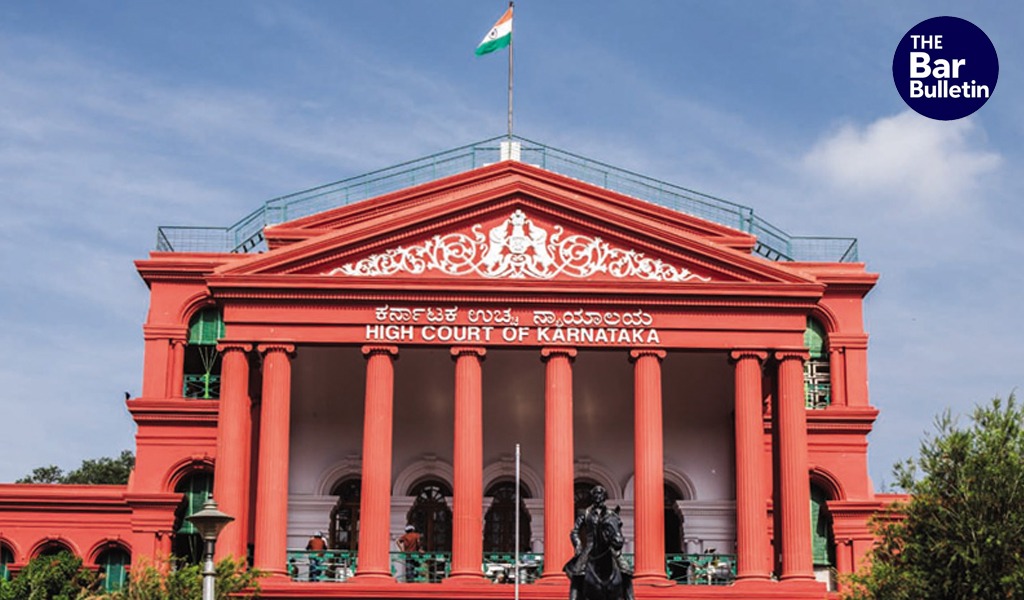
The Karnataka High Court has set aside an order directing a husband to pay ₹20,000 per month as interim maintenance to his wife under the Protection of Women from Domestic Violence Act, holding that the trial court failed to consider that the wife was earning substantially more than the husband and was financially capable of maintaining herself.
Justice Dr. Chillakur Sumalatha allowed the husband’s writ petition challenging an order passed by the Judicial Magistrate First Class (III Court), Mysuru, in proceedings initiated under the Protection of Women from Domestic Violence Act, 2005. The wife had sought, among other reliefs, interim maintenance of ₹1,13,515 per month and litigation expenses of ₹50,000. The trial court, while rejecting the quantum sought, had directed the husband to pay ₹20,000 per month as interim maintenance.
Before the High Court, the husband contended that he was employed with Genpact India Private Limited and earned around ₹57,000–₹60,000 per month, whereas the wife was drawing more than ₹1 lakh per month, with her TDS records reflecting a monthly salary of ₹1,64,285. He argued that despite this admitted position, the trial court had awarded interim maintenance without considering the wife’s independent income.
The wife, while admitting that she earned around ₹1 lakh per month, submitted that she had borrowed money for the marriage and was repaying those loans. However, the High Court noted that she had produced no documentary material showing the details of the loans, outstanding liability or EMIs, nor had she disclosed such liabilities in her affidavit of assets and liabilities.
The Court observed that although the trial court had discussed the husband’s earnings in detail, it had completely ignored the wife’s admitted income while determining her entitlement to interim maintenance. The High Court emphasised that courts cannot mechanically grant maintenance merely because a wife has invoked the provisions of the Domestic Violence Act or other maintenance statutes. Where the wife is financially independent, earns more than the husband, and has no demonstrated financial inability to maintain herself, maintenance cannot be awarded solely on the premise that a husband is bound to maintain his wife.
Holding that the wife was financially capable of maintaining herself with her admitted income and that the husband could not be directed to pay ₹20,000 per month out of his comparatively lower salary, the High Court set aside the Magistrate’s order. It clarified, however, that its observations were confined to examining the legality of the interim maintenance order and would not prejudice the final adjudication of the domestic violence proceedings or any future application for maintenance if circumstances were to change.
