
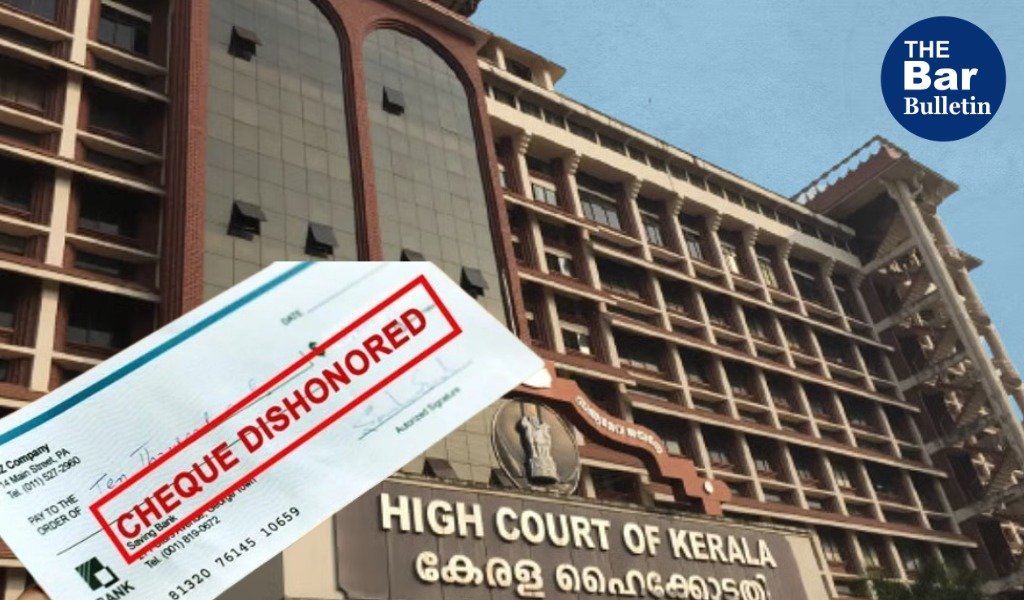

The Kerala High Court (Ernakulam Bench) has held that mere production of a dishonoured cheque is insufficient under Section 138 NI Act when the complainant fails to establish the chitty liability through account statements and supporting records. The Court reiterated that a complainant must prove the transaction that gave rise to the cheque and the existence of a legally enforceable debt. Mere production of the cheque is not enough.
Although the complainant, A.M. Gopalan, claimed that the accused owed Rs. 1.83 lakhs under a chitty transaction, no chitty agreement, account statement, or records showing the outstanding liability were produced before the court. The complainant’s evidence stated that the accused received the prized chitty amount on Sep 01, 2006, whereas the cheque in question was dated Aug 01, 2006. The Court found it inherently improbable that a cheque could have been issued towards a liability allegedly arising later.
The High Court noted that the complainant’s power-of-attorney holder admitted that he could not state how much had been repaid by the accused or how the outstanding figure was calculated without referring to the records. Further, the accused’s contention that the cheque had been issued as a security cheque, coupled with the complainant’s failure to prove the liability, created sufficient doubt to justify acquittal.
Briefly, the case arose from a complaint filed by A.M. Gopalan, Managing Director of Sree Gokulam Chits & Finance Co. (P) Ltd., alleging an offence under Section 138 of the Negotiable Instruments Act against the accused. The complainant claimed that the accused had subscribed to a Rs. 3 lakhs chitty, received the prized amount after auction, defaulted in payment of instalments, and later issued a cheque for 1,83,611 towards the outstanding liability. The cheque was dishonoured for insufficiency of funds, and despite receipt of the statutory demand notice, the accused failed to make payment.
During trial, the accused contended that the cheque had been given as a blank security cheque at the time of joining the chitty and was not issued towards discharge of any legally enforceable debt. The Judicial First Class Magistrate, Vatakara, accepted the defence and acquitted the accused, prompting the complainant to file the appeal before the High Court.
A Single Judge Bench of Justice A. Badharudeen noted that the complainant’s power-of-attorney holder was unable to provide crucial details regarding the chitty transaction. He could not state how much amount had actually been repaid by the accused, the number of instalments paid, or the exact defaults without referring to records. Although he admitted that documents relating to the chitty and accounts existed, those records were never produced before the court.
The Court found a major inconsistency in the complainant’s own case. According to the complaint and evidence, the accused allegedly received the chitty prize amount on 01.09.2006, while the cheque in question was dated 01.08.2006. Thus, the cheque purportedly issued towards the liability was dated one month before the liability itself allegedly arose. The Court observed that this version was inherently improbable and failed the test of prudence.
The High Court further observed that although the accused admitted being a subscriber to the chitty, such admission did not automatically establish the specific liability claimed by the complainant. In the absence of account statements, chitty documents, and reliable evidence explaining how the outstanding amount was calculated, the complainant failed to substantiate the alleged legally enforceable debt.
