
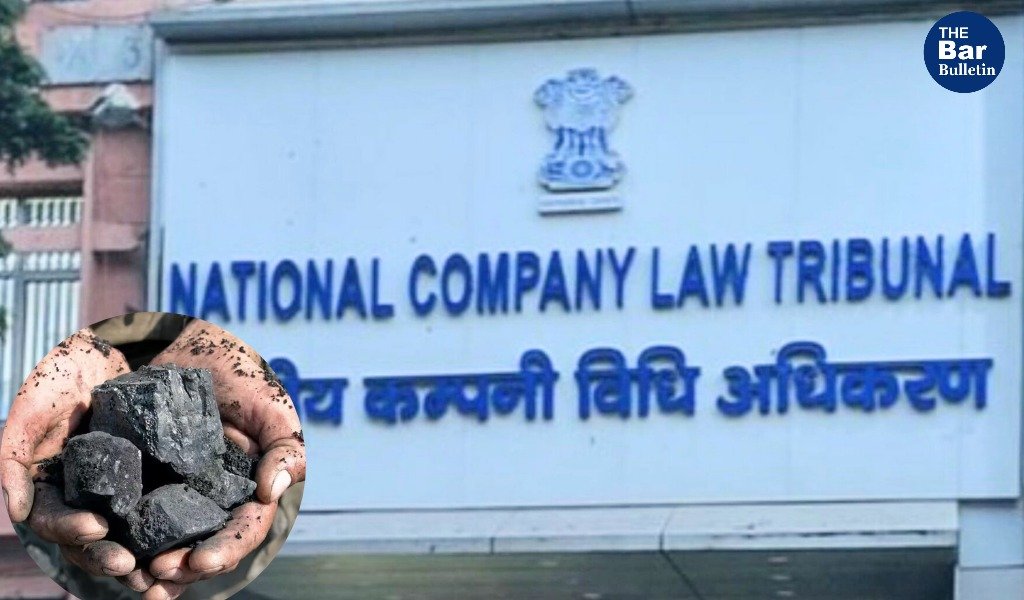

The Bengaluru Bench of the National Company Law Tribunal (NCLT) has held that unpaid dues arising from coal supply and transportation services remain Operational Debt, and repayment arrangements, interest clauses, and mortgage security cannot convert trade debt into Financial Debt under the IBC. Further, where the claim arose from supply of coal and transportation services, it constitutes Operational Debt notwithstanding subsequent settlement arrangements.
The NCLT clarified that an acknowledgment of liability coupled with structured repayment terms cannot transform a trade debt into a borrowing carrying the characteristics of a financial transaction. The creation of a mortgage or registered charge over the Corporate Debtor’s assets merely secures the existing liability and does not alter the underlying nature of the debt.
In the absence of disbursal against consideration for the time value of money, a claim cannot qualify as ‘Financial Debt’ under Section 5(8) of the IBC. Thus, the NCLT directed reconstitution of the Committee of Creditors after finding that the creditor had wrongly obtained a dominant voting share of about 69.73% as a Financial Creditor.
Briefly, the application was filed by V.V.S.R. Anjaneyulu Vattem, the suspended director of Sri Balaji Cement and Power Limited, challenging the inclusion of M/s. P.D. Enterprises as a Financial Creditor in the Committee of Creditors (CoC) during the Corporate Insolvency Resolution Process (CIRP). The applicant contended that the claim of P.D. Enterprises originated from the supply of coal and transportation services and therefore constituted an Operational Debt, not a Financial Debt.
The Corporate Debtor had procured coal and transportation services from P.D. Enterprises since FY 2016-17. Due to non-payment of invoices, the parties executed Memorandums of Understanding (MoUs) in October 2020 recording the outstanding dues and prescribing a repayment schedule. A mortgage was also created over the Corporate Debtor’s immovable properties to secure repayment. Subsequently, P.D. Enterprises filed a claim of Rs. 47.36 crore as a Financial Creditor and was admitted into the CoC with a voting share of about 69.73%.
The Resolution Professional (RP) initially accepted the claim as a Financial Debt on the basis of the MoUs, interest component and registered security. However, after obtaining a legal opinion during CIRP, the RP concluded that the debt actually arose from supply of goods and transportation services and therefore should be treated as Operational Debt.
The Coram of Sunil Kumar Aggarwal (Judicial Member) and Radhakrishna Sreepada (Technical Member) observed that there was no dispute that the original transactions between the Corporate Debtor and P.D. Enterprises arose solely from the supply of coal and related transportation services. The outstanding amount represented unpaid trade dues accumulated over time.
NCLT noted that for a claim to qualify as a Financial Debt under Section 5(8) of the Insolvency and Bankruptcy Code, there must be a disbursement against consideration for the time value of money or a transaction possessing the commercial effect of borrowing. Merely because parties subsequently execute a settlement arrangement, provide a repayment schedule, stipulate interest, or create security, the debt does not automatically become a Financial Debt.
The Tribunal emphasized that the existence of MoUs, a mortgage deed, or a registered charge only acknowledged and secured the existing liability. These documents did not alter the fundamental nature of the underlying transaction, which remained a commercial supply arrangement between a purchaser and supplier.
Relying on judicial precedents, the Tribunal held that a mere obligation to pay under a settlement agreement does not amount to a financial transaction involving the time value of money. It further observed that allowing operational debts to be converted into financial debts through subsequent agreements would defeat the distinction carefully maintained under the IBC between Financial Creditors and Operational Creditors.
The Bench also found that the RP’s earlier view that creation of mortgage security and execution of MoUs amounted to a commercial borrowing was legally unsustainable. The true character of a debt must be determined from the original nature of the transaction and not from later security or repayment arrangements.
