
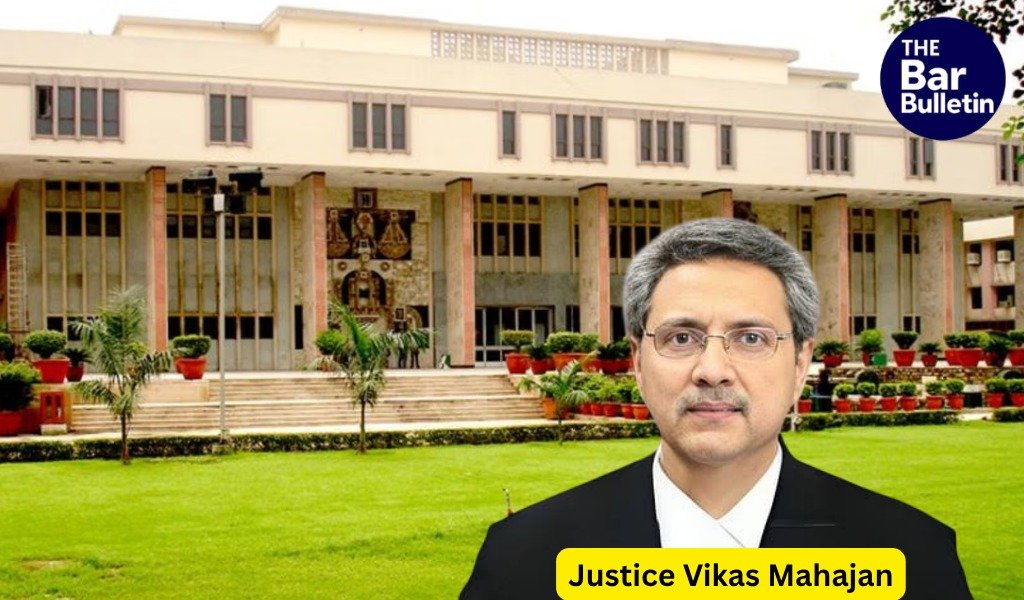

The Delhi High Court has set aside an order granting exemption from mandatory pre-institution mediation under Section 12-A of the Commercial Courts Act, 2015, holding that the Trial Court was required to examine the plaint and accompanying material to determine whether urgent interim relief was genuinely contemplated.
Justice Vikas Mahajan was considering a challenge to the Trial Court’s August 14, 2026 order allowing the plaintiff’s application under Section 12-A and exempting it from pre-institution mediation.
The petitioners argued that the Trial Court had granted the exemption without recording reasons and without examining the plaint and documents to ascertain whether an urgent relief was genuinely contemplated. They further submitted that although the defendants were represented through counsel when the application was considered, they were not given an opportunity to file a reply or make submissions on the Section 12-A application.
The respondent did not oppose setting aside the order and remanding the matter to the Trial Court for completion of pleadings and hearing of the pending applications.
The High Court relied on the Supreme Court’s decision in Novenco Building and Industry A/S v. Xero Energy Engineering Solutions Pvt. Ltd. (2025) SCC Online SC 2278, which laid down the principles governing exemption from pre-institution mediation. The Supreme Court has held that Section 12-A mandates pre-institution mediation for commercial suits and that exemption can be granted only where the plaint and documents clearly disclose a real need for urgent interim intervention.
The Court noted that while assessing urgency, the court must examine the plaint, pleadings and supporting documents, including factors such as immediacy of peril, irreparable harm, risk of losing rights or assets, statutory timelines, perishable subject matter, or circumstances where delay could render the eventual relief ineffective. A merely pro forma or anticipatory prayer for urgent relief cannot be used as a device to bypass mediation.
Applying these principles, the Court held that since the petitioners’ counsel was present before the Trial Court, the defendants ought to have been afforded an opportunity to file a reply to the Section 12-A application. The Trial Court was also required to examine the plaint and accompanying material before concluding that urgent relief was warranted.
Accordingly, the High Court set aside the August 14 order insofar as it granted the Section 12-A exemption and remanded the matter to the Trial Court. The parties were directed to complete pleadings in all pending applications, including the Section 12-A application, before the next date. The Trial Court has been directed to consider the Section 12-A application first before proceeding with the other applications.
