
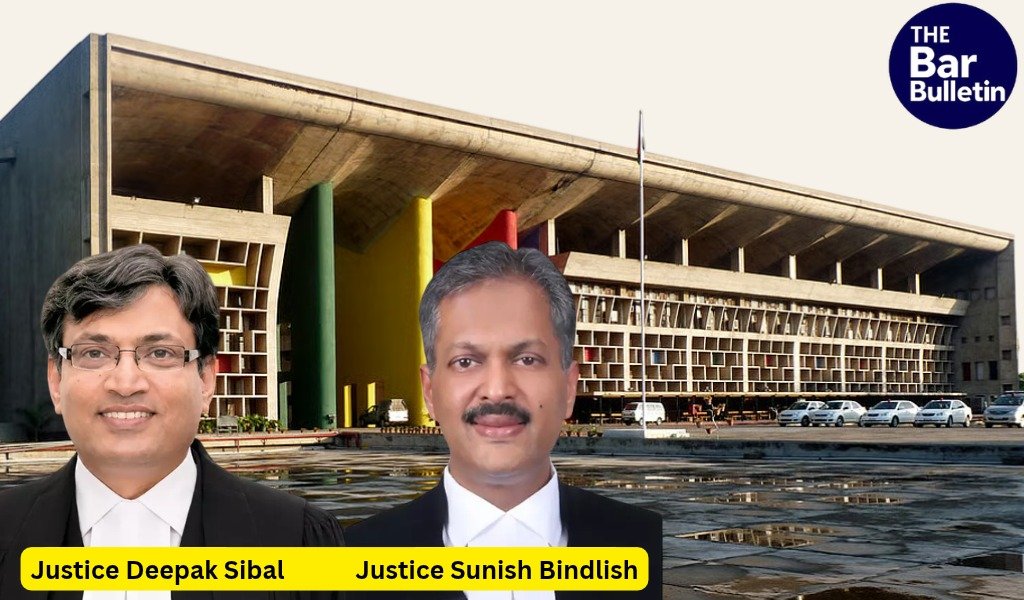

The High Court of Punjab and Haryana at Chandigarh Bench sets aside denial of Section 11 exemption to Sukhmani Society, holding that collection of service charges and generation of surplus alone are not sufficient to invoke the proviso to Section 2(15) of the Income Tax Act. The Court held that merely charging fees for delivering citizen-centric government services does not mean that an institution is carrying on trade, commerce or business.
Before invoking the proviso to Section 2(15), tax authorities must examine whether the charges collected are substantially higher than the cost of providing the services. Such an enquiry was missing in the present case. The Court also observed that the existence of a surplus, by itself, cannot lead to the conclusion that the assessee is engaged in commercial activities. A charitable institution may legitimately generate surplus while pursuing its objects.
While registration under Section 12AA establishes the charitable character of an institution, entitlement to exemption under Section 11 must still be assessed year-to-year based on the actual activities carried out, added the Court.
Briefly, the appellant, Sukhmani Society for Citizen Services, Kapurthala vs Assistant CIT, is a society established by the district administration to run Sukhmani/SUWIDHA Centres, which provide various government-related citizen services through a single-window system. The society was granted registration under Section 12AA of the Income Tax Act in 2007 after its objects were found to be charitable and its activities genuine. For Assessment Year 2010-11, it claimed exemption under Section 11 on its surplus income of Rs. 3.76 lakhs.
During scrutiny, the Assessing Officer noted that the society was charging service fees for various citizen services in addition to the statutory fees payable to government departments. The officer held that the society was carrying on activities in the nature of trade, commerce or business, attracted by the proviso to Section 2(15), and therefore denied exemption under Section 11. The surplus income was brought to tax.
The Commissioner (Appeals) and subsequently the Income Tax Appellate Tribunal upheld the denial of exemption, largely relying upon an earlier Tribunal decision concerning a similarly constituted Sukhmani Society at Mansa.
The Division Bench comprising Justice Deepak Sibal and Justice Sunish Bindlish observed that registration under Section 12AA does not automatically entitle an assessee to exemption under Section 11 every year. Whether exemption is available must be examined annually, particularly after the insertion of the proviso to Section 2(15).
The Court noted that the authorities had proceeded mainly on three factors: collection of service charges over and above statutory fees, generation of surplus, and certain clauses in the society’s memorandum. However, these factors were treated as conclusive without undertaking the enquiry mandated by law.
Relying on the Supreme Court’s decision in Assistant Commissioner of Income Tax (Exemptions) v. Ahmedabad Urban Development Authority [(2023) 4 SCC 561], the High Court emphasized that merely charging a fee does not convert a charitable activity into a business activity. The real test is whether the charges are only on a cost basis or nominally above cost, or whether they are significantly higher than the actual cost of rendering the service.
The Court found that neither the Assessing Officer nor the appellate authorities examined the actual cost of operating the centres, the basis for fixing user charges, or whether the charges had been approved by competent authorities. Therefore, the conclusion that the society was carrying on business activities was reached without the necessary factual analysis.
The Court also held that the existence of a surplus by itself cannot establish a profit motive. A surplus may arise even while carrying out charitable activities, and the authorities must examine the relationship between charges collected and the cost of services rendered before drawing any adverse conclusion.
Further, the Court observed that the Tribunal’s statement that no expenditure of a charitable nature was shown was unsupported by any specific finding. The accounts disclosed expenditure on staff salaries, provident fund, stationery, repairs, maintenance and other operational expenses connected with running the citizen service centres.
Appearances
Mr. Gaurav Dhall, representative of the Appellant.
Mr. Varun Issar, Sr. Standing Counsel, Income Tax Department, with Ms. Pridhi Sandhu, Advocate and Ms. Nikita Garg, Jr. Standing Counsel for the respondent-Income Tax Department.