
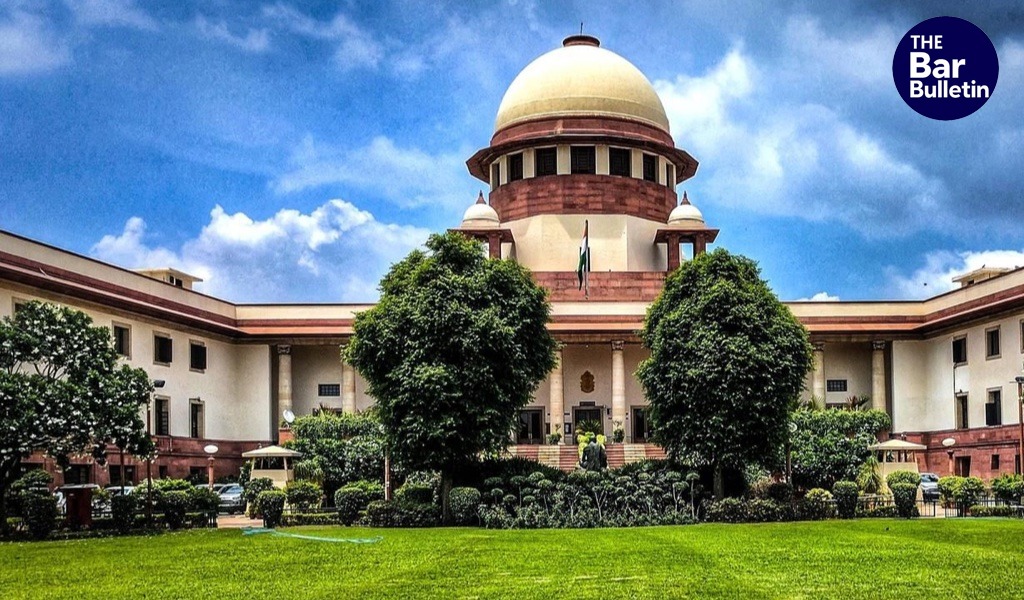

In an appeal filed before the Supreme Court against a final judgment and order dated 18-05-2022, by the Rajasthan High Court whereby an intra-court appeal was dismissed, and a common judgment dated 24-07-2015 was affirmed, a Bench comprising Justice B.V. Nagarathna and Justice R. Mahadevan held that the impugned judgment was unsustainable in law and set the same aside.
By the common judgment, a batch of writ petitions were allowed, and bye-law nos. 20.1(2), 20.1(4), 20.2(7), and 20.2(9) framed by various District Milk Producers’ Co-operative Unions in Rajasthan, including those chaired by the present appellants, were declared to be ultra vires the provisions of the Rajasthan Co-operative Societies Act, 2001 (2001 Act). The judgment also directed that all ensuing elections for the unions be conducted by the State Co-operative Election Authority without referring to the impugned bye-laws, while clarifying that the 2010 elections were not to be disturbed.
The appellants were chairpersons of 5 District Milk Producers’ Co-operative Unions in Rajasthan, and the bye-laws in question, framed under the statutory authority of Section 8, read with Schedule B, Clause 1 (da), (i), (r), and (v) of the 2001 Act, governed the functions of the Co-operative societies. They introduced additional eligibility conditions for candidates (representatives of Primary Milk Unions) seeking to contest elections to the Management Committee.
Aggrieved, a batch of writ petitions were filed by certain Primary Milk Producers’ Co-operative Societies, challenging the bye-laws. However, the present appellants were not impleaded as parties thereto. Thereafter, the said common judgment was passed. The State of Rajasthan appealed against the same; however, a division bench dismissed the appeal. Subsequently, the Registrar, in exercise of powers under Section 11 of the 2001 Act, issued a notice dated 08-02-2023, directing the amendment of the subject bye-laws followed by a further notice to finalize the amendments.
Thus, the present appellants claimed that they were directly affected by the impugned judgment and preferred the present appeal.
The Court noted that the State of Rajasthan was one of the leading milk-producing states in India, as evidenced by data published by the National Dairy Development Board. It was stated that the dairy sector in the State had evolved on a co-operative model structured as a three-tier system comprising (i) Primary Milk Producers’ Co-operative Societies at the village level; (ii) District Milk Producers’ Co-operative Unions at the district level, and (iii) the Rajasthan State Co-operative Dairy Federation Limited at the State level.
It was said that this framework constituted an integrated co-operative mechanism in which the primary societies were organically linked to the District Milk Unions and, in turn, to the State Federation. The Court noted that the dispute concerned the elections to the Boards of Directors of various District Milk Unions, of which the Primary Societies were constituent members. The controversy concerned the bye-laws, which prescribed the qualifications for contesting elections to the Board of Directors.
The Court stated that a person who is aggrieved by a judgment, even if not formally impleaded as a party, can maintain an appeal with the leave of the Court. Reference was made to Ram Janam Singh v. State of U.P. (1994) 2 SCC 622, and it was said that the appellants fell into the category of “persons aggrieved” and were therefore entitled to maintain the appeal.
It was stated that in the impugned judgment, the High Court had proceeded to examine the validity of the bye-laws framed by the District Milk Unions, without first addressing the foundational issues as to whether the writ petitions themselves were maintainable, considering the nature and character of the respondent societies, as well as the statutory dispute-resolution mechanism under the 2001 Act. The Court said that a writ would lie against a non-State entity only where it performs public duties, discharges public functions, or is alleged to have acted in breach of statutory or constitutional obligations of a public character.
Further, the Court stated that disputes regarding the internal management, governance, or electoral process of a co-operative society do not attract writ jurisdiction merely because the society was incorporated by statute. Hence, the Court said that the exercise of jurisdiction under Article 226 must be tested on well-established principles. The Court said that the mere existence of regulatory or supervisory control, however extensive, does not determine whether a body, though not ‘State’ as per Article 12, may be amenable to writ jurisdiction. It was stated that such control must be of a degree that fundamentally alters the body’s character.
Regarding the District Milk Unions, the Court said they were neither departments of the State nor owned, financially controlled, or administratively dominated by the State in a manner that would render them instrumentalities of the State under Article 12. It was also mentioned by the Court that the disputes raised were regarding the internal governance and electoral framework of co-operative societies and did not disclose any breach of statutory or public duty of a public law character. Hence, the Court held that the writ petitions ought not to have been entertained in exercise of jurisdiction under Article 226.
Even otherwise, the Court said that the petitions were not liable to be entertained in view of the express statutory scheme and the availability of a comprehensive adjudicatory mechanism under the 2001 Act. Further, the Court said that Section 58(1) of the 2001 Act confers exclusive jurisdiction upon the Registrar to decide disputes, and excludes the jurisdiction of civil courts by necessary implication. Referring to the entire statutory scheme, the Court said that the existence of such a self-contained, multi-tiered remedial framework shows a clear legislative intent that disputes regarding elections and internal governance of co-operative societies must be resolved within the statutory domain.
The Court held that the High Court had bypassed the statutory dispute resolution mechanism and rendered the remedies under Sections 58 and 104-105 nugatory by entertaining the writ petitions. It was said that such an approach was contrary to the legislative scheme and undermined the discipline of exhausting statutory remedies. Applying principles of Titaghur Paper Mills Co. Ltd. v. State of Orissa (1983) 2 SCC 433 and Umesh Shivappa Ambi & Ors. v. Angadi Shekara Basappa & Ors. (1998) 4 SCC 529, the Court found it evident that the dispute raised fell squarely within the statutory framework governing co-operative societies.
Thus, the Court stated that the writ petitions, insofar as they assailed the validity of the bye-laws, ought to have been rejected at the threshold since the petitioners had an efficacious remedy under the 2001 Act.
Furthermore, the Court held that even assuming the petitions were maintainable, the High Court erred in striking down the impugned bye-laws, as its reasoning rested on an erroneous understanding of the statutory scheme governing elections to co-operative societies. The Court stated that the Act expressly provided that the elections were to be conducted not only in accordance with the Act and the Rules, but also in accordance with the bye-laws, insofar as they fell within the statute’s enabling provisions. It was said that any interpretation excluding the bye-laws would defeat the legislative intent.
The Court said that the High Court had failed to refer to the well-settled distinction between the right to vote and the right to contest an election, both being statutory in nature, but operating in distinct fields. It was stated that the 2001 Act recognizes a clear distinction: the right to vote is the right to participate in the electoral process by exercising the franchise, and the right to contest is a distinct and additional right, subject to stricter regulation.
The Court stated that the bye-laws did not regulate or curtail the members’ right to cast their votes, but were directed at the eligibility of the President or a representative of a primary co-operative society to contest elections to, or continue as a member of, the Board of Directors. It was said that upon reading the bye-laws holistically, it was evident that the term ‘participation’ was used in the sense of participation of a candidate and not as a voter.
Considering whether the subject bye-laws amounted to disqualification or merely prescribed eligibility criteria for contesting elections, the Court stated that the bye-laws did not impose any disabling bar since the criteria mentioned were intrinsic to the concept of representative and accountable governance within a co-operative framework. It was said that invalidating the bye-laws on the ground that they impose disqualifications was legally unsustainable.
Applying the decisions in State of T.N. v. P. Krishnamurthy (2006) 4 SCC 517, and Naresh Chandra Agrawal v. ICAI (2024) 13 SCC 241, the Court held that the subject bye-laws were intra vires since the source of power was directly traceable to Section 8 read with Schedule B (Clauses (da) and (v)) and that the bye-laws supplement the statutory framework, furthering the purpose of ensuring financial, accountable, and democratic governance. The Court stated that the High Court’s view that the bye-laws could not regulate electoral participation was also unsustainable.
The Court said that the bye-laws neither added to the statutory disqualifications under Section 28 nor trenched upon the rule-making domain under Section 123 and only regulated the participation-linked entitlement of a member-society to be represented in the management of a federal co-operative, operating in a distinct, permissible, and statutorily recognized field.
It was noted that, even though the petitions were filed only by certain District Milk Unions, the High Court struck down the bye-laws in their entirety, rendering them inoperative for all co-operative societies, including those neither impleaded nor heard. The Court said that such adjudication operates in rem, affecting a class of autonomous co-operative societies. It was further stated that, at the very least, the High Court ought to have ensured the issuance of notice and opportunity of hearing to societies that stood directly affected. The Court also said that such a failure strikes at the root of audi alteram partem.
The Court held that the High Court exceeded the limits of its writ jurisdiction and that the impugned judgment was liable to be set aside as unsustainable in law. Thus, the appeal was allowed.
Appearances:
For Petitioner – Mr. Kapil Sibal (Sr. Adv), Mr. Purushottam Sharma Tripathi (AOR), Mr. Ravi Chandra Prakash, Mr. Amit, Ms. Vani Vyas, Mr. Prakhar Singh
For Respondents – Mr. Shiv Mangal Sharma (AAG), Ms. Nidhi Jaswal (AOR), Mr. Namit Saxena (AOR), Ms. Arushi Rathore
