
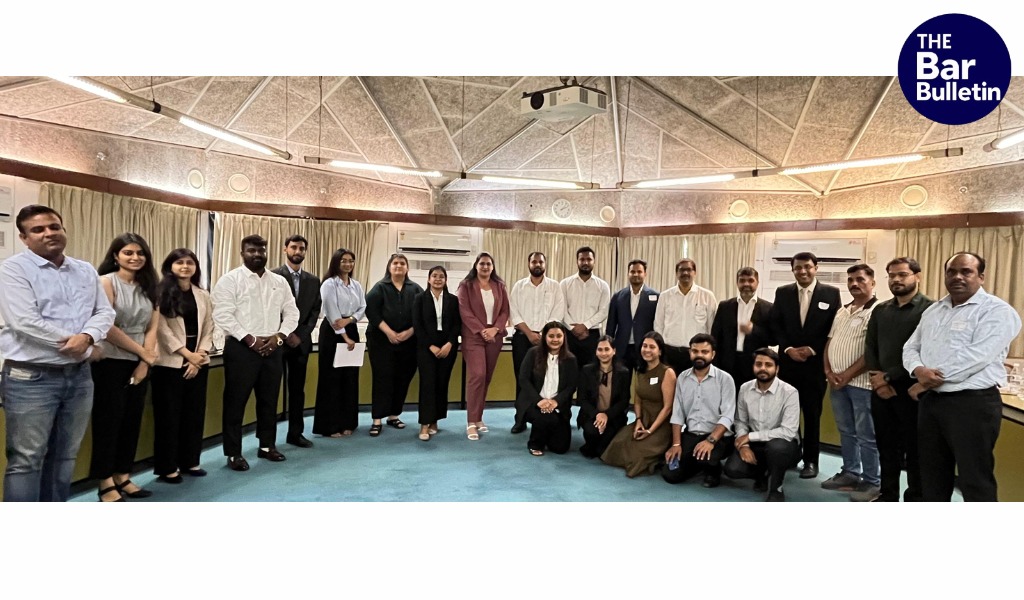
General Counsels, and senior in-house lawyers from leading banks and NBFCs gathered at the India International Centre, New Delhi on 22 May 2026 for a candid conversation on the practical realities of loan recovery in the wake of recent Supreme Court and High Court rulings on unilateral appointment of arbitrators. The Roundtable Consultation on Arbitration & Conciliation for Loan Disputes, organised by Webnyay ODR Institution, brought together speakers from across the lending ecosystem to discuss the landscape after Supreme Court decisions of Perkins and CORE as well as more recent decisions of the Bombay, Madras and Rajasthan High Courts on the use of ODR platforms and the validity of institutional arbitrator appointments. Participants also discussed the shift toward institutional arbitration, the growing role of Online Dispute Resolution (ODR), and the persistent challenges of execution and recovery on the ground. These decisions have collectively reinforced that party autonomy in arbitrator appointment must operate within the framework of the Arbitration and Conciliation Act, 1996.
Secured Lending No Guarantee of Smooth Recovery
Speaking from his experience in mortgage finance, Manoj Kumar of IIFL Home Finance Ltd. drew attention to the practical limits of secured lending in the recovery cycle. “Even secured loans become difficult during recovery and liquidation,” he observed. Property auctions, he explained, often fail to fetch the full outstanding amount because of market conditions and procedural delays. Judicial interpretations following CORE, he added, have introduced a further layer of uncertainty around the enforcement of arbitration awards.
Digital Consent: Bridging Legacy Agreements with Modern Standards
Krishan Singhal of Piramal Finance offered a concrete example of how lenders can address the growing legal scrutiny of arbitration clauses in older loan agreements. Piramal, he explained, is using digital tools to obtain borrower consent for institutional arbitration under legacy loan agreements, on the view that borrower silence no longer suffices to establish valid consent. Mr Singhal recommended that the wider industry adopt similar digital consent practices, treating them as a practical bridge between historical documentation and the expectations set by the Supreme Court and the High Courts in recent decisions.
ODR Opening New Possibilities for Recovery-related disputes
Striking a more optimistic note on the role of technology in dispute resolution, Vipin Kumar, from Shriram Finance, drew on more than two decades of experience in the financial sector. “ODR platforms are creating meaningful opportunities for the recovery ecosystem,” he said. Mr Kumar commended the roundtable as a forum for legal and recovery professionals to exchange ideas and practical insights, and observed that ODR and other alternative dispute resolution platforms are becoming increasingly effective for the industry and observed that ODR has been gaining traction across several states, including Rajasthan and Delhi.
Themes from the Discussion
Across the discussion, three themes emerged with particular force.
First, the absence of well drafted arbitration clauses in legacy loan agreements continues to expose lenders to challenge. Several panellists called for industry standard model clauses anchored in institutional arbitration to reduce ambiguity and improve enforceability.
Second, conciliation and mediation, particularly for small ticket and microfinance loans, found wide endorsement as a cost effective starting point. Participants nonetheless cautioned against treating it as a complete substitute for arbitration when escalation becomes necessary, and recommended a layered approach with conciliation first and arbitration second.
Third, speakers flagged a significant capacity gap. Many collection managers, they observed, lack working knowledge of the Negotiable Instruments Act, the Arbitration and Conciliation Act, and other statutes relevant to recovery. This led to calls for certificate or diploma programmes that bridge legal literacy with practical enforcement skills.
The Roundtable closed with a shared sense that the future of recoveries in banking and financial services lies in weaving legal and collections functions into a unified strategy enabled by technology. Better documentation, more rigorous arbitration clauses, and wider adoption of ODR and conciliation frameworks will shape the next phase of credible and compliant dispute resolution in India.