
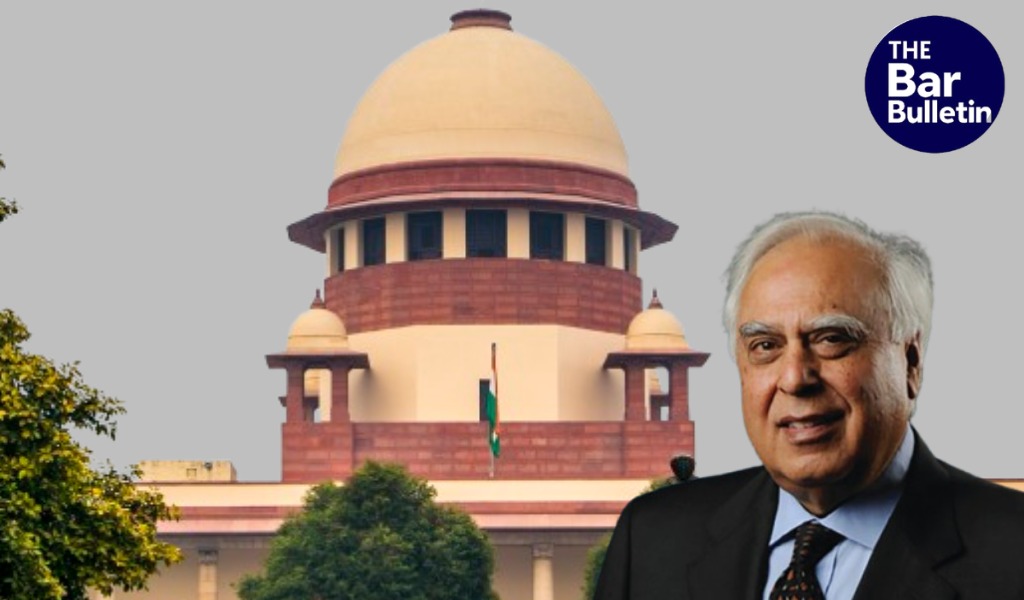

The Supreme Court on Monday issued notice to the Union Government on a writ petition filed by Rajya Sabha MP and Senior Advocate Kapil Sibal, challenging the interpretation of the Tenth Schedule to the Constitution that permits legislators to avoid disqualification under the anti-defection law by claiming a merger of their political party.
A Bench of Justice P.S. Narasimha and Justice Alok Aradhe sought the Centre’s response after hearing Mr Sibal, who appeared as party-in-person. At the outset, the Bench questioned the maintainability of the petition under Article 32 of the Constitution.
Mr Sibal argued that the present interpretation of Paragraph 4 of the Tenth Schedule has far-reaching consequences for India’s democratic framework, as it enables elected representatives to circumvent disqualification by engineering mergers, thereby altering electoral mandates after elections. He referred to the pending Goa defection matter and submitted that the issue has significant ramifications for the country’s polity.
Also read: Tenth Schedule is Being Rendered Ineffective; Kapil Sibal Moves Supreme Court Over Defections
While issuing notice, the Bench observed that the functioning of the Tenth Schedule has thrown up “enormous issues” over the years, but also indicated that such concerns ordinarily fall within the legislative domain, noting that the anti-defection law is a mechanism enacted by Parliament to regulate the conduct of legislators.
According to the petition, the existing interpretation of the merger provision allows splinter groups within political parties to evade disqualification by merging with another political party, thereby defeating the objective of the anti-defection law. Mr Sibal has sought a reconsideration of this interpretation, contending that it undermines the constitutional purpose of the Tenth Schedule.