

The Supreme Court on Friday heard submissions on the proposed framework regulating the use, reproduction and commercial exploitation of audio-video recordings of court proceedings, including their use by journalists and digital content creators.
During the hearing, Solicitor General Tushar Mehta informed the Court that suggestions received from various stakeholders were being considered and that the Government would prepare a proposed framework within a week for the Court’s consideration.
One of the suggestions discussed was to make official recordings of court proceedings available on the Supreme Court’s website, authenticated through digital watermarking and cryptographic signatures. This would allow the public and digital platforms to verify the authenticity of official footage and distinguish it from manipulated or edited clips. The Court also discussed the difficulty of preventing individuals from duplicating recordings or extracting portions using external devices, including mobile phones.
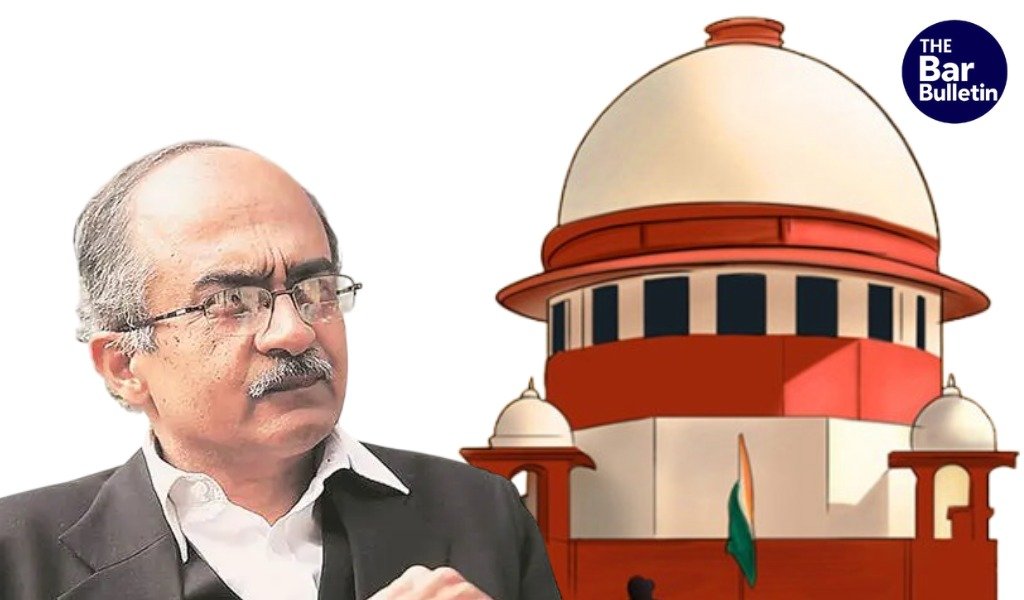
Advocate Prashant Bhushan questioned the requirement of obtaining prior permission from the Secretary General to use extracts from official court recordings for journalistic purposes. Referring to a YouTuber who wished to use a portion of an official recording while reporting on a particular hearing, Bhushan argued that such use for public information should not automatically be treated as commercial exploitation merely because the content creator earns revenue from the video. He also relied on the Supreme Court’s judgment in Swapnil Tripathi v. Supreme Court of India and the UK guidelines on the use of court recordings.
The Solicitor General expressed concern over individuals earning money through such recordings. The Bench discussed the distinction between legitimate reporting and commercial exploitation, as well as the extent to which supervision or permission could be required for extracting clips and the purposes for which they are used.
The Court indicated that it would examine the advantages and disadvantages of the proposed approaches. The existing interim directions requiring prior permission for extraction, dissemination and use of court recordings on digital platforms continue to operate.