

The Supreme Court on Wednesday questioned the time taken to decide disqualification petitions pending before Lok Sabha Speaker Om Birla against 20 rebel Trinamool Congress MPs, who have aligned themselves with the Nationalist Citizens Party of India (NCPI). The proceedings arose from a plea filed by TMC General Secretary and MP Abhishek Banerjee, seeking expeditious disposal of the disqualification proceedings initiated against the MPs under the Tenth Schedule of the Constitution. The 20 MPs had sought recognition as a separate group in the Lok Sabha after breaking away from the TMC parliamentary grouping, with the rebel MPs maintaining that their move constitutes a valid merger, while the TMC has contended that their conduct attracts disqualification under the anti-defection law.
The petitions were filed before the Speaker in June 2026. The Supreme Court had taken up Banerjee’s plea in August and issued notice to the 20 MPs, while the Speaker’s office was not separately issued notice after Solicitor General Tushar Mehta informed the Court that he was appearing for the Speaker. The Speaker had by then issued notices to the MPs in the disqualification proceedings.
Senior Advocate Kalyan Bandopadhyay, appearing for Banerjee, submitted that although notices had been issued by the Speaker to the rebel MPs in August, they had not filed their replies within the initial 14-day period. According to the submission, the time for filing replies was subsequently extended until September 22, following which the MPs again sought an extension.
Bandopadhyay questioned the delay in the context of proceedings under the Tenth Schedule and referred to the Supreme Court’s earlier directions concerning expeditious disposal of disqualification matters.
“
“If someone is disqualified, they can’t function as MP from that date.”
He questioned whether the Speaker was acting in accordance with the Supreme Court’s observations requiring expeditious consideration of Tenth Schedule disputes.
The CJI clarified that the Court was only considering a timeline on the assumption that one may be required, while stressing that the nature of disqualification proceedings itself calls for an expeditious decision. He said,
“
“we are not asking you to pass any order on the assumption that a time frame is required. But at the same time, we definitely respect and expect that anything which is required to be decided expeditiously, the very nature of the this before the Constitutional Authority, that requires early adjudication.”
The Solicitor General Tushar Mehta, , appearing for the Speaker, however, urged the Court to presume that the constitutional functionary was aware of the seriousness and urgency involved and would act accordingly, suggesting that the Court could simply remind the authority of its responsibility to decide the disqualification applications expeditiously, given the importance of the Tenth Schedule
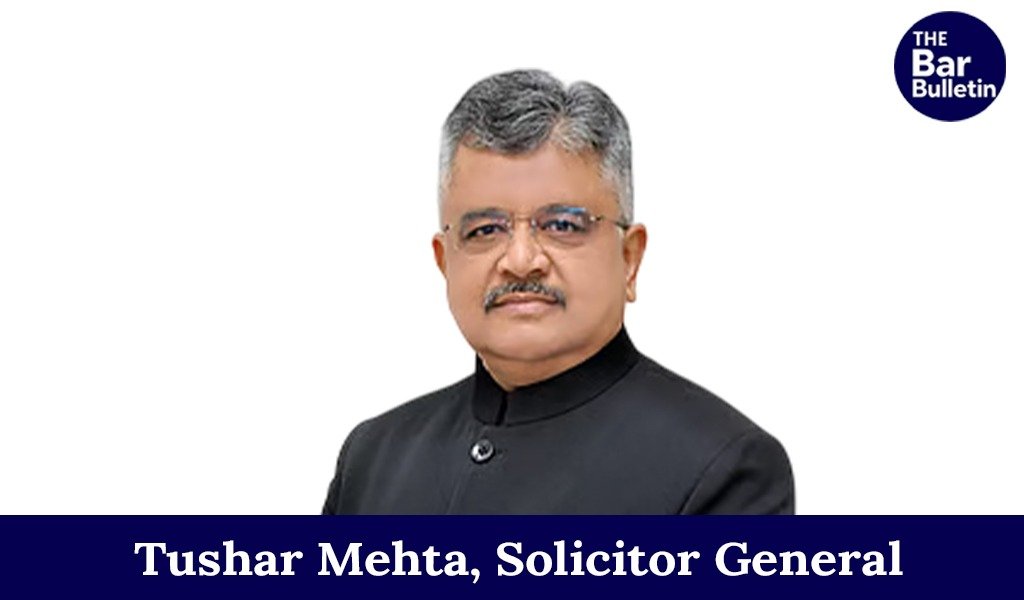
The SG opposed fixing a rigid deadline. He submitted that the Speaker was exercising a constitutional function and that the proceedings required the parties to be heard and evidence to be considered. He also argued that there had been no complete inaction in the present matter since notices had already been issued.
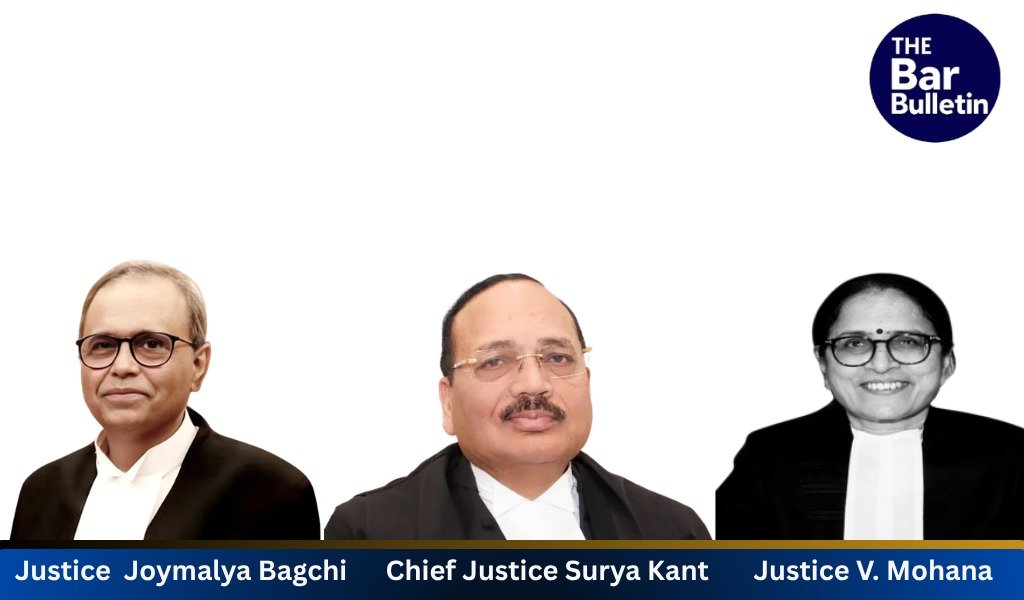
The Bench of Chief Justice of India Surya Kant, Justice Joymalya Bagchi and Justice V. Mohana, while acknowledging that the Speaker was a constitutional functionary, indicated that it wanted the proceedings to move expeditiously. It said it would keep the issue alive, obtain an update on the progress and consider a reasonable timeline at a later stage.
The Court referred to the importance of expeditiously deciding disqualification matters under the Tenth Schedule and noted that delay in such proceedings could have consequences for the democratic process.
The Court further noted that matters under the Tenth Schedule could have repercussions in collateral proceedings as well as the democratic process, and said that the Speaker would have to apply the constitutional role assigned to the office while considering the nature and urgency of the cases. Justice Bagchi remarked:
“
“Two months will be a red flag. And that is very difficult. And it has its repercussions in various collateral proceedings and also the democratic process of the country. So, the speaker needs to apply to the constitutional role assigned. At the same time, there are cases; maybe an open and shut case, maybe a contested one. So, we need to give that end of the case to… What we intend to do is to keep this petition alive and get a view of its progress and at the end of the speaker, give him a reasonable…”
Solicitor General Tushar Mehta responded that any suggestion coming from the Bench would bind him, but said he could not make any commitment on behalf of the Speaker. He added that he would have to consider the suggestion and discuss the proposed timeline.
Senior Advocates Neeraj Kishan Kaul and Maninder Singh, representing the rebel MPs argued that the present case was distinguishable from earlier cases where the Speaker had taken no action for prolonged periods. Senior counsel referred to Pardee Reddy, where notice had allegedly not been issued for seven months, and Keisham Megha Chandra, where notice was not issued for a year.
“
“In Pardee Reddy’s case, for seven months, even a notice was not issued. In the case of Keshav Megha Chandra, for one year, even a notice was not issued. Here… there is no delay. We have asked for extension, and we are filing our reply.”
Counsel further relied on the Supreme Court’s decision in Subhash Desai, submitting that the relevant consideration was whether the Speaker had acted within a reasonable time rather than whether a rigid deadline should automatically be imposed.
The rebel MPs’ counsel also submitted that they had sought an extension for filing their replies and that the Speaker was considering the request. The respondents urged the Court not to subject the Speaker’s proceedings to judicial monitoring in the absence of complete inaction.
Respondents sought four weeks’ time to file their replies, which was opposed by Senior Advocate Kalyan Bandopadhyay, who pointed out that six weeks had already elapsed. The Court, however, recorded the respondents’ undertaking to file their replies within four weeks.