
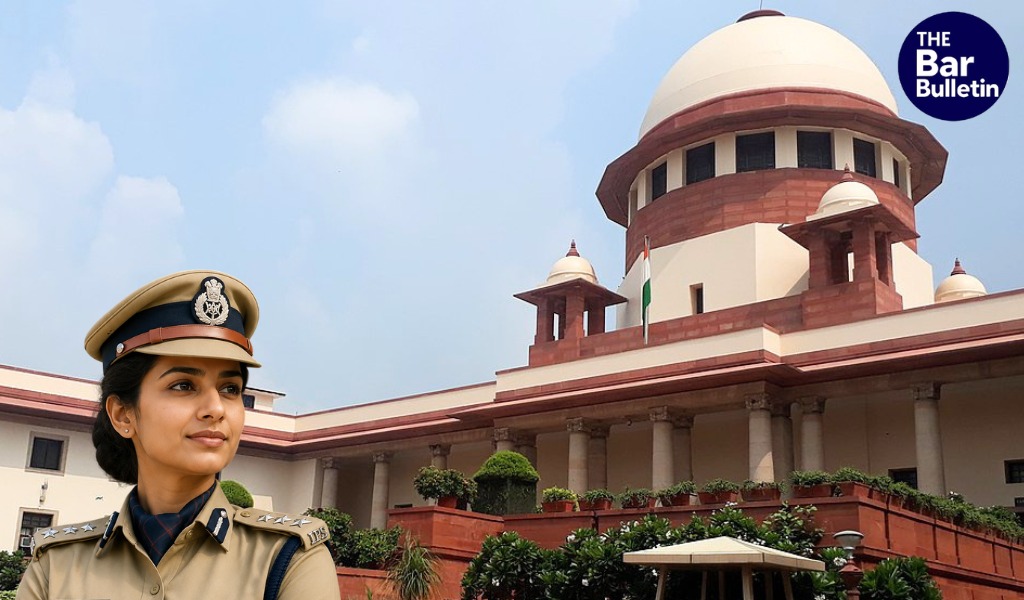
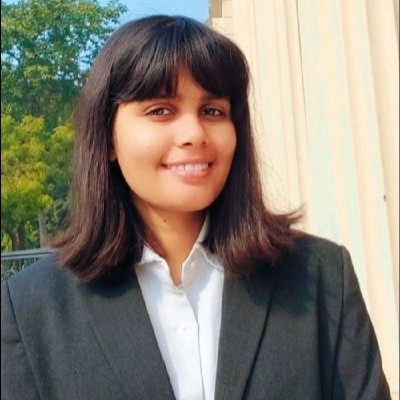
The Supreme Court on Friday declined to grant interim relief to Urvashi Sengar, a woman IPS probationer seeking permission to join the ongoing Phase-II training, observing that the training had progressed substantially and permitting her to join at this stage would leave significant gaps in her learning.
A Bench of Justices Manoj Misra and Shree Chandrashekhar was hearing a special leave petition arising from the Delhi High Court’s order staying the Central Administrative Tribunal’s interim direction permitting IPS probationer Urvashi Sengar to join the ongoing Phase-II training after childbirth. Her substantive challenge to the Ministry of Home Affairs’ Office Memorandum prescribing a one-year post-childbirth training hiatus remains pending before the Central Administrative Tribunal.
Pursuant to the Court’s earlier order, the Union Government placed on record the progress of the training programme, informing the Bench that the nine-week training, which commenced on June 22, 2026, had already completed its first three weeks covering physical fitness, orientation, peer-learning exercises and other foundational modules. Expressing concern over the advanced stage of the programme, the Bench observed:
“
“You see the problem here is, if it is a nine-week schedule and out of that one-third is already gone, that is where the real problem is. We quite agree with your submission on merits, but the problem is we cannot really implement it. Now out of nine weeks, three weeks have already gone. You would not be able to get trained properly; that would be a big problem for you.”
The Court further noted that the Phase-II programme was designed as an intensive residential course where trainees participate in structured activities every day.
“
“Here it is an intense training course. Every day something is happening. Now if you miss all this, then you will not be properly trained. It will be to your detriment.”
The Union Government submitted that allowing the petitioner to join at this stage would result in a 33% overall attendance shortfall and a 43% shortfall at the Academy, making it impossible for her to satisfy the mandatory attendance requirements. In view of these practical difficulties, the Bench declined to grant the interim relief sought. Instead, it directed that the petitioner’s pending proceedings before the Central Administrative Tribunal (CAT) be decided independently. The Court observed:
“
“Having regard to the above, we deem it appropriate to dispose of this petition by observing that the Tribunal shall proceed with the original application filed by the petitioner on its own merits without being prejudiced by any observations in the impugned order.”
During the hearing, the Additional Solicitor General Anil Kaushik also undertook that the Union Government would withdraw the writ petition pending before the Delhi High Court. Recording the undertaking, the Supreme Court disposed of the special leave petition.
Appearances
For Petitioner: Mr. Avinash K. Sharma, Adv. Mr. Ashutosh Nagar, AOR Mr. Uditanshu Singh, Adv. Mr Praveen Kumar, Adv. Mr Navtej Singh, Adv. Ms Palkriti Pande, Adv.
For Respondents: Mr Anil Kaushik, Ld. ASG Mr Syed Abdul Haseeb, Adv. Mr Sai Shashank, Adv. Dr M. Vishakhamurthy, AOR Ms Pranjal Singh, Adv.