

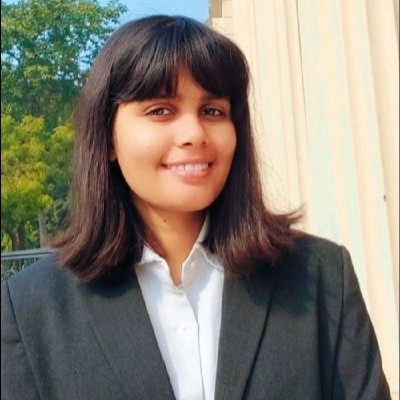
The Supreme Court on Monday declined to express any prima facie opinion in a plea filed by a Parsi woman challenging provisions of the Constitution of the Nagpur Parsi Panchayat that deny religious recognition and access to women marrying outside the faith, while simultaneously exploring the possibility of a consent-based interim arrangement permitting her to attend prayers and religious ceremonies pending adjudication of the larger constitutional issues in Sabarimala Reference.
The petitioner has challenged Rule 5.2 of the Constitution of the Nagpur Parsi Panchayat. Senior Advocate Shyam Divan, appearing for the petitioner, sought interim arrangements permitting the petitioner to enter and offer prayers at the Nagpur Agyari and participate in funeral and religious ceremonies concerning family members. Counsel submitted before the Court:
“There is only one Agyari in Nagpur and the nearest Agyari is Indore which is at least 400 kilometres away.”
The petitioner sought interim permission:
- to offer prayers at the Nagpur Agyari,
- to participate in funeral and muktad prayers of her late grandmother who passed away on September 6, 2024,
- to attend funeral prayers of deceased Zoroastrians, and
- to attend ceremonies and events concerning relatives and friends.
It was argued that similarly situated Parsi women are permitted such access in Mumbai, Delhi, Kolkata, and Pune under local community rules. Senior advocate Shyam Divan submitted that the petitioner:
- was born to Parsi Zoroastrian parents,
- was raised in a Parsi household,
- has always practised the Zoroastrian faith, and
- never renounced her religion despite marrying a Hindu man under the Special Marriage Act in 2009.
The challenge centres around Rule 5.2, which provides:
“Any Parsi-Irani Zoroastrian woman who marries a non-Parsi man and bears children from such an alliance, then such a woman and her children will not be accepted as Parsi-Irani Zarathustris.”
At the same time, Rule 5.3 treats Parsi men differently by allowing them continued recognition despite marrying outside the faith, though denying certain benefits to their spouses and children.
During the hearing, the Bench noted that the broader issue concerning differential treatment between Parsi women and Parsi men had already been extensively argued in sabarimala matters. The Court orally observed: “This issue, particularly this issue of Parsi women vis-a-vis Parsi men, that has been argued at length.”
When pressed for interim relief, the Bench indicated reluctance to pass any order that may reflect a prima facie opinion on the merits of the larger constitutional challenge. The Court observed:
“They are passing any order which will directly or indirectly reflect an opinion. Please, it’s not advisable…For the limited period till the judgment comes take instruction, then whatever law will be laid down, in any case, everybody will follow”
The Court refrained from passing any order that could reflect a prima facie opinion on the larger constitutional challenge concerning the differential treatment of Parsi women marrying outside the faith. Instead, the Bench of Chief Justice Surya Kant, Justice Joymalya Bagchi and Justice Vipul M Pancholi asked the parties to place on record similar consent orders passed by other Parsi Panchayats permitting women to attend funeral prayers and religious ceremonies. Taking note of submissions that such arrangements had been allowed elsewhere, the Court observed that an order on those lines could be considered without expressing any prima facie view on the merits of the dispute.
The matter was thereafter directed to be listed on Friday.
Appearances
For Petitioner(s): Mr. Shyam Divan, Sr. Adv., Mr. Rahul Bhangde, Adv., Mr. Rohit Anil Rathi, AOR, Mr. Yashas Rk, Adv., Ms. Niharika Singh, Adv., Mr. Ankur Singhal, Adv., Mr. Sudipto Sircar, Adv.
For Respondent(s): Mr. Balbir Singh, Sr. Adv., Mr. Gagan Sanghi, Adv., Mr. Naman Tandon, Adv., Mr. Aditya Chaudhari, Adv., Mr. Rameshwar Prasad Goyal, AOR; Mr. Tushar Mehta, Solicitor General, Mr. K.m.nataraj, A.S.G., Ms. Madhulika Upadhyay, AOR, Ms. Aastha Singh, Adv., Ms. Sansriti Pathak, Adv., Ms. Prerna Dhal, Ad