
Bar Council of India v. State of Madhya Pradesh & Ors. W.P.(Crl.) No. 157/2026 X [Order dated April 30, 2026]
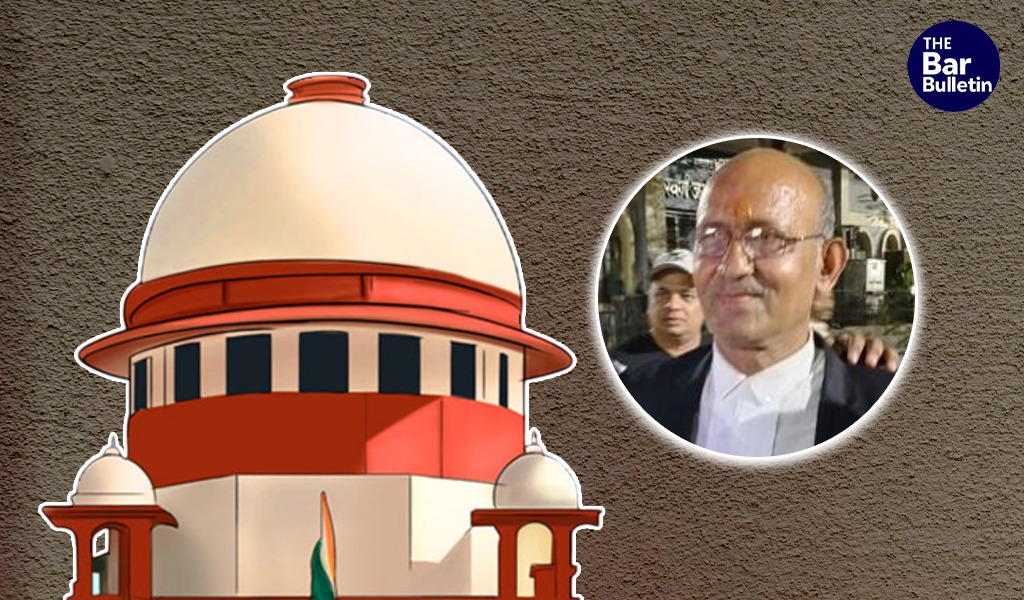
The Supreme Court today issued a show-cause notice to Advocate Dhanya Kumar Jain, President of the Madhya Pradesh High Court Bar Association (MPHCBA) in Jabalpur (Respondent No. 4). A Bench of Chief Justice Surya Kant and Justice Joymalya Bagchi issued a show-cause notice returnable within a week as to:
- Why contempt proceedings should not be initiated against him under the Contempt of Court Act 1971;
- Why the advocate’s bar licence should not be suspended, and
- Why Respondent No. 4 should not be removed from the post of office bearer.
However, the Court declined any ex parte relief, rejecting the request to restrain authorities from acting on the complaint at this stage. “Let him appear,” the Court said.
Issuing notice, the court warned that it would not hesitate to act firmly if such conduct persists:
“We still hope that some better sense will prevail. After all, advocates are advocates. But when we find that there is no scope of any sense, then we also know how to deal with senseless people.”
Background of the case
The case arose from the writ petition filed by the Bar Council of India, which has challenged a letter/complaint issued by Respondent No. 4 addressed to judicial authorities. The communication raised concerns regarding election-related activities and allegations about campaign materials being displayed in the court premises and disruptions caused during the Bar Council election process.
According to the BCI, the complaint is false, derogatory and aimed at undermining the integrity of the election process, which is being conducted under the framework approved by the Court. The petition contends that such actions amount to abuse of legal process, professional misconduct, and may attract liability under contempt law.
BCI also attached several other communications and letters written by Respondent No. 4 raising grievances about the exclusion of advocates, 30% reservation for women, and irregularities in the conduct of elections.
Appearances
Petitioner- Mr. Gurukrishna Kumar, Sr. Adv., Ms. Radhika Gautam, AOR, and Ms. Anjul Dwivedi, Adv.
Respondent —