
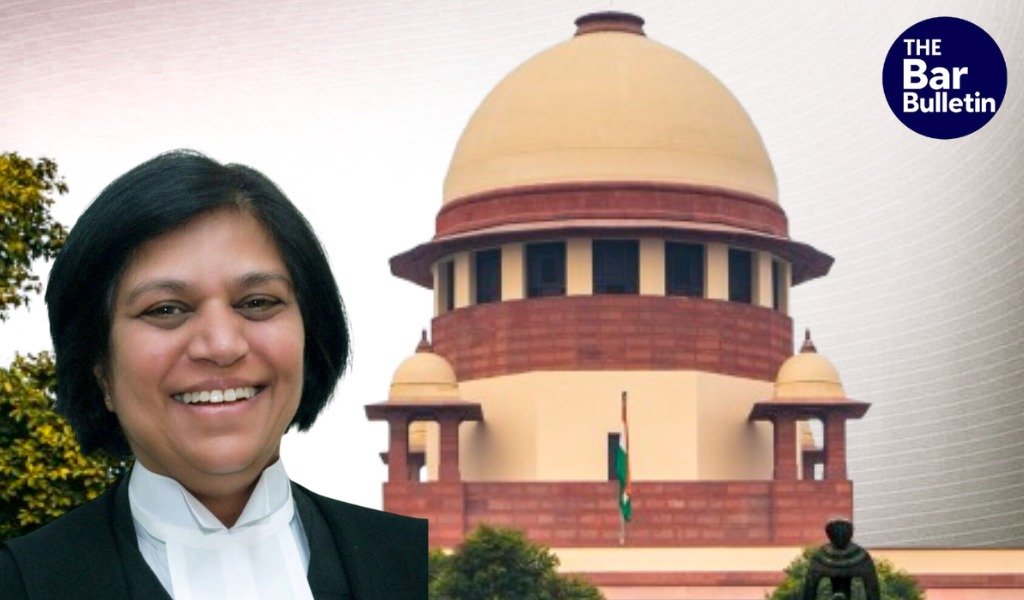

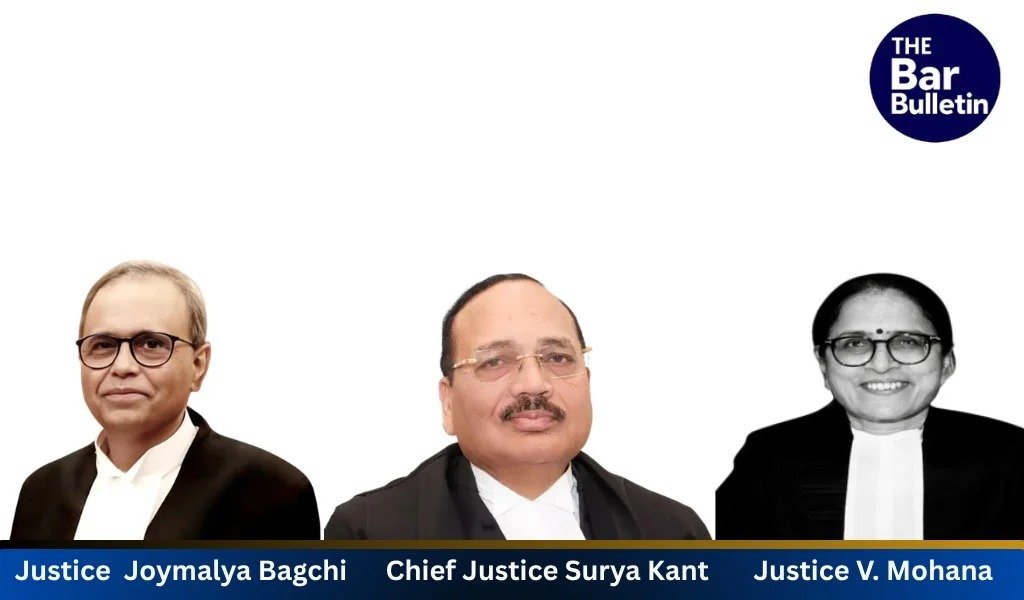
The Supreme Court, on Wednesday, while hearing a plea concerning the co-option and reconstitution of State Bar Councils and the Bar Council of India, questioned the challenge to the nomination of former Punjab and Haryana High Court judge Justice Jaishree Thakur as a member of the Punjab and Haryana Bar Council. The matter was heard by Chief Justice Surya Kant, Justice Joymalya Bagchi and Justice V Mohana.
The issue arose when counsel pointed out that Justice Thakur had herself been the Returning Officer during the election process and was subsequently nominated as a member of the Bar Council, raising concerns about her participation in matters concerning the election process.
The Chief Justice of India, however, strongly questioned the objection.
“
“She Had Been the Finest Judge. What is the problem with you people? You go and raise this slogan outside. She knows how to tackle. Some lawyers are sitting outside, they thing chief justice of India will be afraid of them? We know how to tackle everyone.”
Counsel subsequently explained that the concern was not about Justice Thakur personally, but about the nomination process, particularly since she had been associated with the election proceedings as Returning Officer.
The Bench responded that such concerns could be left to the elections committee.
The issue formed part of a larger hearing on compliance with the Supreme Court’s earlier directions for completing the co-option exercise across State Bar Councils. Senior Advocate Shobha Gupta filed an interlocutory application seeking 30% representation for women in the Bar Council of India, including a proposal that the position of Chairperson be held by a woman for an initial term and thereafter be filled by rotation. The submissions also referred to reserving the posts of Secretary and Treasurer in the State Bar Councils and the BCI for women, at least for the first term.
Another Counsel raised a broader constitutional question concerning whether, under Article 142, the statutory requirement of an “elected” representative could be partially substituted by nomination for certain seats. The submission was made in the context of difficulties being faced in Punjab and Haryana concerning the participation of Justice Thakur in pending election petitions.
After hearing, the Court recorded compliance with its September 2, 2026 directions, under which the Chief Justices of the jurisdictional High Courts were directed to complete the pending co-option of two women members to the respective State Bar Councils within two weeks. Thereafter, the newly constituted State Bar Councils were to notify their final composition within one week, following which they were required to complete the remaining statutory steps for constitution of the Bar Council of India and elect their representatives to the BCI.
The Court further recorded the status of compliance with its earlier directions. It noted that the Bar Council of India had placed on record a tabulated chart showing that the co-option exercise remained incomplete in some States, while counting was still underway in others. The Court observed that it appeared that the State Bar Councils in several States had not yet been formally constituted.
The Court directed that the necessary steps be taken by the Chief Justices of the concerned High Courts and the elected State Bar Councils in terms of its previous orders and that the High Courts be reminded to complete the pending co-option exercise. It further directed the BCI to apprise the elected State Bar Councils of the need to complete the pending exercise and formally notify their composition, and directed that a compliance report be filed.