
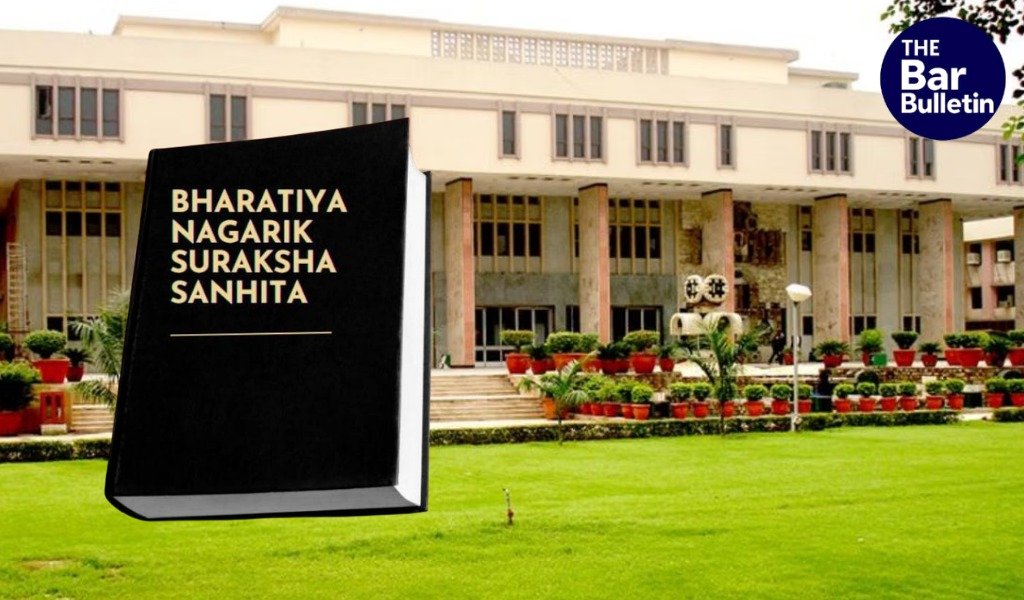

The Supreme Court has held that victims of offences have the locus standi to approach the High Court under Section 528 of the Bharatiya Nagarik Suraksha Sanhita (BNSS), 2023, seeking directions for expeditious completion of criminal trials. The Court clarified that a victim’s role in criminal proceedings is not limited to being a witness and that victims, like accused persons, have a vested right to insist on a speedy and fair trial.
A Bench of Justice Ujjal Bhuyan and Justice Atul S. Chandurkar set aside a Delhi High Court order that had dismissed a complainant’s petition seeking expeditious disposal of a criminal case as frivolous and imposed costs of ₹10,000 on her.
The appellant, the de facto complainant in an FIR registered in 2017 at Farsh Bazar Police Station under Section 420 of the Indian Penal Code, had earlier approached the Delhi High Court over delays in the trial. In February 2023, the High Court had directed the trial court to conclude the proceedings within two years after framing of charges. As the trial made little progress, she filed another petition under Section 528 BNSS, corresponding to Section 482 of the Code of Criminal Procedure, 1973.
The Delhi High Court dismissed the petition on January 6, 2026, holding that the complainant’s role in the State prosecution was limited to being a witness and that only the State or the accused could institute such proceedings. It also characterised the petition as frivolous and imposed costs of ₹10,000.
Disagreeing with this approach, the Supreme Court observed that a victim is a definite stakeholder in the criminal justice system and is not excluded from seeking judicial intervention merely because the prosecution is conducted by the State. It referred to the statutory framework governing victims’ participation in criminal proceedings and earlier decisions recognising their right to a speedy trial.
The Court held that a victim can invoke Section 528 BNSS to seek a direction from the High Court to expedite trial proceedings. It further observed that the High Court’s criticism of the complainant’s petition was based on a misreading of the relevant legal and constitutional provisions.
Allowing the appeal, the Supreme Court directed the trial court to conclude the proceedings within one year from September 24, 2026. The Court clarified that it had not expressed any opinion on the merits of the criminal case and that all contentions remained open.
