
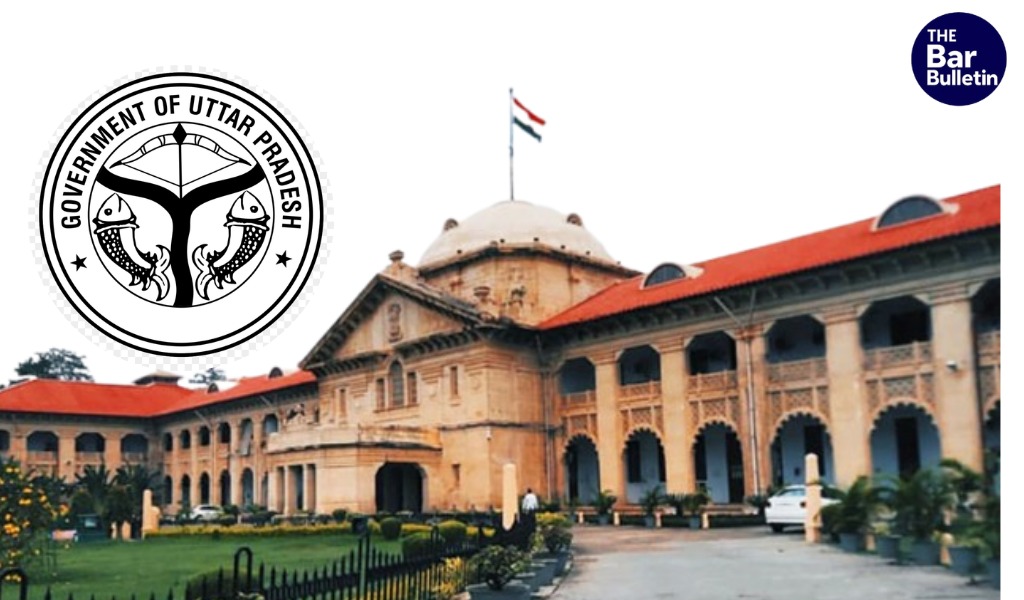

The Allahabad High Court has directed the Uttar Pradesh Government to explain why orders extending the tenure of Gram Pradhans and permitting them to continue as administrators were issued under a statutory provision that had already been declared unconstitutional by a Division Bench of the Court.
Justice Siddharth Nandan observed that the impugned orders dated 25 May 2026 and 26 May 2026, issued under Section 12(3-A) of the U.P. Panchayat Raj Act, 1947, were “apparently non est”, as the provision had been struck down in Pram Lal Patel v. State of U.P., LawSuit ALL 290 for violating Articles 243E and 243K of the Constitution, which mandate timely Panchayat elections and vest the power to conduct elections exclusively in the State Election Commission.
The petitioner sought quashing of the two orders and also sought a direction to the authorities to place on record a time-bound schedule for conducting the three-tier Panchayat elections in accordance with the constitutional mandate.
During the hearing, the State submitted that Panchayat elections had been delayed because the OBC Commission, constituted pursuant to the Supreme Court’s decision in Vikas Kishanrao Gawali v. State of Maharashtra, (2021) 6 SCC 73, had not yet submitted its report on reservation. Counsel appearing for the State Election Commission, however, informed the Court that the electoral rolls had already been published on 10 June 2026 and the Commission was prepared to conduct elections, subject to the State Government providing the necessary logistical support.
Taking note of these submissions, the Court observed that since the orders were founded upon a provision already held unconstitutional, Gram Pradhans could not be permitted to continue as administrators. However, it granted the State one final opportunity to place on record the OBC Commission’s report, if available, and disclose a clear timeline for completion of the Panchayat elections. If failed, the respondent no. 2 shall be present before the Court on the next date fixed.
The Court further directed Respondent No. 2 to file a personal affidavit explaining the circumstances in which the impugned orders were issued despite the Division Bench judgment declaring the enabling provision unconstitutional. Issuing a stern warning, the Court observed:
“
“…he shall give explanation, as to under what circumstances, he has issued the impugned orders, when the provisions mentioned in the impugned order, has already been held to be unconstitutional by a Division Bench of this Court, failing which it can be construed that a prima facie contempt has been committed by him, with regard to the decision of Division Bench of this Court.”
The High Court also permitted the petitioner to implead the OBC Commission as a party to the proceedings and listed the matter for further hearing on 13 July 2026.
