
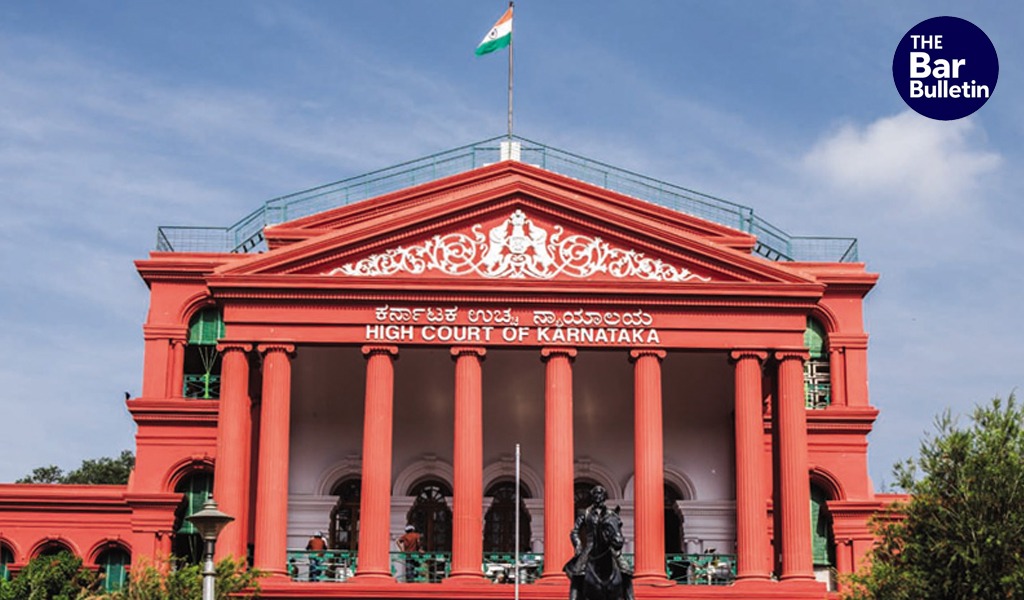

The Karnataka High Court (Bengaluru Bench) has held that under the RBI Prudential Framework for Resolution of Stressed Assets, 2019, the resolution mechanism is founded on collective but majority-based decision-making, not unanimity. Accordingly, non-participation of one lender in the review / resolution meetings does not vitiate the decision-making process of the remaining lenders, nor does it justify setting aside the majority decision, unless there is illegality or procedural irregularity of a fundamental nature.
The Court also held that while non-participation by a lender may be contrary to the spirit and object of the Prudential Framework and may impede the efficiency of the process, the proper regulatory response lies with the RBI in exercise of its supervisory powers, and not by judicially nullifying the majority commercial decision in writ proceedings. The Court held that there was no merit in the petition insofar as the challenge based on the Prudential Framework was concerned, and expressly ruled that non-participation of Deutsche Bank did not vitiate the entire process.
A Single Judge Bench of Justice Lalitha Kanneganti narrowed the controversy to one central issue: whether non-participation of one lender in meetings under the RBI Prudential Framework vitiates the decision of the remaining lenders and requires a fresh resolution process. The Bench made it clear that, except for this limited issue, the petitioner’s objections to NPA classification, SARFAESI measures, and allied grievances were matters for the Debts Recovery Tribunal and not for writ jurisdiction under Article 226.
The Bench observed that the Prudential Framework is a statutory regulatory mechanism framed under the Banking Regulation Act, 1949 and the RBI Act, 1934, intended to ensure early recognition of stress, timely reporting of default, proper provisioning, and expeditious resolution of stressed exposures. It held that the object of the framework is to ensure that resolution is not stalled by individual lenders and that decisions taken by the requisite majority are given effect to in a time-bound manner.
On the petitioner’s main objection, the Bench held that accepting the argument that one lender’s absence nullifies the process would allow any single lender to frustrate the entire mechanism by abstaining. That, according to the Bench, would defeat the very purpose of the framework. It therefore held that even if Deutsche Bank’s non-participation was contrary to the spirit and object of the Prudential Framework, such non-participation, by itself, did not cause legal prejudice to the petitioner where the majority lenders had already rejected the proposal.
The Bench further read paragraphs 9 and 10 of the Prudential Framework to mean that the framework adopts a structured, majority-based decision-making model. The requirement of meetings is to facilitate collective deliberation, but the binding character of the decision flows from the requisite majority approval under the ICA structure, not from universal participation or unanimity. Therefore, non-participation of a lender in such meetings does not, by itself, invalidate the resolution process or prevent implementation of a duly approved resolution plan.
Also Read Gujarat High Court Upholds Acquittal in SC/ST Act Case; Finds No Proof of Caste Abuse in Public View
Briefly, Ganjam Nagappa and Son Private Limited, a jewellery business, had borrowed from Deutsche Bank and a consortium led by SBI, and later faced financial stress during and after COVID-19. The company argued that the lenders did not properly follow the RBI’s Prudential Framework for Resolution of Stressed Assets dated 7 June 2019, particularly because Deutsche Bank did not participate in the collective review process. It also alleged improper appropriation of GECL/ECLGS funds, challenged the NPA classification and SARFAESI recovery measures, and sought a direction to the lenders to jointly consider its 2025 one-time settlement / resolution proposal.
The petitioner’s case was that once a borrower is in default, all lenders must undertake a prima facie review within 30 days under paragraph 9 of the Prudential Framework, and where a resolution plan is to be implemented, all lenders must enter into an inter-creditor agreement under paragraph 10. According to the petitioner, non-participation of one lender vitiated the entire process, and therefore the lenders could not continue recovery proceedings while the resolution exercise was still pending.
The RBI stated that ICA becomes mandatory where a resolution plan is to be implemented, and clarified by affidavit that the framework envisages a coordinated and collective process in which all lenders are required to come together for review; however, it also stated that there is no regulatory prescription prohibiting banks from engaging in recovery without exploring restructuring in every case. SBI and the other banks opposed the petition mainly on maintainability and contended that challenges to SARFAESI action must be taken before the DRT under Section 17 of the SARFAESI Act.
