
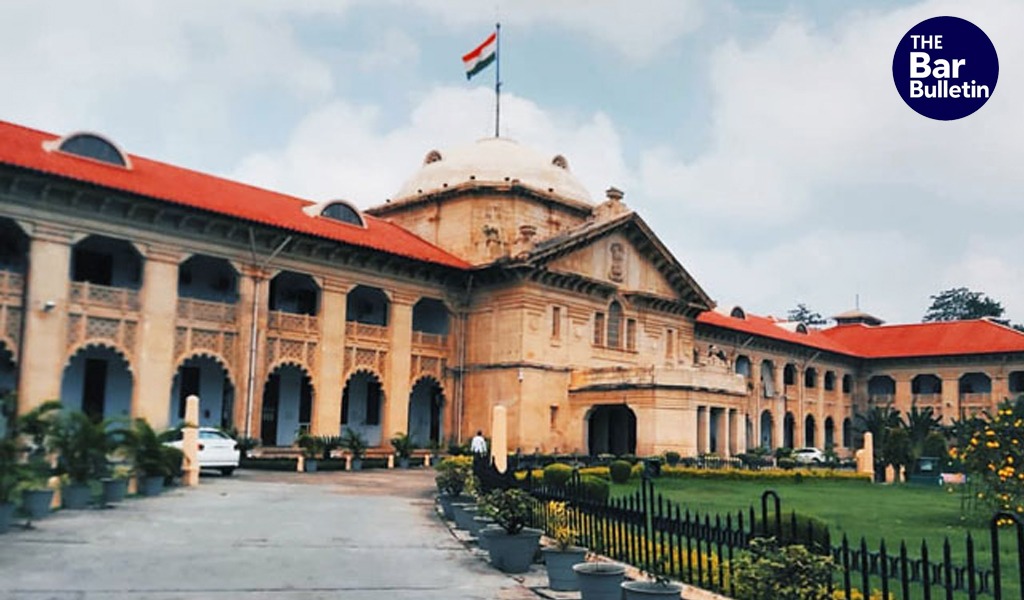

The Allahabad High Court has dismissed a public interest litigation seeking directions to permit a new route for the Muharram Alam/Tazia procession in Sambhal district, holding that while Article 25 guarantees the right to practice religion, it does not confer a fundamental right to insist upon a particular route for conducting religious processions.
A Division Bench of Justice J.J. Munir and Justice Arun Kumar was hearing a plea seeking permission to take out the Alam/Tazia procession on a newly proposed route after the traditional route used between 1952 and 2022 was rendered unusable following the Railways’ construction of a permanent wall at a railway crossing after an accident in 2022. The petitioners contended that the alternative route presently available significantly increased the travel time to the Karbala where the Tazia is buried and sought provisional permission for the procession on the new route.
The State opposed the plea, informing the Court that an alternate arrangement had already been arrived at pursuant to an agreement dated 28 July 2023, which had been incorporated in the festival register maintained by the administration. Under the arrangement, the procession would proceed along the customary route up to the government tubewell, where the religious rites would be performed and the Alam dismantled before being carried by hand. The State further submitted that permitting the proposed new route through the Sirsi-Bilari Main Road had been opposed by members of other communities and could lead to law and order concerns.
The Court observed that although the Constitution guarantees freedom of religion under Article 25, the exercise of that right is subject to considerations of law and public order. Emphasising the distinction between the right to practice religion and the manner in which it is exercised, the Bench observed:
“
“The exercise of a right to practice one’s religion is one thing and to practice it in a particular way is different. The earmarking of routes to take out processions, that involve a multitude of people, is a matter that essentially relates to law and order, for which the civil and the police administration bear responsibility. If, upon assessment of the situation, physical and geographical, and opinions of members of other communities, the respondents have taken a decision that a new route, as proposed by the petitioners, cannot be permitted to take out the Tazia procession, there is no right inhering in the petitioners to take out the procession along the particular route that they propose.”
The Court held that decisions regarding routes for large religious processions primarily fall within the domain of the civil and police administration, which must assess law and order, geographical conditions and the views of other communities before granting permission. Rejecting the petitioners’ contention that they were entitled to the newly proposed route, the Bench observed:
“
“There is absolutely no fundamental right to the practice of one’s religion, that may entitle them or the community to use a particular road for the performance of religious rites.”
The Court noted that the petitioners had not been prohibited from taking out the Muharram procession altogether; only the request to use a different route had been declined. It further held that the petitioners remained bound by the terms of the 2023 agreement governing the procession route and could not compel the authorities to permit the newly proposed route.
Finding no merit in the plea, the High Court dismissed the PIL.
