
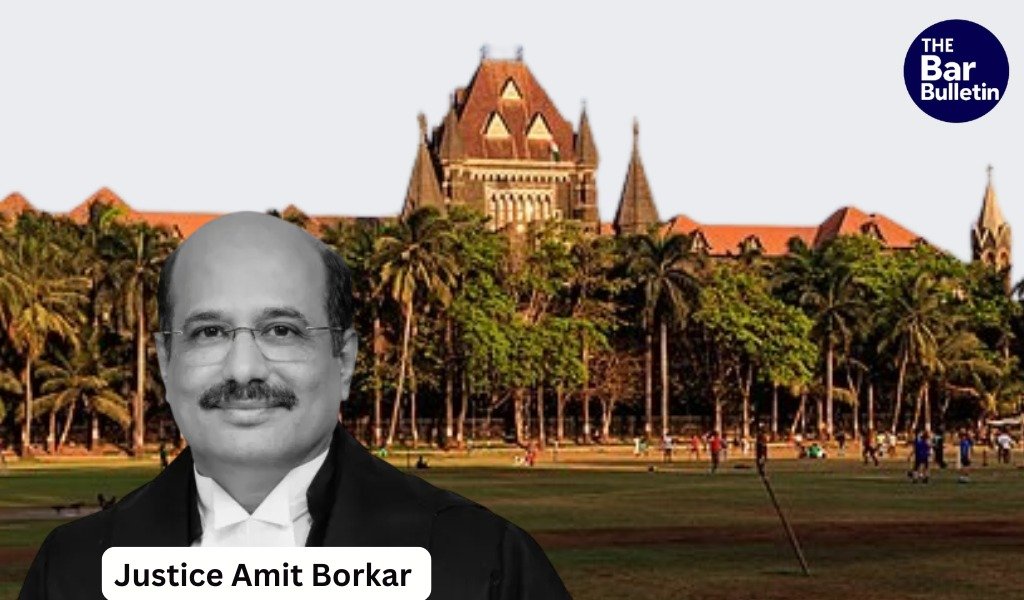
The Bombay High Court has rejected a petition filed by Phantom Studios India Pvt. Ltd. seeking interim relief from contractual restrictions prohibiting it from producing or commercially exploiting works featuring key Ramayana characters, including Hanuman, until Diwali 2027.
Justice Amit Borkar, while deciding a petition under Section 9 of the Arbitration and Conciliation Act, 1996, held that Phantom Studios had not established a sufficiently clear legal right to be released from the negative covenants contained in an Assignment Agreement dated April 19, 2024.
The dispute arose from the Assignment Agreement under which Prime Focus Technologies Ltd. acquired intellectual property rights in Project Ramayana from Allu Mantena Media Ventures LLP. Phantom Studios was also made a signatory to the agreement and agreed to comply with Clause 5, which restricted the production, development, release, exploitation, marketing and advertising of works relating to Ramayana or featuring its principal characters, including Hanuman, until Diwali 2027.
Phantom Studios approached the High Court alleging that the restrictions were being applied selectively. It contended that Madhu Mantena and other respondents were proceeding with a film titled Chiranjeevi Hanuman: The Eternal, centred on Hanuman, through Collective Artists Network India Pvt. Ltd., despite the contractual restrictions.
Phantom argued that following a share buy-back in October 2024, the relationship of control between Madhu Mantena’s group and Phantom Studios had ended. It therefore contended that it should no longer remain bound by the restrictions. It also relied on an alleged oral assurance by Madhu Mantena to pay ₹9 crore as compensation for its inclusion in the agreement and for remaining subject to the negative covenants.
Rejecting the plea for interim protection, the Court observed that Phantom Studios had been expressly named in the operative provisions of the agreement imposing the restrictions. Clause 5.1 specifically included Phantom among the entities bound by the negative covenants, while Clause 5.2 recorded its agreement to remain bound by those restrictions.
The Court held that the agreement did not provide for Phantom’s release from the restrictions upon Madhu Mantena or his entities exiting its shareholding. Nor had Phantom produced any written release or signed amendment modifying the contractual terms. The alleged oral assurance, which was denied by the respondents, could not by itself bring the written negative covenant to an end.
The Court further observed that permitting Phantom to undertake activities expressly restricted under the agreement would effectively alter the written contract through an interim order under Section 9. The fact that Phantom had not received separate consideration directly was not sufficient to render the negative covenant ineffective, particularly when the agreement recorded that the consideration paid to the Assignor covered the restrictions imposed upon Phantom as well.
The Court also declined to direct disclosure of payments made or payable under the Assignment Agreement in connection with Phantom’s alleged ₹9 crore compensation claim. It held that the information sought would not establish the disputed oral promise and that no sufficient connection had been shown between the disclosure sought and the monetary claim.
The Court clarified that its findings were confined to the interim reliefs sought under Section 9 and that the respective rights and arguments of the parties would remain open for consideration in the arbitration proceedings.
Appearances
For the Petitioner: Mr. Sharan Jagtiani, Senior Advocate with Ms. Naira Jeejeebhoy, Ms. Samridhi Lodha, Ms. Shweta Jaydev, Mr. Jai Sanyal, and Mr. Keshav Thakkar .
For Respondents 1, 2, 4 and 5: Mr. Ashish Kamat, Senior Advocate with Mr. Anand Mohan, and Ms. Nirali Atha .
For Respondent 8 and 9: Mr. Hiren Kamod with Mr. Ameet Naik, Ms. Madhu Gododia, Mr. Vivek Dwivedi, Mr. Aryan Garg Ms. Sakshi Dube, & Ms. Khushi Agarwal.