
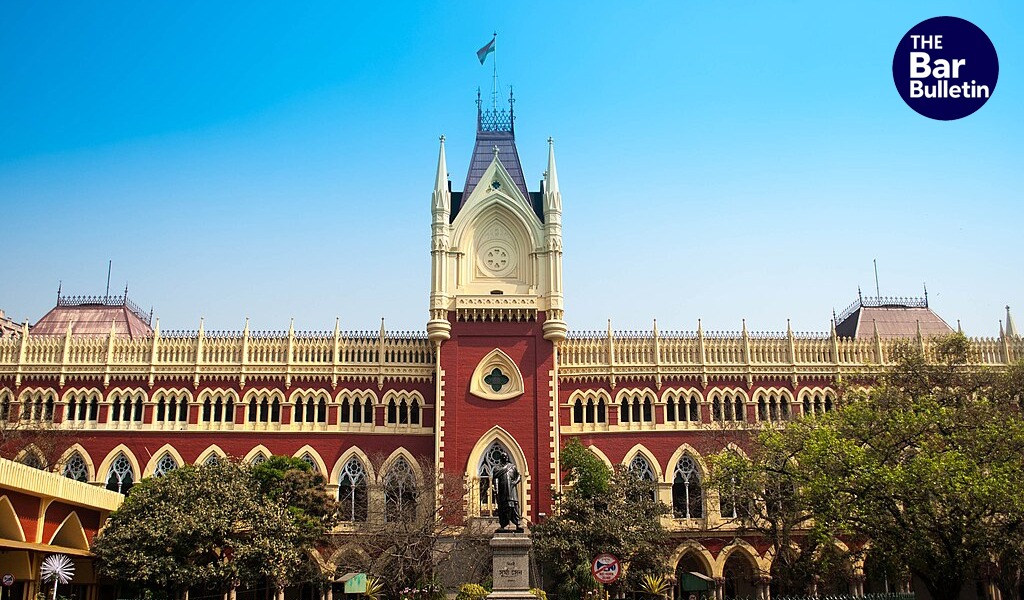

The Calcutta High Court has held that an MSME which fails to invoke the RBI’s 2016 Revival and Rehabilitation Framework at the SMA/NPA classification stage and instead chooses to challenge bank action under Section 17 of the SARFAESI Act, cannot turn around and seek Framework relief through a writ petition after Section 13(4) proceedings have commenced.
The Court clarified that while the Framework for Revival and Rehabilitation of MSMEs dated 17th March 2016 is mandatory and binding on banks and secured creditors under the SARFAESI Act and must be followed before classifying an MSME loan account as NPA, it is equally incumbent on the MSME concerned to be vigilant and bring to the notice of the bank its status as an MSME by producing authenticated and verifiable documents at the appropriate stage.
An MSME that allows the entire process for enforcement of security interest under the SARFAESI Act to proceed, or that having challenged such action before a court or tribunal and having failed, cannot be permitted to raise the plea of being an MSME at a belated stage to thwart the bank’s recovery actions. Furthermore, where an MSME has invoked the statutory remedy under Section 17 of the SARFAESI Act before the Debt Recovery Tribunal, its grievance regarding the NPA classification and the alleged non-following of the Framework cannot be entertained in a writ proceeding under Article 226 of the Constitution, added the Court.
A Single Judge Bench of Justice Krishna Rao noted that the Framework for Revival and Rehabilitation of MSMEs dated 17th March 2016, issued by the Reserve Bank of India, applies to MSMEs having loan limits up to Rs. 25 crores, including accounts under consortium or multiple banking arrangements. Clause 2.1 of the Framework mandates that before a loan account of an MSME turns into an NPA, banks or creditors must identify incipient stress in the account by creating three sub-categories under the Special Mention Account (SMA) category.
Clause 3.3 prescribes the composition of the Committee for revival and rehabilitation, comprising the regional or zonal head of the convener bank as Chairperson, the officer-in-charge of the MSME Credit Department as member and convener, one independent external expert nominated by the bank, one representative from the concerned State Government, and senior representatives of all banks or lenders in cases of consortium or multiple banking arrangements, added the Court.
The Court observed that in the present case, the petitioners did not inform the bank or request the benefit under the Framework in their reply to the Section 13(2) notice, did not pray for any such benefit in their further representation dated 15th July 2024, and only sought the benefit after the bank had issued the Section 13(4) notice. The Court further noted that the petitioners had voluntarily initiated proceedings under Section 17 of the SARFAESI Act before the Debt Recovery Tribunal, Siliguri, and had not initiated proceedings under the Framework by filing an application along with the affidavit of an authorised person as contemplated thereunder.
Briefly, Debpara Tea Company Limited, a Micro, Small and Medium Enterprise (MSME), obtained financial assistance of Rs. 13.73 crores from the State Bank of India on 7th October 2020, which was subsequently enhanced on 6th May 2022, with petitioners 2 to 4 standing as guarantors and directors of the borrowing company. The bank classified the account of petitioner no. 1 as a Non-Performing Asset (NPA) on 29th December 2023 and communicated this to the petitioners by a letter dated 2nd January 2024.
Thereafter, the bank issued a demand notice on 15th January 2024 calling upon the petitioners to pay Rs. 13.24 crores within seven days, followed by a notice under Section 13(2) of the SARFAESI Act, 2002 on 21st March 2024 for Rs. 14.28 crores along with future interest. The petitioners replied on 17th May 2024 alleging that they had not received any prior reminders regarding regularization of the loan account before it was classified under the Special Mention Account (SMA) category and designated as NPA, as mandated by the Reserve Bank of India.
The bank subsequently issued a notice under Section 13(4) of the SARFAESI Act on 16th September 2024 for taking possession of the secured assets, prompting the petitioners to file an application under Section 17 of the SARFAESI Act before the Debt Recovery Tribunal, which remains pending. The petitioners thereafter submitted multiple revised settlement proposals seeking benefit under the Framework for Revival and Rehabilitation of MSMEs dated 17th March 2016 and made a representation to the RBI on 10th April 2026. The petitioners ultimately filed the present petition praying for a declaration that the respondents had not discharged their obligations under the said Framework before declaring the account as NPA, and consequently that the NPA declaration was null and void.
