
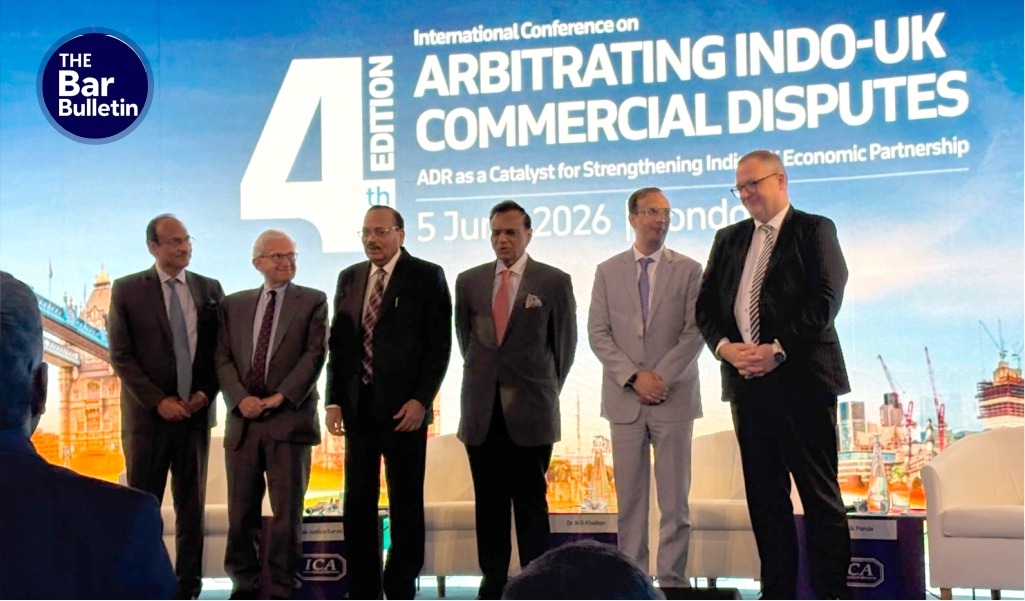

Chief Justice of India Surya Kant on Friday called for a critical re-examination of contemporary international arbitration, cautioning that the dispute resolution mechanism risks replicating the very shortcomings it was originally designed to overcome. Speaking at the inauguration of the fourth International Conference of the Indian Council of Arbitration (ICA) on “Arbitrating Indo-UK Commercial Disputes: ADR as a Catalyst for Strengthening the India-UK Economic Partnership”, the CJI reflected on the evolution of arbitration, its growing role in global commerce, and the structural challenges confronting the system today.
Describing arbitration as a mechanism that offers expertise, neutrality, confidentiality and finality, CJI Surya Kant said its legitimacy depends on remaining fair, accessible and efficient. Tracing its origins to medieval merchant practices and India’s own tradition of community-based dispute resolution, he observed that arbitration was built around a simple question: “When parties in commerce disagree, how can their dispute be resolved in a manner that is fair, informed, timely, and final?”
However, the Chief Justice stated that arbitration must guard against allowing procedure to overshadow purpose. He said:
“
“The difficulty begins when the machinery overwhelms the purpose. If arbitration becomes too expensive, too slow, too closed or too formal for the parties it is meant to serve, then the institution must look within.”
Arbitration Acquiring Failings of Litigation: CJI
Expressing concern over the direction in which international arbitration has evolved, CJI Surya Kant remarked, “I believe this has occurred at least in part because arbitration has increasingly come to be treated as a product to be promoted rather than a mechanism to be refined.” He observed that discussions often shift away from the needs of businesses and parties towards the interests of the industry that has developed around arbitration.
The Chief Justice pointed to concentrated appointment patterns, rising costs, prolonged proceedings and increasingly complex arbitration clauses as issues requiring attention. He said arbitration agreements frequently generate preliminary litigation over jurisdictional and procedural questions before parties can even address the substantive dispute. He was also concerned about overly expansive interpretation of party autonomy. He said
“
“Party autonomy was never intended to mean that parties are entitled to engineer the identity of the decision maker most likely to favor their position. Rather, it signifies the right of the parties to insist upon a process that is independent, impartial, fair and capable of inspiring confidence in its outcome.”
Calling for stronger institutional safeguards, the Chief Justice emphasised that party autonomy should remain a guarantee of procedural fairness rather than a source of procedural contestation. Summing up his concerns, he said:
“Arbitration was built to be the answer to the pathologies of formal litigation and it is seemingly acquiring each of those very failings. In other words, the remedy has come to resemble the disease it was designed to cure.”
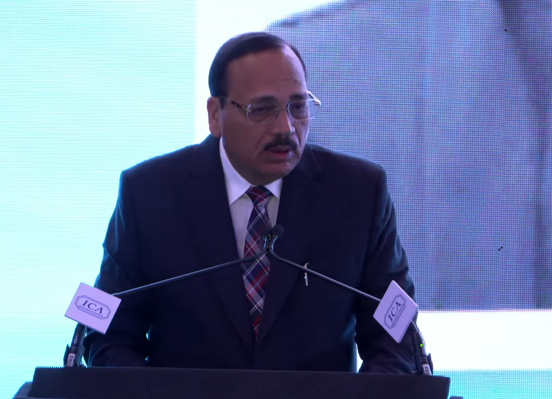
On the conference theme, the Chief Justice highlighted the significance of the recently concluded India–UK Free Trade Agreement and the opportunities it presents for deeper commercial engagement. He noted that while trade agreements create opportunities, sustained economic partnerships require credible dispute resolution systems. He said:
“
“The Indo-UK economic partnership cannot be strengthened by trade agreements, tariff schedules and investment announcements alone. It also needs an ADR architecture that converts commercial confidence into day-to-day practice.”
He stated that the confidence in cross-border commerce depends on ensuring that businesses are not priced out of dispute resolution mechanisms or forced into processes they cannot realistically access. Referring to smaller exporters, start-ups, suppliers and medium-scale enterprises, he observed that many parties accept arbitration clauses drafted by stronger commercial counterparts, leaving them with limited practical choices despite formal consent. Emphasising inclusivity, he stated,
“Real party autonomy therefore requires accessible model clauses, transparent costs, diverse panels, digital case management and procedures proportionate to the value and urgency of the disputes. In short, the autonomy that arbitration promises must be made genuinely usable for all parties to the corridor, not just the most powerful ones.”
Arbitration Doesn’t Need Another Ceremonial Tribute to its Past: CJI
The Chief Justice also called for closer institutional collaboration between India and the United Kingdom, noting developments such as the UK’s Arbitration Act 2025, India’s Mediation Act 2023 and recent regulatory reforms allowing foreign lawyers and law firms greater access to the Indian market. Rejecting the notion that India should merely emulate established arbitration centres, he remarked,
“
“What is needed now is not comparison but co-creation. The task is to design together an ADR corridor in which both systems lend each other credibility, talent and standards, ultimately building something neither could build alone.”
To achieve that goal, CJI proposed a joint Indo-UK arbitrator accreditation and cross-training programme, fast-track protocols for mid-market commercial disputes, and hybrid arbitration-mediation frameworks capable of preserving long-term commercial relationships. He stressed that future dispute resolution mechanisms must be accessible, affordable and tailored to the needs of businesses operating in the expanding India-UK economic corridor. Concluding his address, the Chief Justice urged stakeholders to move beyond ceremonial praise of arbitration and instead recommit themselves to its foundational purpose.
“
“Arbitration does not need another ceremonial tribute to its past. It needs a serious recommitment to the reason it came into being. Arbitration must remain not a privilege of scale but an instrument of justice.”
Arbitration has become the silent infrastructure of globalisation: Welcome Address by Arun Chawla
Arun Chawla, Director General of the ICA, in his welcome address, said the conference reflected the growing strategic convergence between India and the United Kingdom, which are increasingly connected by commerce, legal traditions and a shared vision for dispute resolution. Emphasising the importance of arbitration in global commerce, he observed,
“
“International arbitration is no longer viewed as an alternate mechanism for resolving disputes. It has evolved into an enabling framework for economic cooperation itself. It gives businesses the confidence to transact across borders, across legal systems, across currencies and increasingly across geopolitical uncertainty.”
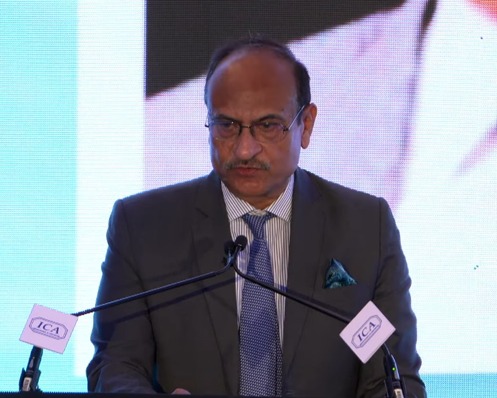
Highlighting arbitration’s role in facilitating international trade and investment, Chawla further remarked:
“
“In many ways arbitration has become the silent infrastructure of globalisation. Invisible perhaps to the public eye but indispensable to the functioning of international commerce.”
He also pointed to the deepening India-UK economic relationship and observed that as trade, investment and commercial collaboration expand across sectors, the need for credible and efficient dispute resolution systems becomes even more critical. He concluded by expressing confidence that the conference discussions would contribute meaningfully to strengthening institutional cooperation, enhancing cross-border dispute resolution frameworks, and advancing the India-UK economic partnership.
Opening Address by N.G. Khaitan, President, ICA
Delivering the opening address, ICA President N.G. Khaitan recognised India’s emergence as one of the world’s fastest-growing economies and pointed to the growing international confidence in the country’s economic and legal ecosystem. Referring to India’s expanding trade relationships and recent free trade agreements, he said the country was increasingly being viewed as a safe and attractive destination for business and investment. Emphasising India’s long tradition of dispute resolution and its growing arbitration framework, Mr Khaitan noted that the country had resolved nearly 800,000 disputes through mediation and Lok Adalats between 2016 and 2025.
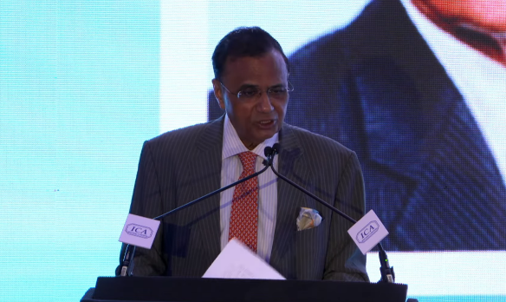
Stressing the judiciary’s pro-arbitration approach and the government’s reform measures, he urged international stakeholders to consider India as an arbitration venue. He said: “To me personally, to arbitrate is a divine function. In India, arbitration is an emotion. It is not just business.” Emphasising India’s readiness to play a larger role in the global dispute resolution landscape, he added, “Taste India to do arbitration there.”
Mr Khaitan concluded by urging the international arbitration community to look towards India as a credible, cost-effective and business-friendly arbitration destination.
Brett Dixon on Legal Cooperation and Business Confidence
Brett Dixon, Vice President of the Law Society of England and Wales, highlighted the importance of trusted dispute resolution systems in fostering trade and investment between India and the United Kingdom. Referring to the growing economic partnership between the two countries and the recently concluded Free Trade Agreement, he noted that alternative dispute resolution plays a critical role in supporting commercial growth. He said:
“
“Alternative dispute resolution is an important part of that story. It plays a vital role not only in resolving disputes but in underpinning business confidence, facilitating cross-border investment and enabling long-term commercial partnerships to flourish.”
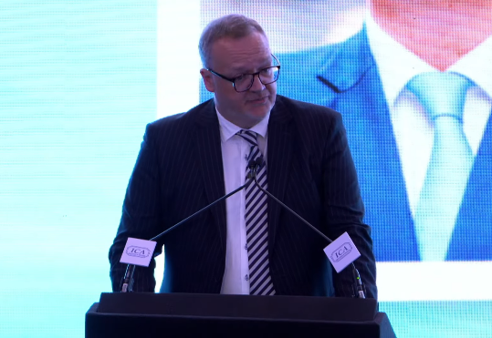
He further observed that Businesses are much more likely to invest where there is certainty, predictability and confidence in how their disputes are handled. Calling for deeper cooperation between the legal sectors of both countries, Mr Dixon said that “closer alignment, greater engagement between our legal sectors, including through arbitration, mediation, and professional exchange, can act as a powerful catalyst for trade, innovation, and mutual prosperity.” He also welcomed India’s efforts to position itself as a leading arbitration hub and expressed confidence that stronger legal collaboration would unlock greater opportunities for both jurisdictions.
Special Remark by Kartik Pande, Deputy High Commissioner of India to the UK
In his special remarks, Kartik Pande, Deputy High Commissioner of India to the United Kingdom, situated the discussion within the backdrop of rapidly expanding India-UK economic relations and the recently concluded Free Trade Agreement. Highlighting the scale of bilateral engagement, he noted that trade between the two countries currently stands at approximately £47.9 billion and that the goal of doubling bilateral trade by 2030 now appears “entirely within reach.” He stated that the significance of the Free Trade Agreement extends beyond tariff reductions, as it creates conditions for deeper economic integration, greater transparency and enhanced commercial confidence. Emphasising the importance of dispute resolution in sustaining this growth, he stated,
“
“Businesses and investors seek certainty, predictability, and confidence that commercial disputes, should they arise, can be resolved fairly, efficiently, and in a manner that supports continued business relationships…robust arbitration and alternative dispute resolution frameworks provide precisely that assurance. They help create a stable environment for international transactions, reinforce contractual confidence and facilitate increasingly complex cross-border commercial activity.”
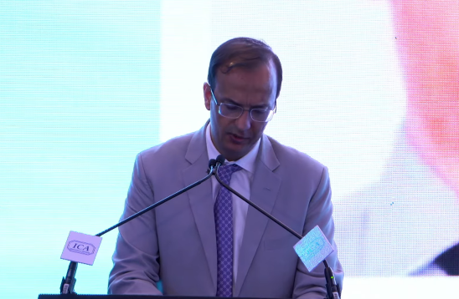
Stressing India’s commitment to strengthening ADR mechanisms, Pande said the government remained firmly committed to promoting arbitration and mediation as an integral part of the country’s legal and commercial ecosystem. He concluded by expressing confidence that the conference would help advance legal cooperation between India and the United Kingdom and contribute to building a modern and internationally respected dispute resolution framework.
‘The World Will Not Go Backwards’: Sir Geoffrey Vos on AI
Delivering the keynote address, Sir Geoffrey Vos, Master of the Rolls and Head of Civil Justice of England and Wales, highlighted the growing importance of efficient dispute resolution systems in an increasingly digital and interconnected global economy. Referring to the role of efficient dispute resolution in fostering investment and economic growth, he observed,
“
“Dependable systems of private law and efficient and economical commercial dispute resolution are both far more important to the economic success of our nations than many people would recognise. Unless overseas investors are confident that a commercial dispute will be resolved fairly within a reasonable time and at proportionate cost, such investors will go elsewhere.”
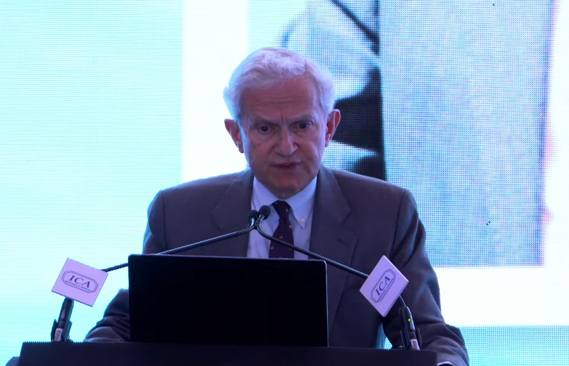
Addressing the impact of artificial intelligence on dispute resolution, he noted that AI-driven arbitration could significantly transform the sector owing to its advantages in terms of speed and cost. At the same time, he emphasised the need to preserve legal and digital sovereignty. He said:
“
“The legal community must ensure that the digital and legal sovereignty of our jurisdictions is maintained so that those decisions are just and reliable.”
Concluding with a call for adaptation of Ao, he remarked, “The world will not go backwards. Instead, these changes will accelerate and the legal community needs to find ways to make itself relevant in the new world order. To encourage and promote cross-border trade, we must make sure that we embrace AI solutions to legal problems, but those AI solutions must have their foundations in our own laws and legal traditions.”
Read Also
Fireside Chat Report- https://thebarbulletin.com/geeta-luthra-wider-arbitrator-pool-arbitration-reforms/
1st Technical Session Report- https://thebarbulletin.com/hybrid-adr-models-indo-uk-commercial-disputes/
2nd Technical Session Report- https://thebarbulletin.com/commercial-certainty-dispute-prevention-india-uk-trade-adr/
Delivering the vote of thanks, Mr Arun Chawla said the discussions highlighted a shared recognition that modern commerce depends on trust, legal certainty and credible dispute resolution systems. He noted that the India–UK partnership presents a unique opportunity to strengthen cross-border dispute resolution and commercial cooperation.