
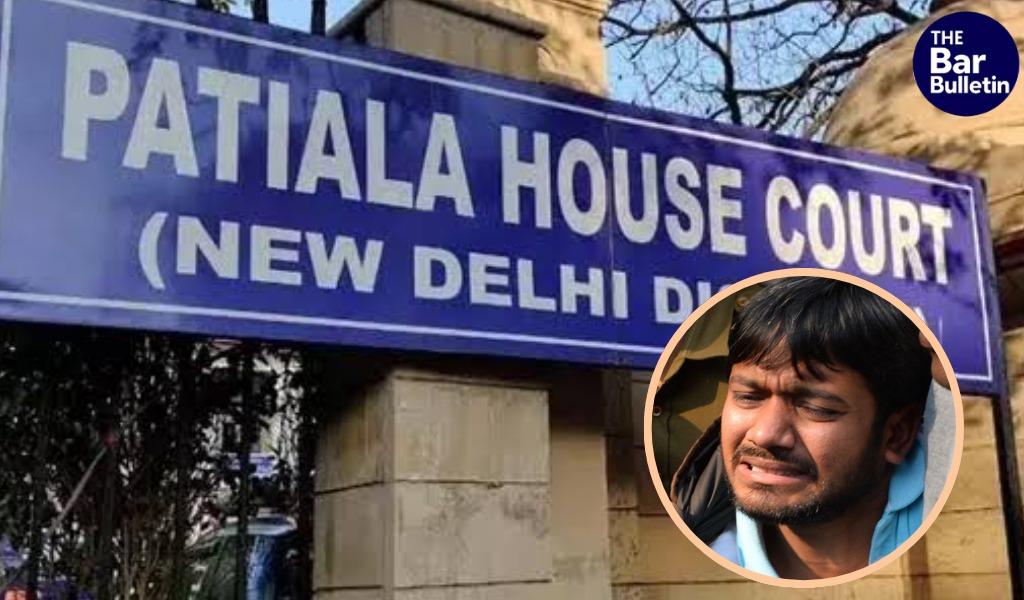
The Patiala House Court, Delhi has rejected a defamation suit filed by advocate Vikram Singh Chauhan against Google India and several media organisations over their reporting of the 2016 Patiala House Court violence, holding that the suit was barred by limitation. The Court observed that the continued availability of allegedly defamatory content on the internet does not amount to a fresh publication so as to extend the limitation period for instituting a defamation suit.
The Court allowed applications filed under Order VII Rule 11 CPC by several defendants seeking rejection of the plaint and held that the suit was ex facie barred under the Limitation Act.
The plaintiff had alleged that following the incidents at Patiala House Courts on 15 and 17 February 2016, various media houses carried false and defamatory reports describing him as a gunda lawyer, hooligan and goon, thereby damaging his professional reputation. He claimed that the publications continued to harm him, citing instances where a prospective client allegedly refused to engage him in 2022 and his defeat in the Patiala House Court Bar Association election the same year. The suit sought directions for removal of the content, a permanent injunction, an unconditional apology and symbolic damages of Re. 1.
The defendants contended that the publications had been made in 2016 and that a suit for compensation for defamation is governed by Articles 75 and 76 of the Limitation Act, 1963, which prescribe a limitation period of one year from the date of publication. They further argued that the plaint failed to disclose a fresh cause of action, lacked material particulars identifying the allegedly defamatory statements and was liable to be rejected under Order VII Rule 11 CPC.
Agreeing with the defendants, the Court held that the plaintiff had not pleaded or demonstrated that any of the defendants had republished or recirculated the impugned material within the limitation period. The Court found that the plaintiff’s assertions regarding the loss of a client and defeat in the 2022 Bar Association election were vague and unsupported by material particulars linking those events to the publications complained of.
Significantly, the Court observed that although content uploaded on the internet may remain accessible through search engines or archived webpages for a considerable period, its continued availability does not constitute republication or recirculation each time it is accessed. Drawing a distinction between continuing consequences of an earlier publication and a fresh act of publication, the Court held that mere discoverability of online material cannot give rise to a fresh cause of action.
Holding that the plaint disclosed only the continuing effects of publications made in 2016 and failed to establish any legally sustainable fresh cause of action within the prescribed limitation period, the Court rejected the plaint under Order VII Rule 11(d) CPC. In view of the rejection of the suit, all pending applications, including those seeking impleadment of parties and interim injunction, were dismissed as infructuous.
Appearances
For the Plaintiff: Mr. Aryamn Yadav, Proxy Counsel.
For Defendant No. 1: None appeared.
For Defendant No. 2: Not served.
For Defendants Nos. 3, 4, 7 & 8: Mr. Himanshu Sethi, Advocate.
For Defendant No. 5: Reported deceased.
For Defendant No. 6: Mr. Gaurav Dudeja, Mr. Raghvendra Pratap Singh and Mr. Abhijeet Debnath, Advocates (through Video Conferencing).
For Defendant No. 9: Mr. Kaustubh Srivastava, Proxy Counsel (through Video Conferencing).
For Defendants Nos. 10, 11 & 12: Mr. R.H.A. Sikander, Advocate.