
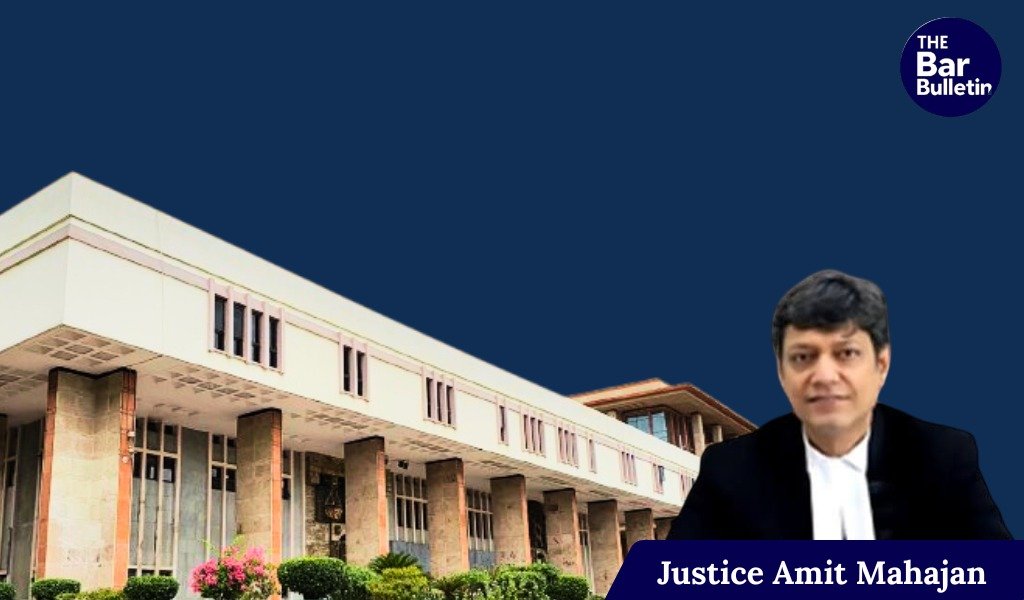

The Delhi High Court has held that the foundational challenge to the Award that All India Radio is not an “industry”, stands eclipsed by the Supreme Court’s categorical holding in the case of All India Radio v. Santosh Kumar and Ors. [Civil Appeals Nos. 2423/1989 with Civil Appeals No. s 2135/1993 & 775-776/1998/1989] that All India Radio and Doordarshan are industries within the meaning of Section 2(j) of the Industrial Disputes Act. Once the Department itself accepted and implemented the Award by reinstating the workman and paying back wages, any surviving dispute on the legality of the Award was rendered academic.
The Court held that under Article 226, it possesses the equitable power to mould relief and grant monetary compensation where mechanical enforcement would produce impracticable consequences, particularly where more than four decades have elapsed and a fresh computation exercise would only generate further litigation. The conduct of public authorities in failing to implement a binding Award for decades, compelling the workman to litigate repeatedly, warranted imposition of costs to subserve the interests of justice.
A Single Judge Bench of Justice Amit Mahajan observed that the sole premise on which the writ was transferred to the CAT in 1990, namely, that the SLP on the question of whether All India Radio is an “industry” was pending before the Supreme Court, has since been conclusively resolved. The Supreme Court, vide judgment dated Feb 05, 1998 in All India Radio v. Santosh Kumar [Civil Appeals Nos. 2423/1989 with 2135/1993 and 775–776/1998], categorically held that All India Radio and Doordarshan are industries within the meaning of Section 2(j) of the Industrial Disputes Act. The very foundation of the challenge to the Award thus stands eclipsed.
The Court further noted that the Award dated April 28, 1987 was never set aside or modified by any competent forum. Throughout the decades of procedural wrangling, the Award continued to subsist and remained operative and binding. The disputes on merits were neither decided by the CAT nor by any other forum.
The Court observed that the conduct of the Petitioners demonstrates that the Award was ultimately accepted and implemented. The workman was reinstated on Dec 10, 2012 and back wages were paid up to the date of the Award. Having accepted and implemented the Award, any surviving dispute regarding its legality would be rendered academic.
The Court strongly deprecated the conduct of the Petitioners and the Department, noting that the Award was passed in 1987, yet even after the CAT declined jurisdiction in 1997, no effective steps were taken by the Petitioners to restore the challenge before the appropriate forum. The workman was compelled to engage in avoidable and protracted litigation for decades merely to secure the fruits of an Award passed in his favour. The Court observed that public authorities are expected to act as model employers and cannot prolong industrial disputes indefinitely through procedural lapses and administrative inaction.
Also read Allahabad High Court Grants Bail in POCSO Gang Rape Case Due To Overcrowded Jails
Briefly, the workman, Bhushan Lal, was employed as a Carpenter with All India Radio in the pay scale of Rs. 320–400 with effect from Dec 17, 1981. His services were terminated vide order dated July 22, 1983 without compliance with the mandatory provisions of Section 25F(b) of the Industrial Disputes Act, 1947. The workman raised an industrial dispute before the Central Government Industrial Tribunal (CGIT), which vide Award dated April 28, 1987 held the termination to be void ab initio for non-compliance with Section 25F(b) and directed reinstatement with continuity of service and full back wages.
The Union of India challenged the Award before the Delhi High Court, principally contending that All India Radio was not an “industry” under the Industrial Disputes Act and, therefore, the CGIT lacked jurisdiction. During the pendency of the writ, the Court noted that an SLP against a Madhya Pradesh High Court judgment (which had held All India Radio to be an industry) was pending before the Supreme Court, and proceeded on the footing that the workman was a government employee governed by Central Civil Service Rules. Consequently, vide order dated March 20, 1990, the writ was transferred to the Central Administrative Tribunal (CAT). The CAT dismissed the application as not maintainable, holding it had no jurisdiction to entertain a challenge against a Labour Court award. The workman then filed petition seeking implementation of the Award.
The High Court allowed the petition vide order dated Oct 17, 2011, directing implementation of the Award within one month, and imposed costs of Rs. 15,000 on the respondents. A clarification application was allowed on Nov 14, 2011, substituting “All India Radio” as the entity directed to implement the Award. The workman was re-engaged on Dec 10, 2012 and was paid back wages only for the period July 31, 1983 to April 28, 1987, but was denied back wages till the date of reinstatement, continuity of service, and consequential benefits including pensionary benefits. The workman superannuated on Dec 01, 2014. The workman then filed another petition seeking complete implementation of the Award. In the interim, the High Court revived W.P.(C) No. 136/1988, setting aside the CAT’s order dated Feb 20, 1997 on the ground that the CAT ought to have remitted the matter back to the High Court instead of dismissing it on maintainability.
