

While rejecting the blanket levy, the Delhi High Court has clarified that sales tax applies only to rolling stock the Railways owned and transferred to the Indian Railway Finance Corporation (IRFC), not to stock procured as agent. The Court ruled that railways can be a ‘dealer’ under the Delhi Sales Tax Act, but being a dealer does not mean every transaction is a sale. The legal character of each transaction must be independently established, and stock procured as agent falls outside the levy.
The Court drew a sharp three-way classification: rolling stock manufactured by the Railways, rolling stock purchased by the Railways in its own right, and rolling stock procured by the Railways on behalf of IRFC. Only the first two classes can constitute sales; the third class is outside the levy. Hence, the impugned assessments failed because they treated the entire IRFC-financed rolling stock as turnover from sales by the Railways without segregating the source and title history of each item, rendering the composite demands unsustainable.
On territorial taxability, the Court clarified that once a sale is established, the burden shifts to the dealer under Section 6 of the DST Act to prove non-liability under Section 8 read with Sections 3 and 4 of the CST Act. Accordingly, the head office location, Clause 15 deemed appropriation, and absence of other-State assessment are not, by themselves, conclusive of Delhi situs. Resultantly, the Court ordered a structured, time-bound remand with a four-week inter-governmental meeting between the Railways, GNCTD and IRFC to jointly classify transactions, followed by reasoned assessment orders within twelve weeks, with deposits to be adjusted and no recovery for four weeks after communication.
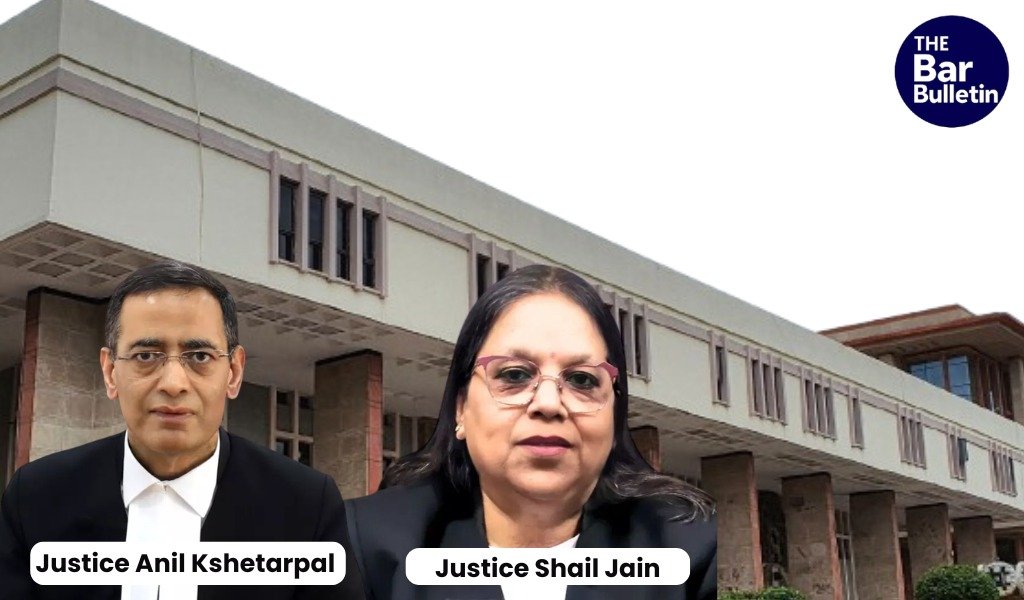
The Division Bench comprising Justice Anil Kshetarpal and Justice Shail Jain framed three questions for consideration: whether the Railways answers the description of a ‘dealer’ under the Delhi Sales Tax Act, whether the transactions between the Railways and IRFC constituted ‘sales’, and whether such sales were taxable in Delhi. On the first question, the Court observed that the Railways is not immune from sales tax legislation merely because transportation is its principal function or because it forms part of the Central Government.
On the second question, the Court drew a critical distinction between three classes of rolling stock: stock manufactured by the Railways in its own production units, stock purchased by the Railways from private manufacturers in its own right, and stock procured by the Railways on behalf of IRFC. The Court held that the first two classes, where the Railways held title and thereafter transferred it to IRFC for consideration, would constitute sales, while the third class would not. The Court noted that the impugned orders had failed to maintain this distinction and had treated the entire financing amount as turnover from sales by the Railways.
On territorial taxability, the Court observed that once a sale is established, the burden shifts to the dealer under Section 6 of the DST Act to prove non-liability under Section 8 read with Sections 3 and 4 of the Central Sales Tax Act. The Court clarified that the location of the parties’ head offices, Clause 15 of the Lease Agreement (deemed appropriation at Delhi), and the absence of assessment by another State were not, by themselves, conclusive of situs in Delhi.
Briefly, the Ministry of Railways approached the Delhi High Court by way of ten connected writ petitions challenging sales tax assessments made under the Delhi Sales Tax Act, 1971 for the assessment years 1987-88 to 1996-97, with the total disputed demand being approximately Rs. 533.79 crores. The dispute centred on whether the rolling stock financed through the Indian Railway Finance Corporation (IRFC) was liable to sales tax in Delhi.
According to the revenue, the Railways first manufactured or procured the rolling stock, acquired ownership, and then transferred it to IRFC against funds advanced by IRFC, after which IRFC leased the same assets back to the Railways. The Railways, on the other hand, contended that there was no independent sale by it to IRFC, and that it had acted merely as IRFC’s agent for inspection, delivery and commissioning of the rolling stock.
