
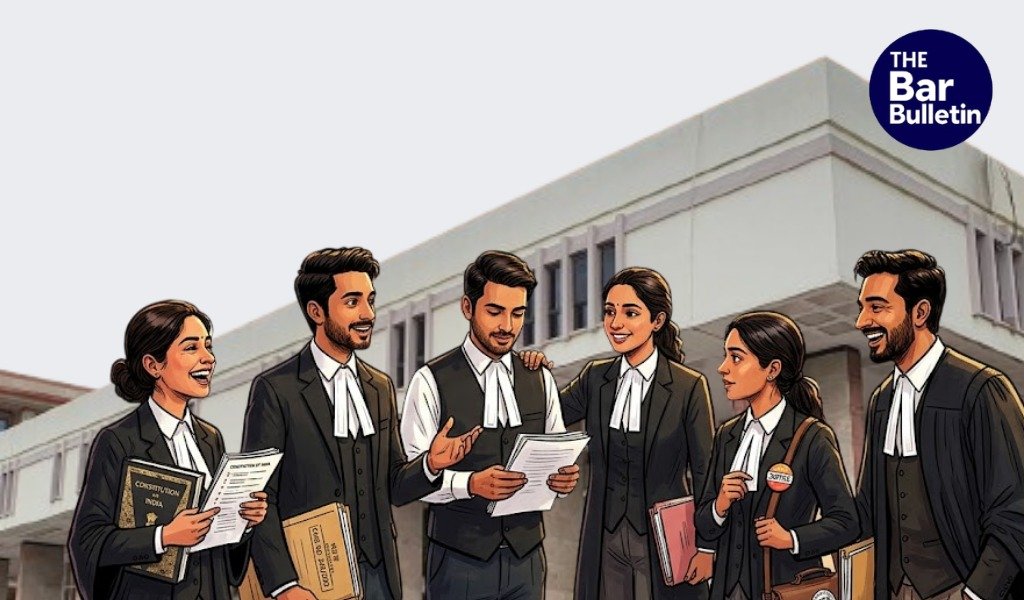

The Delhi High Court has notified the Delhi High Court Designation of Senior Advocate Rules, 2026, replacing the rules framed in 2024 for the designation of advocates as Senior Advocates.
The notification, dated September 3, 2026, has been issued under Section 7 of the Delhi High Court Act, 1966 and Section 16(2) of the Advocates Act, 1961. The Rules will come into force from the date of their publication in the Delhi Gazette.
Under the new framework, a Permanent Secretariat headed by an officer of the rank of Registrar will oversee the designation process. It will initiate the process at least once every year by inviting applications, with notices to be published on the High Court’s website and intimated to the Delhi High Court Bar Association. Applicants will get at least 21 days to apply.
An advocate will generally be eligible only if they have at least 10 years of practice, are enrolled with a Bar Council, have mainly practised before the High Court, Trial and District Courts or specialised Tribunals, and are 40 years or older, unless the Full Court relaxes the age requirement. The 10-year practice requirement is subject to a specific exception for former Delhi Higher Judicial Service officers.
The Rules also expressly prohibit canvassing by a nominee, which will result in disqualification. Eligible advocates may be considered either suo motu by the Full Court, with their consent, or on an application made by the advocate.
The names of advocates who apply for designation will be published on the High Court website, inviting suggestions and views from stakeholders within four weeks. For advocates practising before specialised Tribunals or Trial and District Courts, the views of the concerned Tribunal Chairpersons and Principal District and Sessions Judges may also be sought.
The applications will ultimately be placed before the Full Court. In considering designation, the Full Court may take into account factors including an advocate’s fairness in court, conduct towards Judges and members of the Bar, courtroom decorum, professional ethics, mentoring of junior advocates, pro bono work and standing within the legal fraternity.
The Full Court will endeavour to decide applications by consensus. If consensus is not reached, voting may be resorted to, including a secret ballot where the Full Court considers it appropriate. A decision through voting will require a two-thirds majority of the Judges who have voted. The Full Court is not required to record reasons for its decision.
An advocate whose application is rejected will be ineligible for recommendation for two years from the date of the decision. Thereafter, the matter may be reconsidered by following the prescribed procedure afresh.
The Rules further empower the Full Court to recall a Senior Advocate’s designation where, after giving the concerned advocate an opportunity of hearing, it finds conduct warranting such action. A separate mechanism has also been provided for retired Delhi Higher Judicial Service officers seeking designation as Senior Advocates.