
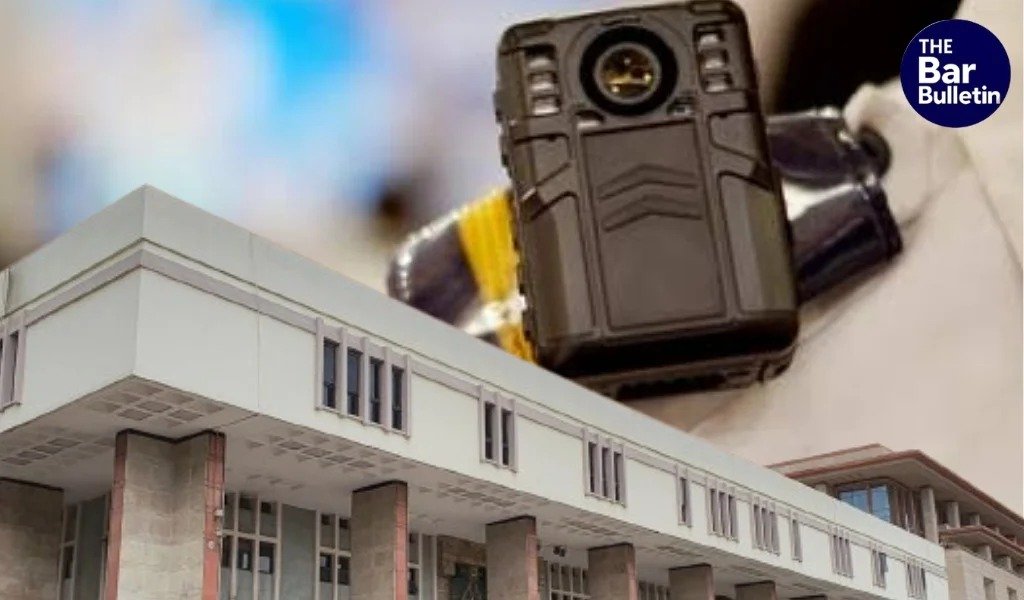
The Delhi High Court, comprising Justice Nitin Wasudeo Sambre and Justice Sanjay Sharma, has directed the respondents to take a decision within six months on framing a Standard Operating Procedure (SOP) governing the operation and use of body-worn cameras by police personnel, including aspects relating to storage and handling of recorded data.
The Court was hearing a PIL concerning the use of body-worn cameras during protests, demonstrations and crowd-control situations, with the petitioner seeking a defined mechanism to ensure accountability in cases involving allegations of excessive use of force by police as well as violence by protesters.
Senior Advocate Akhil Sibal, appearing for the petitioner, submitted that although body-worn cameras are already being used in certain contexts, including by traffic police, and tenders have been issued for their procurement, there was no comprehensive SOP governing their mandatory use during protests, preservation of recordings, access, chain of custody and prevention of selective recording. He submitted that an authenticated and preserved video record could help resolve competing allegations concerning police action and protester violence.
The petitioner also relied upon existing Delhi Police standing orders governing the policing of demonstrations and rallies, but argued that these primarily contemplate third-party videography and do not provide for body-worn cameras worn by individual police personnel. The petitioner submitted that body-worn cameras could provide a continuous and authenticated record of an officer’s actions during crowd-control operations.
Additional Solicitor General Chetan Sharma, appearing for the Union of India, submitted that existing standing orders already provide for videography of protests and demonstrations. He also relied upon directions issued by the Supreme Court in Mazdoor Kisan Shakti Sangathan v. Union of India, AIR 2018 SC 3476 concerning regulation and videography of demonstrations, and submitted that the petitioner could make a representation to the authorities.
The Court ultimately permitted the PIL to be treated as a representation and directed the respondents to communicate the decision taken on the issue of framing an SOP for the operation and use of body-worn cameras, including the handling and storage of data recorded through such cameras, within six months. The Court also granted liberty to the petitioner to approach it afresh if aggrieved by inaction or by the reasonableness of the eventual SOP.
Appearances
For Petitioner: Senior Advocate Akhil Sibal; Adv Vipul Wadhwa; Adv Kanishk Gera
For Union of India: ASG Chetan Sharma