
The Delhi High Court on Friday issued show-cause notices to the DUSU candidates and student organisations, calling upon them to explain why collective electoral damages should not be imposed on them for alleged violations of the Lyngdoh Committee recommendations and judicial orders governing the elections.
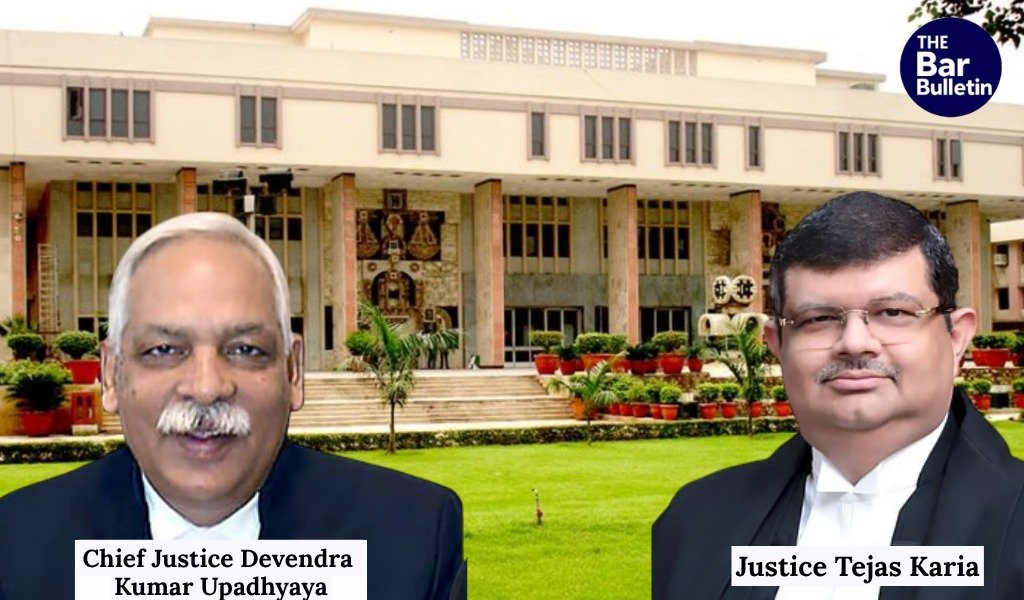
The Bench of Chief Justice Devendra Kumar Upadhyaya and Justice Tejas Karia has also prohibited victory processions following the declaration of the DUSU election results, directing the Delhi Police to ensure that no such procession is taken out on roads, campuses or around hostels.
The Court particularly expressed concern over cavalcades involving vehicles without registration plates and the manner in which candidates and supporters were allegedly travelling around the University campus. During the hearing, the Bench questioned the police on how such vehicles could have been allowed on Delhi roads despite the deployment of a large police force. The Court remarked.
“
“Now what happens, you know, by these cavalcades and these kinds of processions, they create a sense of terror, they create a sense of fear, they create a sense of hegemony tied to the establishment of special candidates. What deterrent action did you take? Why did you allow these cars to be played by these candidates? They should have been more vigilant. Standing on the rooftop, standing on the front bonnet, what else is hooliganism?”
Additional Solicitor General Chetan Sharma, appearing for State and Police, informed the Bench that 998 challans had been issued and 30 cars impounded in connection with the violations referred to in its status report. The report also referred to six FIRs, four arrests and one case of rustication.
The Bench also questioned the authorities regarding the arrest of students in connection with slapping a teacher and whether corresponding administrative action had been taken by the University.
The Court then made it clear that the matter would no longer be confined to action against individual students. It directed that notices be issued to student organisations as well as all candidates, calling upon them to show cause why collective damages should not be imposed. The court remarked:
“
“We will impose collective damages for all these violations. You people have not mended your ways. See the orders passed on the last occasion of the elections. We are not treating the organizations differently. The time has come now.”
The ASG agreed with the Court’s proposition. However, counsel appearing for the student organisations submitted that there had been a significant improvement compared to last year and that, following the Court’s intervention, no incident of violence had taken place during the present election process. On this basis, the student bodies urged the Court not to impose exemplary costs. The Court, however, proceeded to issue show-cause notices to the candidates and student organisations, calling upon them to explain why collective electoral damages should not be imposed.
On the petitioner’s apprehension that the issuance of show-cause notices may become merely a symbolic exercise without any consequential action, the Bench drew a distinction between the criminal proceedings initiated by the police and the administrative action being taken by the University. The Court observed that criminal prosecutions must be taken to their logical conclusion, while expressing concern that the University’s show-cause notices in previous elections had often remained inconclusive and failed to serve as an effective deterrent. The Court observed:
“
“The FIRs lodged, the criminal prosecution instituted by the police, that will be taken to its logical end. We can’t doubt that. Their show-cause notices, we do not know. Because nothing has happened last year. And so far as the show-cause, we are issuing them the show-cause notice. We are issuing the show-cause notice to the usual candidates. We are also issuing notice to the student organizations. For the imposition of damages.”
The petitioner’s counsel was directed to compile the relevant material allegedly establishing violations and file the compilation within two weeks after supplying soft copies to the respondents, student organisations and candidates. Upon receipt of the compilation, the organisations and candidates would be required to respond and show cause why they should not be saddled with exemplary electoral damages.
On the issue of victory processions, the ASG first submitted that the Delhi Police would ensure that no victory procession is taken out on the roads of Delhi, and also sought clarity that the Court’s direction should extend to the University campuses and hostels, where such celebrations could also lead to disruption. The Bench accepted the submission and made the prohibition comprehensive, directing that there should be no victory procession, drums or hooliganism of any kind. The Court observed:
“
“Having regard to the past experience, as already noticed by this Court in earlier orders, we direct that no victory procession shall be taken out after declaration of result and even thereafter by the candidates or students, not only on the roads of Delhi but also within the campuses and hospitals. It will be the responsibility of the Delhi Police to check and ensure that any such victory procession does not take place.”
The Bench further clarified that the prohibition would not be restricted to candidates alone, noting that supporters and outsiders could also participate in post-result celebrations. It directed the authorities to take all permissible preventive measures to ensure compliance with the Court’s orders and the Lyngdoh Committee recommendations.
Towards the end of the hearing, the Bench made particularly sharp observations about the conduct of persons participating in election-related cavalcades and questioned whether such persons could genuinely be regarded as students.
“
“The police officials should not be shy or constrained only because they are students. They are not students. I’m sorry to say! Someone brandishing a weapon, can he be a student? Roaming around in a cavalcade of all luxury cars, where do they get this money from? They are eating into the facilities to be given to the genuine students. They are not students.”
The Court reiterated that repeated violations of the Lyngdoh Committee recommendations could not be allowed to continue merely through routine issuance of notices, stressing that the situation required effective action. It also directed the student organisations present in court to immediately communicate the order to their candidates, students and supporters without waiting for a certified copy.